 Save
Save I discovered the magic of cabbage cores by accident one Tuesday when I was too stubborn to throw them away. Everyone else was shredding leaves and tossing the dense, pale center into the compost, but I noticed how crisp and sweet those cores tasted raw. That single observation became the foundation for this slaw, which has somehow become the thing I make when I want people to feel taken care of without fussing.
I made this for a potluck at a community garden, where someone's grandmother took a bite and said it reminded her of a Korean dish she hadn't eaten in thirty years. She asked for the recipe right there, hands still holding a fork, and I watched her eyes get a little watery. That moment taught me that food bridges distances we didn't even know existed.
Ingredients
- Cabbage cores: The pale, dense heart of the cabbage is sweeter and more fibrous than leaves. Use about one medium cabbage, cutting the core into manageable pieces before shredding.
- Green cabbage leaves: These add volume and mild flavor, balancing the intensity of the core with tender crunch.
- Carrot: Julienne it thin so it soaks up the dressing and adds natural sweetness alongside the cabbage.
- Green onions: Their sharpness wakes up the whole salad, so don't skip them or substitute regular onions.
- Toasted sesame oil: This is non-negotiable. The nutty warmth defines the entire dressing, so buy good quality.
- Rice vinegar: Its delicate sourness won't overpower the vegetables like regular vinegar would.
- Soy sauce or tamari: This adds umami depth that makes people keep reaching for another bite.
- Maple syrup: A small amount balances acid and salt, creating harmony without tasting sweet.
- Fresh ginger: Grate it just before mixing so you get maximum spice and brightness.
- Garlic: One small clove is enough. Mince it fine so it distributes evenly through the dressing.
- Toasted sesame seeds: Toast them yourself if you can. The difference between store-bought and toasted is worth the five extra minutes.
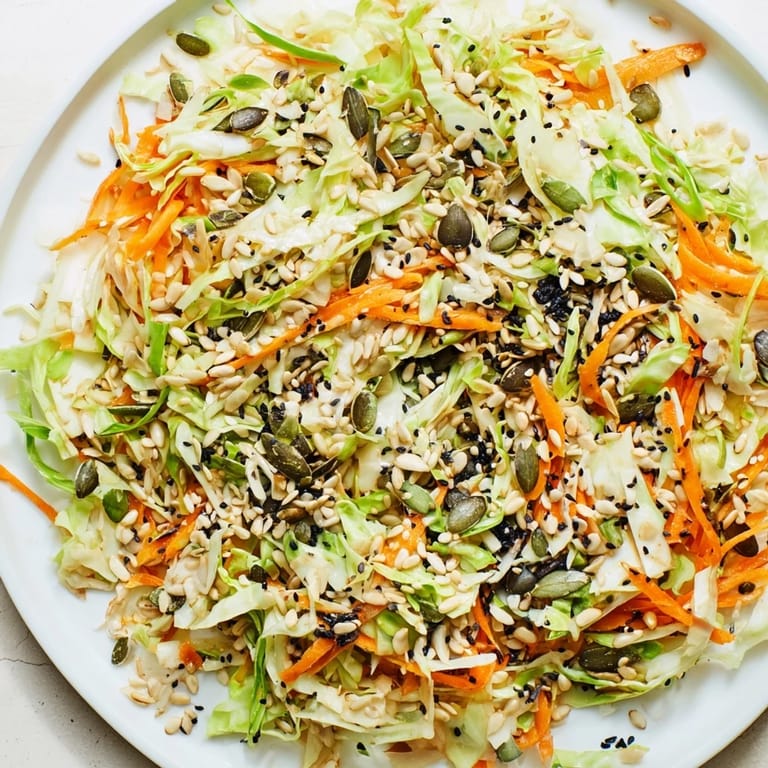
- Pumpkin seeds: These add earthiness and contrast beautifully against the pale cabbage and dark sesame.
- Sunflower seeds: Their mild flavor lets everything else shine while adding protein.
Tired of Takeout? 🥡
Get 10 meals you can make faster than delivery arrives. Seriously.
One email. No spam. Unsubscribe anytime.
Instructions
- Prep your vegetables with intention:
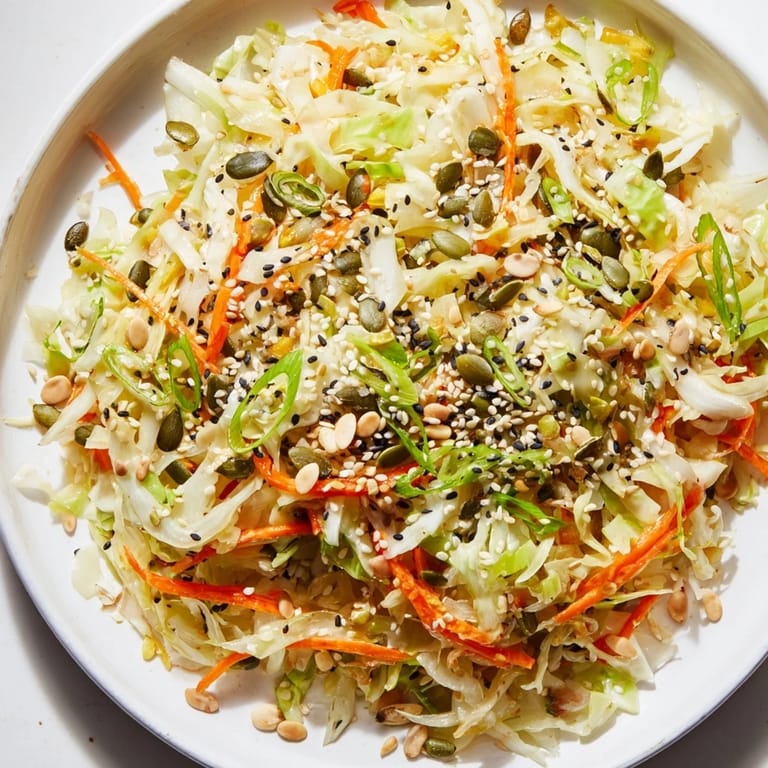
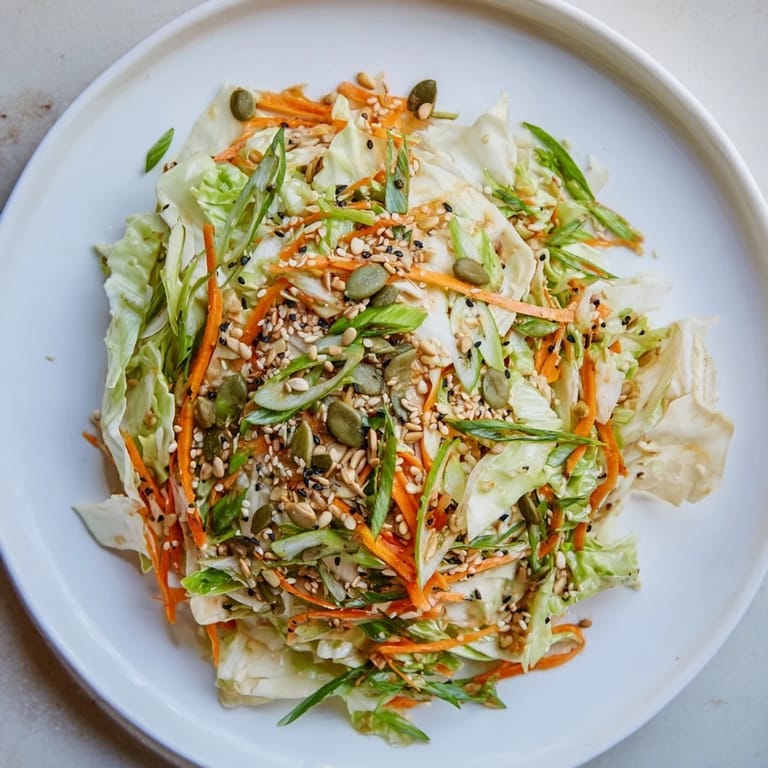
- Cut the cabbage core into quarters, then shred it fine using a knife or mandoline. The finer you shred, the better it soaks up dressing. Julienne your carrot so each piece is about the size of a matchstick, and slice those green onions at an angle so they look like they belong together.
- Build your dressing with patience:
- In a small bowl, whisk sesame oil, rice vinegar, soy sauce, maple syrup, ginger, and garlic until they emulsify into something glossy and unified. Taste as you go. The dressing should make your mouth water.
- Toss like you mean it:
- Pour the dressing over your raw vegetables and toss with both hands or two spoons until every piece glistens. This is your moment to make sure nothing hides at the bottom of the bowl.
- Scatter your seeds with generosity:
- Sprinkle all three types of toasted seeds over the slaw and toss gently to combine. You can either mix them fully in or reserve some on top for a beautiful finish when you serve it.
- Let it breathe:
- Walk away for ten minutes. This isn't wasted time. The vegetables soften slightly while staying crunchy, and the flavors meld into something greater than their parts.
 Save
Save My neighbor who's never been impressed by anything I cook asked for this recipe because she was stunned by how it tasted. That quiet moment of validation made me realize that food doesn't need to be complicated to be worth making. Simplicity, when done with care, speaks louder than anything else.
Why Cabbage Cores Are Your Secret Ingredient
Most people treat cabbage cores like kitchen waste, but they're actually the sweetest, crunchiest part of the vegetable. The dense structure means they hold their texture even when dressed, unlike tender leaves that wilt. This is where nutrition lives too. That pale core is packed with fiber and minerals that the outer leaves don't have in the same concentration. Once you start using them intentionally, you'll wonder why you ever threw them away.
The Sesame Dressing That Changes Everything
Sesame oil gets a reputation for being fancy, but it's actually one of the most forgiving ingredients in your kitchen. Its nutty, almost caramel-like warmth makes simple vegetables taste intentional and considered. Rice vinegar keeps the acidity gentle instead of sharp, so nothing gets aggressive or unpleasant. Together with a touch of sweetness and the umami punch of soy sauce, you end up with a dressing that tastes like it took hours but arrives in five minutes.
Variations That Keep It Interesting
This slaw is a canvas, not a rulebook. In winter, I add thinly sliced red onion and a pinch of chili oil for warmth. When cilantro is abundant, I throw it in by the handful. Some mornings I'll top it with a soft-boiled egg and eat it as breakfast. The base is sturdy enough to handle whatever your garden, market, or mood suggests.
- Fresh mint brings a cooling brightness that's perfect in summer heat, while cilantro adds herbaceous depth for those who love it.
- A drizzle of chili oil or a scatter of fresh red chilies transforms this from side dish to something with an edge.
- Swap the seeds for crushed peanuts or cashews if you want richness, or leave them out entirely if allergies demand it.
 Save
Save This slaw has become my default answer to the question, "What should I bring?" It travels well, feeds a crowd, and somehow makes people feel seen. That's the real recipe right there.
Recipe FAQs
- → What makes cabbage cores ideal for this dish?
Cabbage cores provide extra crunch and fiber, offering a unique texture that distinguishes it from traditional slaws.
- → Can I substitute the soy sauce in the dressing?
Yes, tamari works for gluten-free needs, or coconut aminos can be used for soy allergies without sacrificing flavor.
- → How do the toasted seeds enhance the salad?
Toasted sesame, pumpkin, and sunflower seeds add a nutty depth and a satisfying crisp contrast to the crunchy vegetables.
- → Is it necessary to let the slaw sit before serving?
Allowing the slaw to rest for about 10 minutes lets the dressing infuse the vegetables, enriching the overall flavor profile.
- → Can this slaw be made vegan and gluten-free?
Yes, by using maple syrup instead of honey and gluten-free tamari, the dish suits vegan and gluten-free diets easily.