 Save
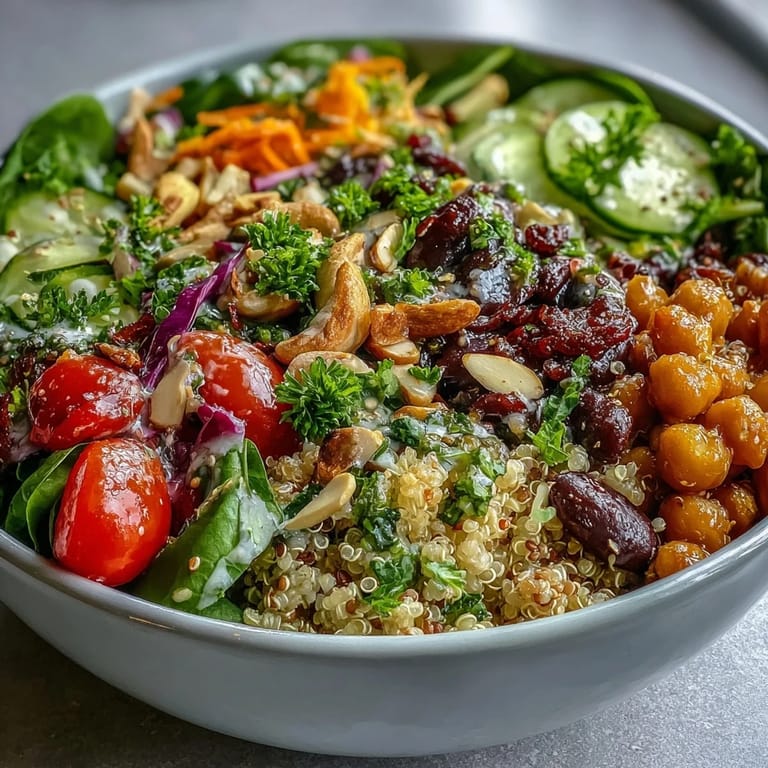
Save I discovered the magic of eating with my eyes when a friend brought this rainbow salad to a potluck on a gray Tuesday afternoon. The moment she opened that container, the kitchen seemed brighter—deep purples, sunny yellows, vibrant greens all catching the light. I realized then that building a salad this way isn't just about nutrition; it's about inviting color and joy onto your plate in the most straightforward way possible.
Last summer, I made this for a family gathering where my cousin had just gone vegan, and I was nervous about pleasing everyone at once. What surprised me was watching my meat-loving uncle go back for seconds, then thirds, completely unaware he was eating plant-based protein. That salad became the unexpected bridge that got everyone talking and laughing at the table.
Ingredients
- Cooked quinoa or brown rice: This is your foundation, so cook it properly and let it cool completely—warm grain releases steam that wilts everything else.
- Cherry tomatoes, halved: Their sweetness balances the earthiness of the beans and grains beautifully.
- Shredded purple cabbage: Beyond the stunning color, it stays crisp for days and actually gets more flavorful as it sits.
- Grated carrots: Fresh carrots add natural sweetness and that satisfying crunch that makes you want to keep eating.
- Yellow bell pepper, diced: Choose one that feels heavy for its size—that means it's juicier and sweeter.
- Baby spinach leaves: Add these last or just before serving so they don't wilt under the weight of heavier ingredients.
- Cucumber, sliced: I learned to salt my cucumber slices lightly and let them sit for five minutes, then pat them dry—this keeps the salad from getting watery.
- Chickpeas and black beans: Rinsing them thoroughly removes excess sodium and that tinny canned flavor, making them taste fresher.
- Roasted cashews or almonds, chopped: Roasted nuts are essential here—raw ones disappear into the background, but roasted ones announce themselves in the best way.
- Pumpkin and sunflower seeds: These add textural contrast and a subtle earthiness that ties everything together.
- Extra-virgin olive oil: Use one you actually like drinking—you'll taste it directly in the dressing.
- Fresh lemon juice: Never use bottled; the fresh juice brightens everything in ways bottled simply cannot.
- Maple syrup or honey: This tiny bit of sweetness is the secret that makes people ask what's in your dressing.
- Dijon mustard: It acts as an emulsifier, helping the oil and lemon juice become friends instead of staying separated.
- Fresh garlic and herbs: Mince the garlic finely so you taste its flavor without biting into chunks.
Tired of Takeout? 🥡
Get 10 meals you can make faster than delivery arrives. Seriously.
One email. No spam. Unsubscribe anytime.
Instructions
- Start with your grains:
- Prepare quinoa or rice according to the package instructions, then spread it on a plate or baking sheet to cool. Warm grain will make everything else soggy, and nobody wants that.
- Prep your produce with intention:
- Wash, chop, and arrange everything on your cutting board in order of how soft they are—start with harder vegetables like carrots and bell peppers, work toward delicate greens. This prevents your cutting board from smelling like raw onion (if you're using them) all over your spinach.
- Build your bowl like you're painting:
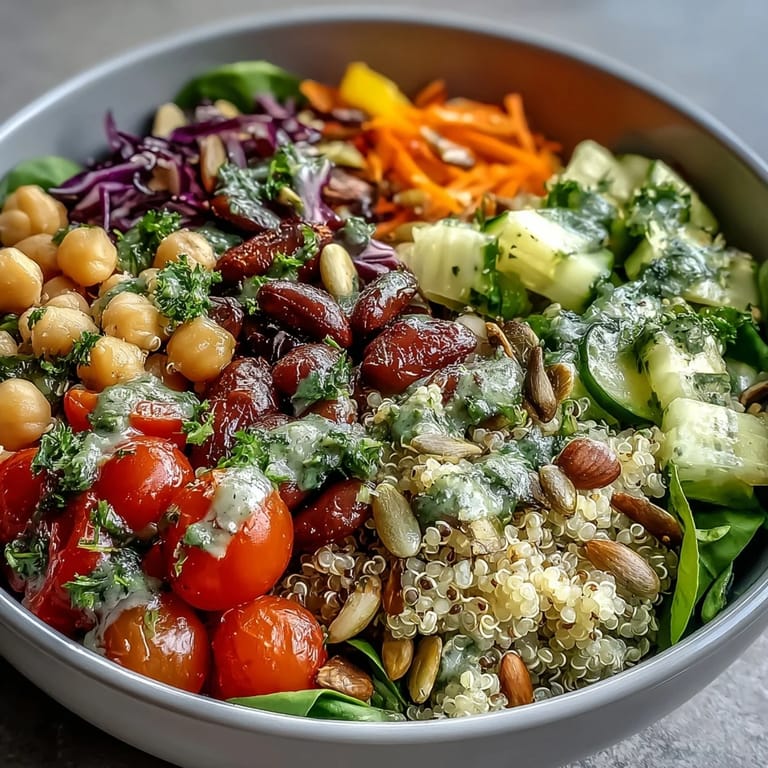
- Arrange the cooled grain in the center of a large bowl or platter, then create sections around it with each vegetable, the beans, nuts, and seeds. The rainbow visual isn't just pretty—it makes serving yourself more intentional, and you're more likely to get a balanced bite every time.
- Whisk your dressing with confidence:
- In a small bowl, combine olive oil, lemon juice, maple syrup, Dijon mustard, minced garlic, salt, and pepper. Whisk steadily for about thirty seconds until it looks slightly creamy and emulsified—this is when you know the flavors are actually bonding together.
- Dress your salad strategically:
- You can drizzle the dressing over everything and toss gently, or serve it on the side so guests can dress their own portions. If you're serving this for meal prep, dress only what you'll eat today and keep the dressing separate.
- Finish with fresh herbs:
- Scatter chopped parsley or cilantro over the top just before serving—fresh herbs wilt quickly, but they add a brightness that tastes like the salad was made minutes ago.
 Save
Save There's something grounding about making this salad on a quiet Sunday morning, when the kitchen is still cool and the farmers market ingredients are at their absolute peak. It's the kind of meal that reminds you that eating well doesn't require complicated techniques—just good ingredients treated with respect.
Customizing Your Bowl
This salad is endlessly flexible, which is partly why I keep making it. Swap the quinoa for farro or barley if you want more chew, use whatever beans you have on hand, and absolutely throw in shredded beets or thinly sliced fennel if your vegetable drawer is calling for it. I've made versions with cooked chickpeas instead of canned when I had the forethought to soak them overnight, and they taste noticeably creamier. The point isn't to follow this exactly—it's to understand the structure so you can riff confidently.
Make-Ahead Strategy
This salad actually rewards meal prepping because the vegetables absorb the flavors more fully as they sit, which means Thursday's portion tastes better than Monday's if you kept them separate. I store the grain, vegetables, beans, and dressing in separate containers and only combine them when I'm ready to eat. The nuts and seeds go in their own tiny container because they'll lose their crunch if they sit in moisture, and the fresh herbs stay wrapped in a damp paper towel in the fridge until the very last moment. This approach means you're essentially eating four different salads throughout the week, each one tasting fresher than if you'd mixed everything together on Sunday.
Dressing Variations and Pairings
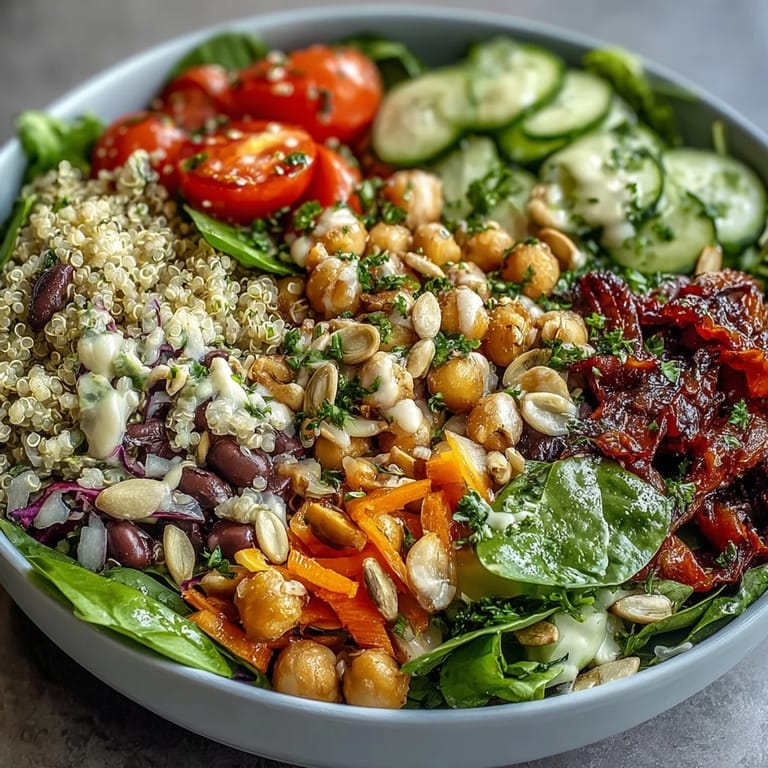
The lemon-maple dressing is what I reach for most often, but this salad is equally stunning with a tahini dressing if you prefer something creamier, or a lime-cilantro version if you want to lean into brighter, more tropical flavors. I've drizzled it with a simple balsamic reduction on nights when I wanted more richness, and I've whisked up a ginger-soy dressing when I was craving something with more heat and umami. The salad itself is so sturdy and well-balanced that it can handle bold dressing personalities without losing its identity.
- Tahini dressing works beautifully if you're serving this to friends with nut allergies—just substitute tahini for the oil and add a splash of water to thin it.
- A squeeze of fresh ginger into any vinaigrette adds complexity that makes people wonder what's different about your salad.
- Keep extra dressing in a jar in your fridge for the inevitable moment when you'll want to refresh last night's leftovers.
 Save
Save This salad has become my answer to the question of what to bring when I'm not sure what people want to eat. It's nourishing without being precious, colorful without being fussy, and every time I make it, I remember why simple food made with attention tastes like care.
Recipe FAQs
- → Can I make this bowl ahead of time?
Absolutely! This bowl meal preps beautifully. Store ingredients separately in airtight containers and combine when ready to eat, or keep dressed for up to 3 days—the vegetables stay crisp and flavors actually improve.
- → What grains work best in this salad?
Quinoa is fantastic for its complete protein profile, but brown rice, farro, bulgur, or even millet work wonderfully. Choose gluten-free grains if needed, and always cool them completely before assembling to prevent sogginess.
- → How do I add more protein?
Top with grilled tofu cubes, tempeh, or even edamame. Feta cheese adds creamy protein (though not vegan). Hard-boiled eggs, shredded chicken, or baked salmon also pair beautifully with these Mediterranean-inspired flavors.
- → Can I use different vegetables?
Certainly! Swap in whatever looks fresh at the market. Roasted beets, shredded Brussels sprouts, radishes, bell peppers, or avocado all work beautifully. The key is maintaining that rainbow of colors for visual appeal and varied nutrients.
- → Is the dressing customizable?
Definitely! Try balsamic instead of lemon, add fresh herbs like basil or dill, or use tahini for a creamier version. The maple syrup balances acidity, but honey or agave work too. Adjust garlic to your taste preference.
- → What should I serve with this bowl?
This stands alone as a complete meal, but pairs wonderfully with crusty whole grain bread, a light soup, or roasted sweet potato wedges. For beverages, try crisp white wine, iced herbal tea, or sparkling water with citrus.