 Save
Save The skillet was still hissing when I realized I'd forgotten to reserve the pasta water. My neighbor had just texted asking for a weeknight dinner idea that felt fancy but wasn't fussy, and I was mid-demo in my own kitchen, phone propped against the olive oil bottle. I scrambled to scoop a mugful from the colander, splashing water everywhere, but that near-disaster taught me more about carbonara than any cookbook ever did. The starchy, salty liquid saved the sauce from seizing, turning my egg mixture into something glossy and restaurant-worthy. Now I keep a coffee mug by the stove every single time I make this chicken carbonara, and it's become my answer to anyone who wants comfort food with a little swagger.
I first made this for my brother after he moved into his new apartment with nothing but a hot plate and a single skillet. He was skeptical when I showed up with a grocery bag, insisting he couldn't cook anything impressive with his setup. But as the bacon crisped and the garlic hit the pan, his tiny kitchen smelled like a trattoria, and he stood there with a wooden spoon, grinning like he'd discovered a superpower. We ate straight from the skillet, twirling forkfuls of creamy pasta while he planned who he'd cook it for next. That night, carbonara stopped being just dinner and became his signature move.
Ingredients
- Spaghetti or fettuccine: Choose a pasta that holds onto sauce, and always cook it one minute shy of the package time since it will finish cooking when you toss it with the bacon and chicken.
- Cooked chicken breast: Rotisserie chicken is your best friend here, shredded into bite-sized pieces that soak up the creamy Parmesan coating.
- Bacon or pancetta: Pancetta is traditional and less smoky, but thick-cut bacon adds a deeper, almost caramelized flavor that I've come to prefer.
- Eggs: Use the freshest eggs you can find since they are the backbone of the sauce, and room temperature eggs whisk more smoothly into the cheese.
- Parmesan cheese: Grate it yourself from a wedge, the pre-shredded stuff contains anti-caking agents that make the sauce grainy instead of silky.
- Heavy cream: Completely optional, but a small splash makes the sauce more forgiving if you are nervous about scrambling the eggs.
- Garlic: Two cloves, chopped fine, bloom in the bacon fat and perfume the entire dish without overpowering the delicate egg sauce.
- Salt and black pepper: Go heavy on the pepper, it's a defining flavor in carbonara, and remember the bacon and Parmesan are already salty.
- Parsley: A handful of chopped fresh parsley at the end adds a pop of color and a hint of freshness that cuts through the richness.
Tired of Takeout? 🥡
Get 10 meals you can make faster than delivery arrives. Seriously.
One email. No spam. Unsubscribe anytime.
Instructions
- Boil the pasta:
- Bring a large pot of generously salted water to a rolling boil, then cook your spaghetti or fettuccine until al dente, usually about one minute less than the package suggests. Before draining, scoop out at least half a cup of that starchy, cloudy pasta water and set it aside, it will be your secret weapon for a velvety sauce.
- Crisp the bacon and warm the chicken:
- While the pasta bubbles away, heat a large skillet over medium heat and add the diced bacon or pancetta, stirring occasionally until the edges turn golden and crisp, about five minutes. Toss in the chopped garlic and let it sizzle for just a minute until fragrant, then stir in the shredded chicken to warm it through before pulling the skillet off the heat.
- Whisk the egg mixture:
- In a mixing bowl, whisk together the eggs, grated Parmesan, cream if you are using it, and a generous grind of black pepper until smooth and slightly frothy. This mixture will transform into your creamy coating, so make sure everything is well combined.
- Combine pasta with bacon and chicken:
- Add the drained pasta directly to the skillet with the bacon, garlic, and chicken, tossing everything together with tongs so the pasta picks up all that savory, garlicky fat. Work quickly here, you want the pasta hot but the skillet off the burner.
- Create the creamy sauce:
- Pour the egg and Parmesan mixture over the hot pasta, tossing continuously and vigorously to coat every strand without scrambling the eggs, the residual heat does all the work. Drizzle in the reserved pasta water a few tablespoons at a time, tossing as you go, until the sauce clings to the pasta in a glossy, creamy sheen.
- Serve immediately:
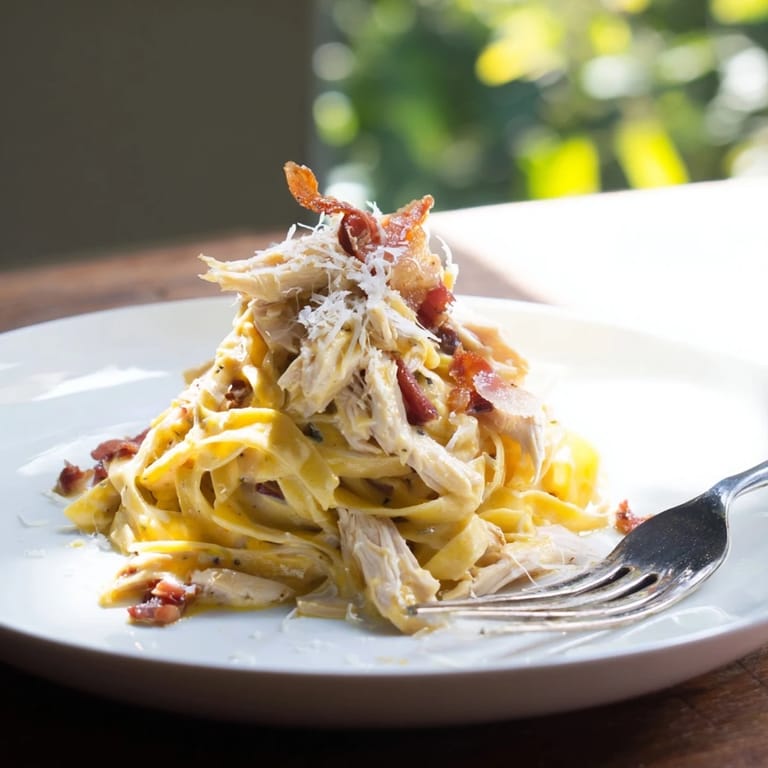
- Divide the carbonara among warm bowls, then shower each serving with extra grated Parmesan and a sprinkle of chopped parsley if you like. Carbonara waits for no one, so serve it straight away while it is at its silkiest.
 Save
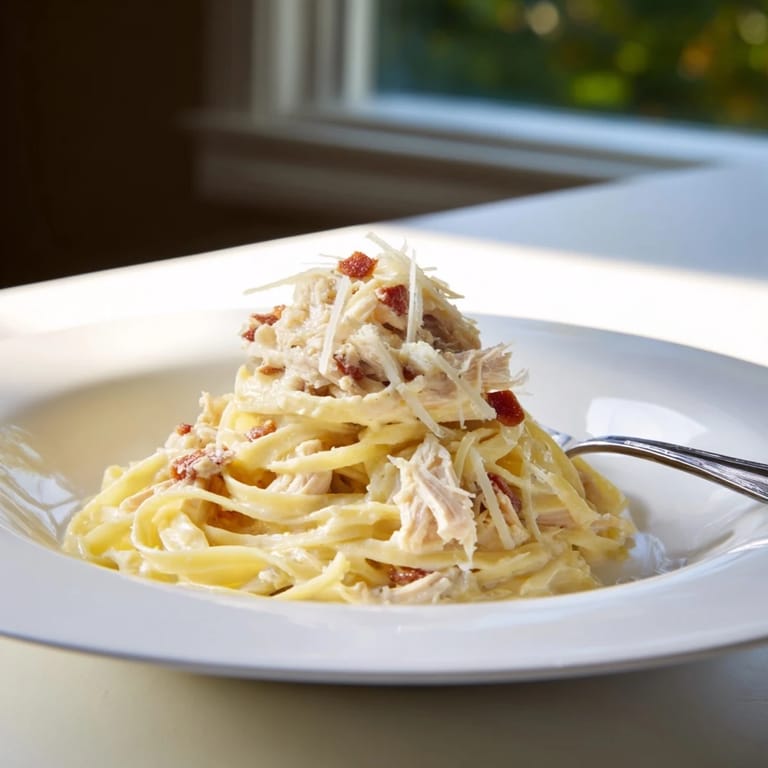
Save One rainy Tuesday, I made this for a friend who had just finished a brutal work deadline and needed something that felt like a hug. She walked in damp and exhausted, but the moment she smelled the garlic and bacon, her shoulders dropped and she smiled for the first time in days. We sat on my couch with bowls balanced on our knees, twirling creamy forkfuls and talking about nothing important, and she told me later that it wasn't just the food, it was the feeling of being taken care of. That's when I understood that carbonara isn't just a recipe, it's a love language.
Making It Your Own
I've made this carbonara with leftover grilled chicken thighs, turkey bacon when my dad was avoiding red meat, and even crispy prosciutto when I was feeling fancy. You can swap the spaghetti for rigatoni if you want the sauce to pool inside the tubes, or use whole wheat pasta for a nuttier flavor. Some nights I skip the cream entirely and let the eggs and Parmesan do all the work, which makes the sauce lighter and even more traditional. The beauty of this dish is that it adapts to what you have on hand without losing its soul.
Pairing and Serving Ideas
I almost always serve this with a simple arugula salad dressed in lemon juice and olive oil, the peppery greens and bright citrus cut through the richness of the carbonara perfectly. A crisp white wine like Pinot Grigio or Sauvignon Blanc is my go-to, though my brother insists a cold beer works just as well. If you want to make it a full meal, add some crusty garlic bread on the side for scooping up every last bit of sauce. Keep it simple, carbonara is the star and doesn't need much competition on the table.
Storing and Reheating
Carbonara is truly best eaten the moment it comes together, but I've successfully stored leftovers in an airtight container in the fridge for up to two days. When reheating, add a splash of milk or cream and warm it gently in a skillet over low heat, tossing constantly to bring the sauce back to life without scrambling the eggs. The microwave works in a pinch, but use fifty percent power and stir every thirty seconds to keep the texture creamy. It won't be quite as silky as the first night, but it's still a satisfying lunch that beats takeout any day.
- Reheat gently and slowly, high heat will turn the sauce grainy and dry.
- Add a splash of liquid, milk, cream, or even a bit of chicken broth, to revive the creamy consistency.
- Store in shallow containers so it cools quickly and reheats more evenly.
 Save
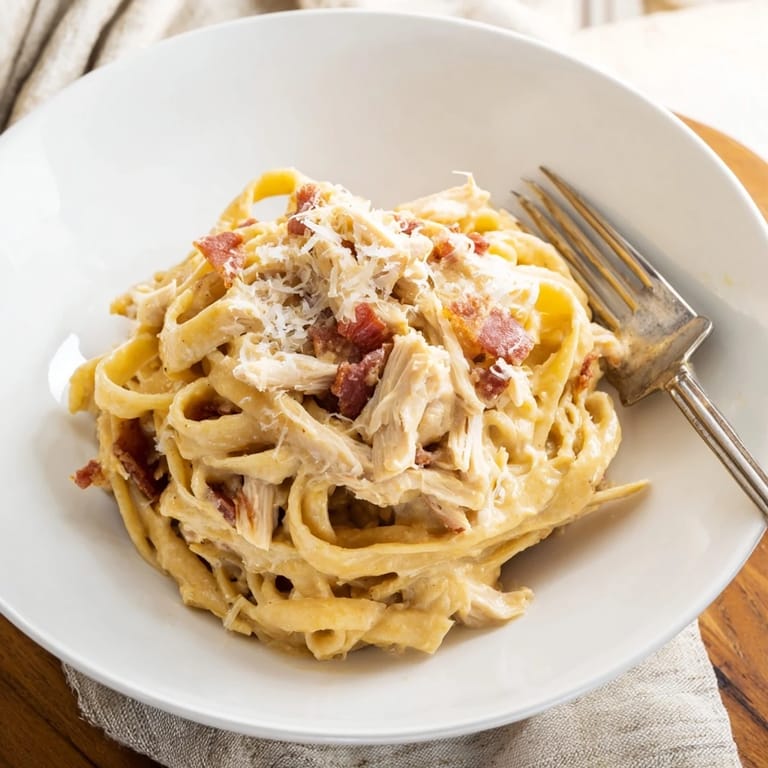
Save This chicken carbonara has become my answer to almost every dinner dilemma, whether I'm cooking for one or feeding a crowd who showed up unexpectedly. It's proof that the best meals don't require fancy techniques or hard-to-find ingredients, just a little attention and a lot of heart.
Recipe FAQs
- → How do I prevent the eggs from scrambling?
Remove the skillet from heat before adding the egg mixture, then toss continuously and quickly. The residual heat from the hot pasta cooks the eggs gently into a creamy sauce rather than scrambled bits.
- → Can I use regular bacon instead of pancetta?
Yes, bacon works perfectly as a substitute. Both deliver the crispy, salty element that balances the creamy sauce. Cook until crispy for the best texture.
- → What if my sauce is too thick or too thin?
Use the reserved pasta water to adjust consistency. Add it gradually while tossing to reach your preferred thickness. A few tablespoons usually makes a significant difference.
- → Is the heavy cream necessary?
No, cream is optional. Traditional carbonara relies solely on eggs for creaminess. The cream adds extra richness but isn't essential for achieving a silky sauce.
- → How do I keep this dish warm while serving multiple plates?
Serve immediately after tossing. The pasta cools quickly, and the sauce can thicken further as it sits. Work efficiently plating to maintain the ideal creamy consistency everyone enjoys.
- → What wine pairs well with this dish?
Crisp white wines like Pinot Grigio or Sauvignon Blanc complement the richness beautifully. Their acidity cuts through the creamy sauce and cleanses the palate between bites.