 Save
Save Last February, I stood in my kitchen watching snow pile up outside the window, feeling that particular winter exhaustion where nothing sounds good but you know your body needs real food. I'd been rotating the same three dinners for weeks when I remembered a bowl a friend had made—humble, warm, nothing fancy, but somehow it felt like the bowl itself was wrapping you in a blanket. That's when I started building layers: grains that could actually fill you up, vegetables that tasted sweet from the oven, greens that didn't feel like punishment, and a dressing creamy enough to make everything feel indulgent. What surprised me most was how a bowl without any meat or complicated technique became the thing I craved on the coldest nights.
I made this for my sister on a Sunday when she'd just moved into her first apartment with an oven that barely worked. We crowded into her tiny kitchen, laughing at how the roasted vegetables smelled so good they almost made up for the sadness of cardboard boxes everywhere. She took one bite and immediately asked for the recipe, and I realized it wasn't about impressing anyone—it was just genuinely nourishing in a way that felt like care.
Ingredients
- Farro or quinoa, 1 cup: Farro gives a nutty chew if you have time; quinoa if you need it faster or need to keep things gluten-free, and honestly both are wonderful.
- Vegetable broth or water, 2 cups: Broth adds more flavor but water works fine in a pinch, especially if your vegetables and dressing are seasoned well.
- Carrots, 2 medium, diced: They sweeten as they roast and hold their shape better than softer vegetables.
- Parsnips, 2, diced: These are the secret—they caramelize beautifully and taste almost buttery when roasted.
- Sweet potato, 1 small, cubed: The starch here makes the bowl feel more grounded and substantial.
- Olive oil, 2 tbsp for vegetables plus 1 tbsp for greens: Don't skimp here; this is what creates the golden, crispy edges on the roasted vegetables.
- Dried thyme, 1 tsp: Winter herbs belong on root vegetables, full stop.
- Sea salt and black pepper: Taste as you go because everything needs proper seasoning.
- Kale or Swiss chard, 4 cups, chopped: Kale is tougher and holds up better; chard is silkier and cooks faster.
- Garlic, 1 clove, minced: This small amount perfumes the greens without overpowering them.
- Tahini, 1/4 cup: This is the dressing's backbone—use the good stuff and stir it well before measuring.
- Lemon juice, 2 tbsp: Fresh lemon is non-negotiable; bottled will taste thin.
- Maple syrup, 1 tbsp: A touch of sweetness balances the tahini's earthiness.
- Warm water, 2 tbsp, plus more: This is how you get the dressing to pour instead of sit there like cement.
- Dijon mustard, 1/2 tsp: It adds a subtle sharpness that brings everything into focus.
- Pumpkin seeds, 1/4 cup toasted: These add the crunch that makes eating a bowl feel intentional.
- Feta cheese, 1/4 cup crumbled: Optional but it adds a salty, creamy contrast to the vegetables.
- Fresh parsley, 2 tbsp chopped: A little brightness at the end changes everything.
Tired of Takeout? 🥡
Get 10 meals you can make faster than delivery arrives. Seriously.
One email. No spam. Unsubscribe anytime.
Instructions
- Heat your oven and start the vegetables:
- Set the oven to 400°F and while it heats, peel your carrots and parsnips—there's something almost meditative about it. Toss them with the sweet potato, olive oil, thyme, salt, and pepper until every piece is glossy, then spread them on a baking sheet in a single layer and let them go golden for 25 to 30 minutes, stirring halfway through so they caramelize evenly on all sides.
- Cook your grains while vegetables roast:
- Rinse your farro or quinoa, then combine it with vegetable broth in a saucepan and bring to a boil. Cover, turn the heat down, and let it simmer quietly—quinoa takes about 20 minutes, farro closer to 30—until the liquid is absorbed and the grains are tender but still have a little texture.
- Wilt the greens with garlic:
- While everything else cooks, warm a skillet over medium heat with a tablespoon of olive oil. Mince your garlic and let it sauté for just 30 seconds until it smells alive, then add your chopped greens and a pinch of salt. Stir constantly for a few minutes until they collapse and become tender, which happens faster than you'd think.
- Build your dressing:
- In a bowl, whisk together the tahini, lemon juice, maple syrup, Dijon, salt, and pepper. The mixture will look thick and angry at first, which is normal—slowly add the warm water while whisking until it becomes creamy and pourable, like a loose yogurt sauce.
- Assemble your bowls:
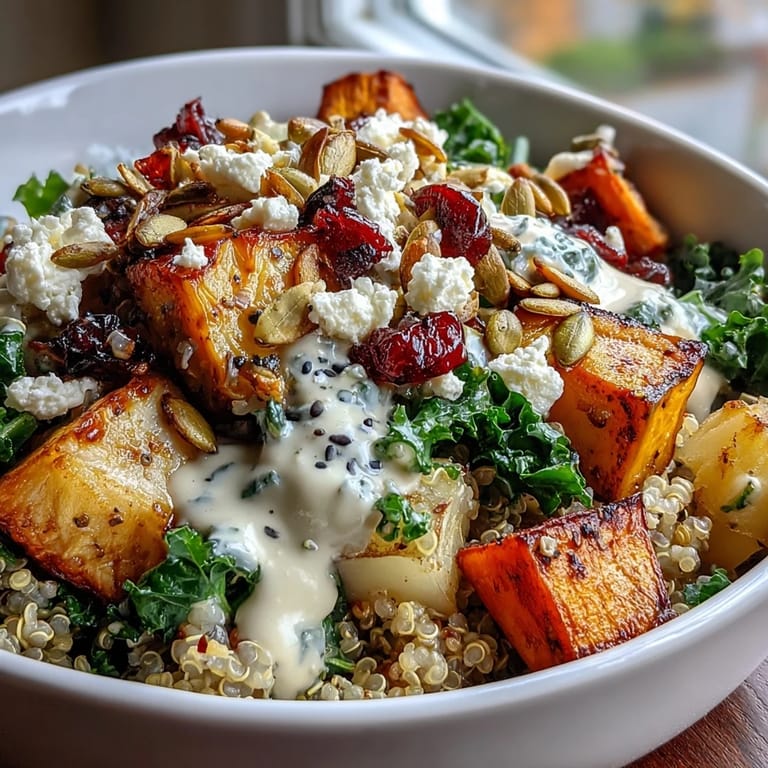
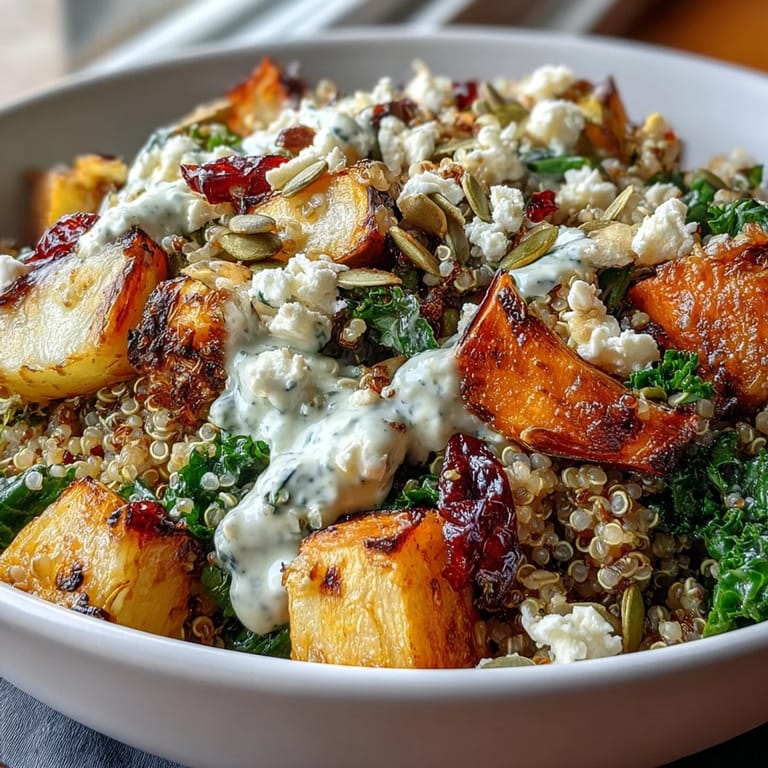
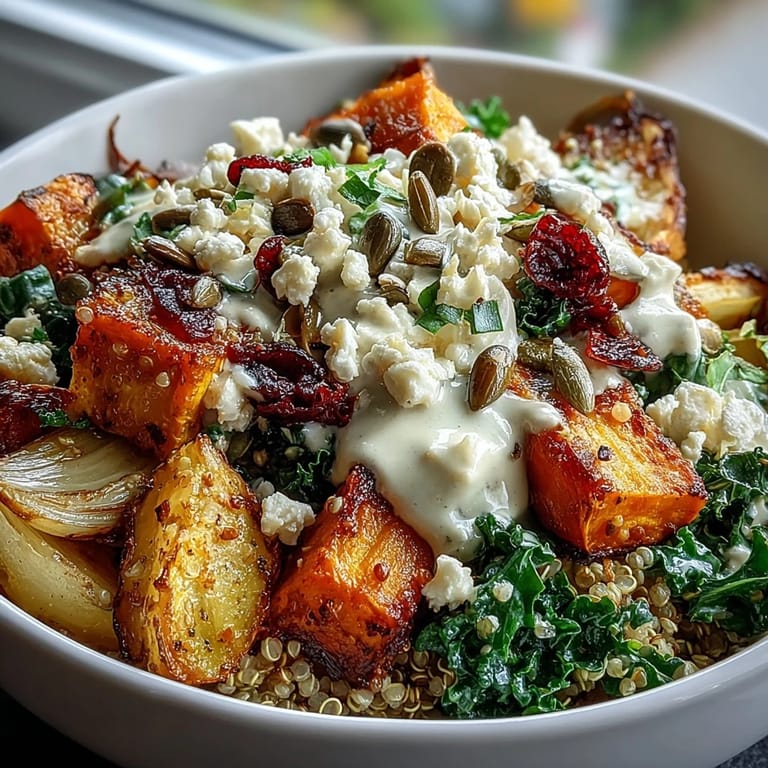
- Divide the warm grains between four bowls, then arrange the roasted vegetables, wilted greens, and any other components on top like you're building something you actually want to eat. Drizzle the tahini dressing generously over everything and finish with pumpkin seeds, feta if using it, and a scatter of fresh parsley.
 Save
Save My neighbor stopped by while I was eating a bowl of these one afternoon and asked what smelled so good. When I explained it was just roasted vegetables and grains, she looked skeptical, but I offered her a spoonful of the tahini dressing and watched her eyes change. She came over the next weekend and we made four bowls together, and it became one of those things we just do now when the weather turns cold.
Why Root Vegetables Matter in Winter
There's something about carrots, parsnips, and sweet potatoes that feels aligned with winter eating—they're naturally sweet, they store well, and when you roast them at high heat they develop this caramelized exterior that makes you forget you're eating vegetables at all. The magic happens when you give them enough space on the pan and don't move them around constantly; a little browning is exactly what you want, and it develops flavor in a way steaming never could.
The Tahini Dressing Makes It
I used to think tahini was just for hummus until I realized it makes a dressing that tastes both creamy and bright, rich without being heavy. The lemon cuts through it, the maple syrup rounds it out, and the mustard adds just enough sharpness to make you taste every layer. Once you understand this ratio, you'll start using it on everything from roasted vegetables to grain bowls to salads.
Building a Bowl That Actually Sustains You
The reason this bowl works for winter is that it hits every category your body actually needs: warm carbohydrates from the grains, vegetables for vitamins and fiber, greens for iron and minerals, and fat from the tahini and seeds so your body can actually absorb everything. It's not restrictive or punishing; it just acknowledges that winter eating should be nourishing without being fussy. A bowl like this on a cold day feels like something between a meal and a hug.
- Make this on a Sunday and you'll have components ready to assemble all week long, switching up the ratios or adding different toppings depending on what's in your fridge.
- If you're cooking for someone else, assemble their bowl fully so they experience the finished intention; if you're cooking for yourself, layer it so you get to adjust the dressing and toppings as you eat.
- This bowl tastes best when everything is still warm, so time your components so they finish around the same moment.
 Save
Save This bowl became my answer to those winter nights when I needed something real but didn't have the energy for complicated cooking. It's the kind of dish that proves you don't need a lot of ingredients or techniques to make something that feels completely nourishing, both for your body and for whatever part of you winter is testing.
Recipe FAQs
- → Can I make this ahead?
Absolutely. The roasted vegetables, cooked grains, and dressing can all be prepared up to 3 days in advance. Store components separately and assemble when ready to serve.
- → What grains work best?
Farro provides a chewy, nutty texture, while quinoa offers a lighter option and keeps it gluten-free. Brown rice, wheat berries, or barley also work beautifully.
- → How do I store leftovers?
Keep assembled bowls in the refrigerator for up to 4 days. The grains and vegetables reheat well in the microwave. Add dressing just before serving to maintain freshness.
- → Can I add protein?
Yes. Roasted chickpeas, grilled chicken, baked tofu, or a poached egg all complement the flavors. For plant-based options, try hemp seeds or toasted walnuts.
- → Is the dressing customizable?
Certainly. Substitute almond butter for tahini, use apple cider vinegar instead of lemon juice, or add a clove of garlic for extra zing. Adjust water to reach your preferred consistency.
- → What vegetables can I swap?
Beets, turnips, butternut squash, or Brussels sprouts all roast well. For greens, try spinach, chard, or collard greens depending on what's in season.