 Save
Save There's something about the sound of falafel sizzling in hot oil that transports me straight to a bustling street market in Beirut, even though I was standing in my tiny apartment kitchen at the time. My neighbor had just handed me a paper bag of golden falafel from a local vendor, and I bit into one—still warm, still steaming—and thought: I need to figure out how to make these at home. Years later, after mastering the rhythm of getting them crispy on the outside and fluffy within, I realized these little patties had become my answer to almost every craving: lunch, dinner, a last-minute meal for unexpected guests.
I made these for my sister's potluck dinner once, and she ate three pita pockets before anyone else had even filled their plates. What she loved most, she told me later, wasn't just the falafel but how I'd set up a little assembly line with all the fresh toppings arranged like they were the stars of the show. That's when I understood: falafel pitas aren't just about the falafel—they're about the moment of putting it all together, warm bread meeting cool vegetables and creamy sauce.
Ingredients
- Dried chickpeas (1 ½ cups, soaked overnight): Using dried chickpeas instead of canned is the secret—canned ones release too much moisture and make the falafel dense. Soaking overnight hydrates them perfectly without cooking them soft.
- Fresh parsley and cilantro (½ cup each): These aren't optional—they're what make falafel taste like falafel, not just seasoned chickpea paste. Fresh herbs are non-negotiable here.
- Ground cumin and coriander (1 tsp each): These warm spices are the backbone of flavor; toast them briefly in a dry pan first if you have time, and you'll taste the difference.
- Onion and garlic (½ small onion, 3 cloves): They provide moisture and aromatic depth, but keep them roughly chopped so they stay textured in the mixture.
- Baking powder (½ tsp): This tiny amount is what makes the falafel light and airy inside—skip it and you'll get hockey pucks.
- All-purpose flour (2 tbsp): Flour acts as a binder and helps them hold their shape during frying; don't add more or they'll become cakey.
- Tahini (½ cup): Rich, nutty sesame paste that becomes silky sauce with lemon juice and water—quality matters here, so don't grab the cheapest jar.
- Fresh lemon juice (2 tbsp for sauce, plus extra for serving): Brightens everything; use actual lemons, not bottled juice if you can.
- Pita bread (4 warmed): Warm pita is soft and forgiving; cold pita cracks and tears, making assembly frustrating.
- Fresh vegetables (lettuce, tomatoes, cucumber, red onion): Keep them cold and crisp to contrast with the warm falafel—that temperature play is part of the magic.
Tired of Takeout? 🥡
Get 10 meals you can make faster than delivery arrives. Seriously.
One email. No spam. Unsubscribe anytime.
Instructions
- Drain and dry your chickpeas:
- Pat them completely dry with paper towels—any excess moisture will make your mixture wet and hard to shape. Think of it as prep work that takes two minutes but saves you fifteen minutes of frustration.
- Pulse everything into coarse texture:
- Use a food processor, pulsing the chickpeas, aromatics, and herbs until the mixture looks sandy and holds together when squeezed, not like wet dough. If it's too fine, the falafel becomes dense; too chunky and they fall apart.
- Chill the mixture:
- Thirty minutes in the fridge makes the mixture much easier to shape and helps the flavors meld. If you're in a rush, fifteen minutes helps, but don't skip this step entirely.
- Heat oil to the right temperature:
- Use a kitchen thermometer and get it to 350°F—this is crucial. Too hot and they burn outside before cooking through; too cool and they absorb oil and become greasy.
- Shape with wet hands:
- Wet hands prevent sticking, and golf ball-sized portions fry evenly in about five minutes. A falafel scoop works beautifully if you have one, but your hands work just fine.
- Fry until deep golden:
- Listen for the sizzle to calm down slightly—that's when the inside is cooked through. About two to three minutes per side gets you golden and crispy.
- Whisk tahini sauce until silky:
- Start with less water and add gradually; tahini can suddenly seize up and become thick again, so patience wins here. You want it pourable but not thin.
- Assemble with intention:
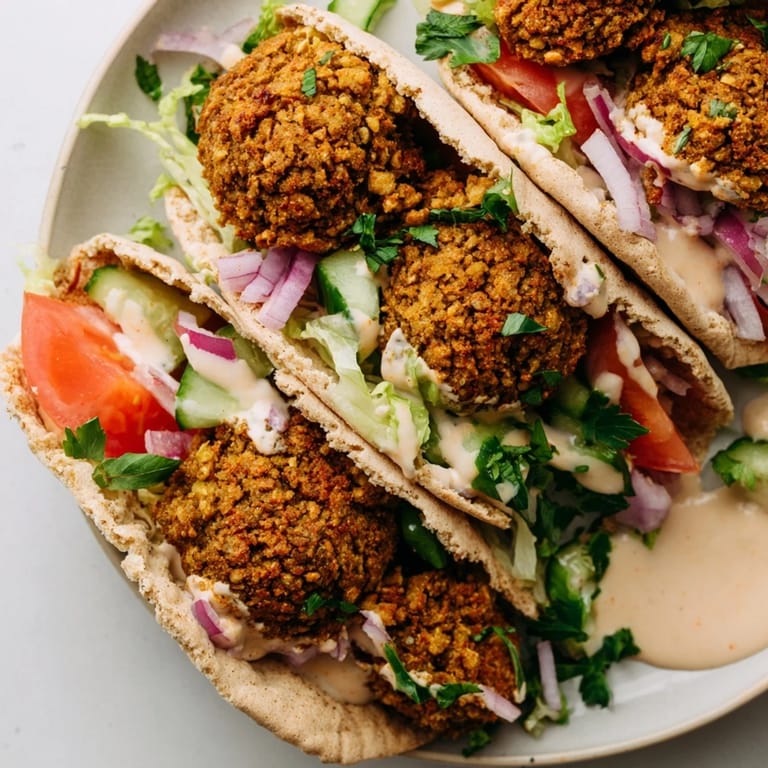
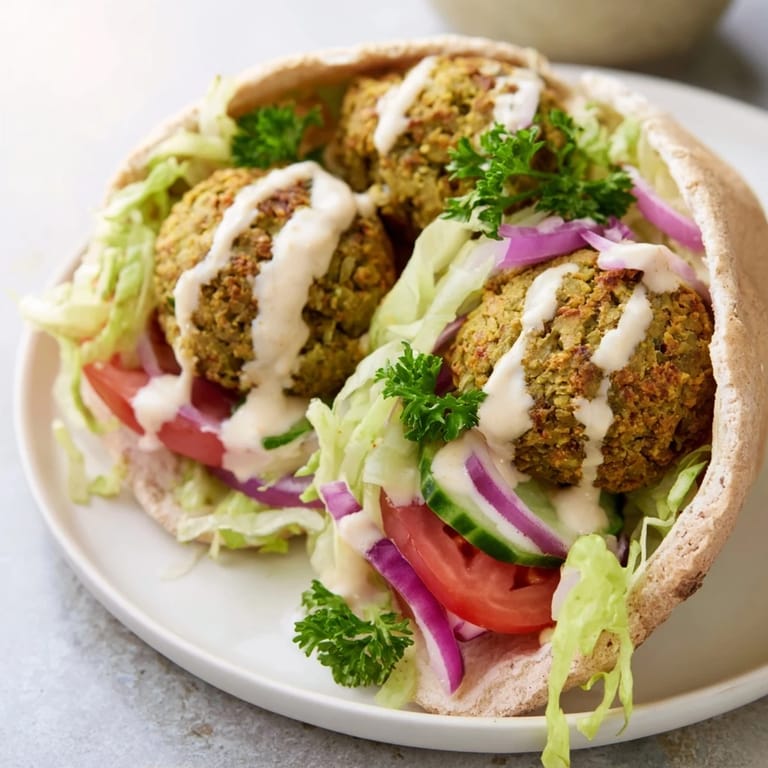
- Warm pita, cool fresh vegetables layered in, falafel tucked in while still warm, and tahini sauce drizzled just before serving so everything stays fresh and doesn't get soggy.
 Save
Save There was one evening when my friend brought his elderly mother to dinner and she tasted the falafel for the first time in thirty years—she'd grown up eating it from street vendors in Damascus. Watching her eyes close as she took that first bite, then smiled at me with this expression of recognition and comfort, I realized that food can bridge decades and distance in a way that words sometimes can't. That's when falafel stopped being just a recipe for me.
The Secret to Restaurant-Quality Falafel
The difference between homemade falafel and the kind that melts in your mouth comes down to respecting the details. That overnight soak isn't just soaking—it's rebuilding the chickpea's structure to be tender but sturdy enough to fry without breaking apart. The chill time isn't optional busywork; it's when the flour and baking powder do their job, creating tiny air pockets that make the falafel light and fluffy inside. And the oil temperature is non-negotiable—I've learned this through burnt edges and undercooked centers that taught me never to eyeball it again.
Building Your Perfect Pita Pocket
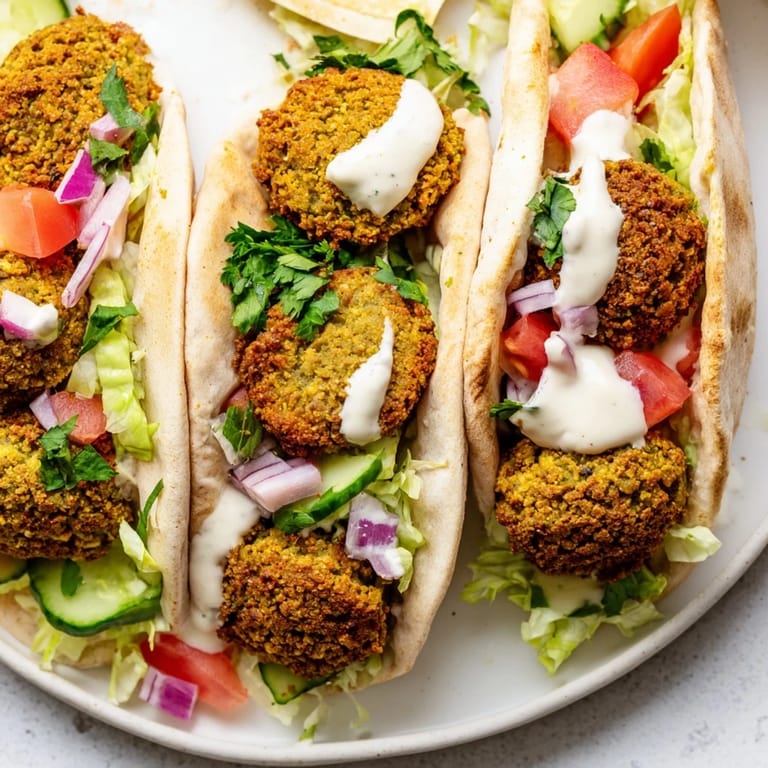
The assembly of a falafel pita is almost as important as the falafel itself because texture matters when you're eating something this bold. The lettuce should be crisp and cold, creating contrast against the warm falafel; the tomatoes should be diced small enough that you get them in every bite; and the cucumber adds a cooling sweetness that plays against the spices. Some people add pickled turnips (which I now do every time because they add an almost wine-like tartness), and some prefer hot sauce or a squeeze of fresh lemon. There's no wrong way once you understand that you're building layers of temperature, texture, and brightness.
Variations That Transformed My Kitchen
My first experiment was baking instead of frying—it worked, but something intangible was lost, like the song without the drums. Then I tried adding a pinch of sumac to the tahini sauce, and suddenly it tasted like it had traveled from somewhere specific. I've crumbled falafel into salads, stuffed them into wraps with hummus and roasted vegetables, even eaten them cold the next day (surprisingly good). The point is that once you master the base, you can play with it endlessly.
- For a lighter version, bake at 400°F for twenty to twenty-five minutes instead of frying, turning halfway through.
- Add sumac, za'atar, or dukkah spice blend to the tahini sauce for subtle variations in flavor.
- Serve with hot sauce, fresh lemon wedges, or a dollop of hummus for those who want to layer their flavors even more.
 Save
Save These falafel pita pockets have become my answer to the question "what should we eat tonight?"—quick enough for a weeknight, impressive enough for guests, and wholesome enough to not feel guilty about eating two. Make them once and they'll find their way into your regular rotation.
Recipe FAQs
- → How do you make falafel mixture hold together?
Soaking chickpeas overnight softens them, and blending with herbs, spices, flour, and baking powder helps the mixture bind well. Refrigerating before frying firms it further.
- → Can falafel be baked instead of fried?
Yes, baking at 400°F (200°C) for 20–25 minutes with a turn halfway provides a lighter option while retaining crispness.
- → What ingredients give falafel its distinctive flavor?
Fresh parsley, cilantro, garlic, cumin, and coriander create the classic Middle Eastern taste with a hint of spice from cayenne if used.
- → How is the tahini sauce prepared smoothly?
Whisk tahini paste with lemon juice, minced garlic, salt, and gradually add cold water until the sauce reaches a creamy, pourable consistency.
- → What are popular garnishes for falafel pita pockets?
Fresh parsley leaves, pickled turnips, sliced radishes, and a squeeze of fresh lemon juice enhance flavor and texture.