 Save
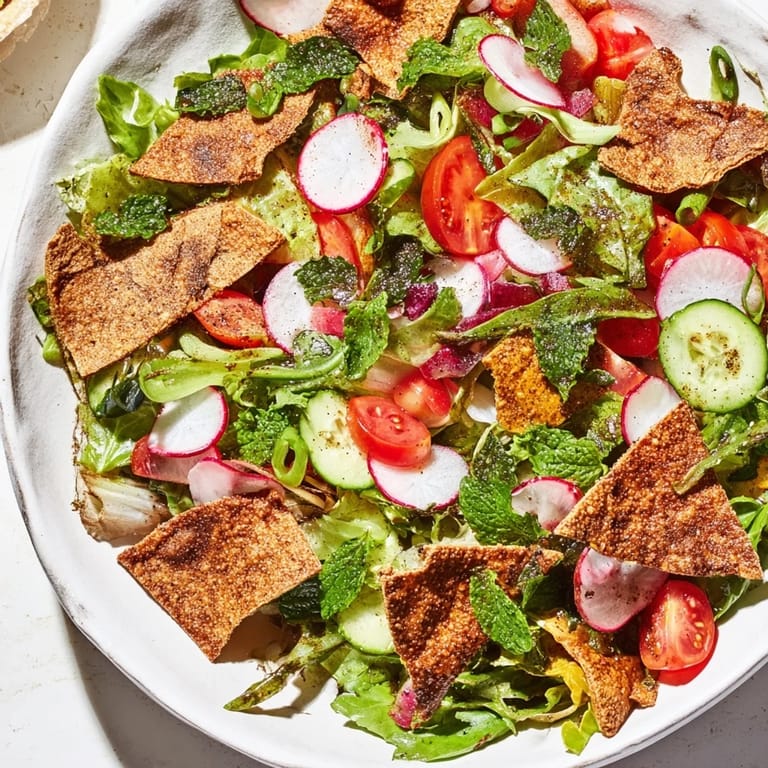
Save There's a particular magic in how Lebanese kitchens know to balance acid and crunch in ways that feel almost effortless. I discovered fattoush on a warm afternoon when a friend tossed together whatever greens and vegetables were lingering in her fridge, then elevated it all with homemade pita chips and a whisper of sumac. What struck me wasn't the complexity—it was how something so simple could taste like summer and spice at once, alive on the tongue.
I made this for a casual dinner party where everyone was too tired to pretend they cared about fussy plating, and fattoush turned out to be exactly what was needed—bright, informal, the kind of salad you could eat standing up while talking to someone by the counter. My friend who grew up eating versions of this every summer nodded quietly after her first bite, which felt like the highest compliment possible.
Ingredients
- Mixed greens: Use whatever feels fresh—romaine holds up best to the dressing, but arugula brings a pleasant peppery note if you prefer bolder greens.
- Cherry tomatoes: Halving them rather than quartering keeps them from dissolving into the dressing.
- Cucumber: Dice it just before assembling if you want it crisp, or you can prep it earlier and it'll just be softer, which some people prefer.
- Bell pepper: Red or yellow both work; red is slightly sweeter if that matters to your palate.
- Radishes: They stay crisp and add a gentle heat that surprises people who don't expect it.
- Green onions: Both white and green parts go in; they soften slightly in the dressing and become sweeter.
- Fresh parsley and mint: This is where the dish starts to taste like itself—don't skip them or substitute dried herbs.
- Pita breads: Day-old pita works just as well as fresh and sometimes better, since it has less moisture to turn soggy.
- Olive oil for chips: Just enough to coat; too much and they turn greasy instead of crispy.
- Sumac: This is the ingredient that makes people ask what that flavor is—it's lemony and slightly floral, and there's nothing quite like it.
- Extra-virgin olive oil for dressing: Good quality here makes a noticeable difference in how smooth and rounded the dressing tastes.
- Lemon juice and red wine vinegar: Together they create a brightness that feels intentional rather than one-note.
Tired of Takeout? 🥡
Get 10 meals you can make faster than delivery arrives. Seriously.
One email. No spam. Unsubscribe anytime.
Instructions
- Heat your oven and prepare the pita:
- Set the oven to 375°F and cut your pita breads into bite-sized pieces—rough is fine, unevenness is actually good since some pieces will be crispier than others and that variation is part of the charm.
- Make the chips golden:
- Toss the pita pieces with olive oil, sea salt, and sumac until every piece is lightly coated, then spread them on a baking sheet and bake for eight to ten minutes, stirring once halfway through. They should smell toasted and look golden brown at the edges; let them cool on the sheet for a minute because they'll crisp up more as they cool.
- Whisk the dressing:
- In a small bowl, combine olive oil, lemon juice, red wine vinegar, sumac, minced garlic, salt, and pepper—whisk it until it feels balanced, tasting as you go. If it seems too sharp, add a touch more oil; if it's flat, squeeze in a little more lemon.
- Assemble the greens:
- Tear or cut your mixed greens into bite-sized pieces if they're large, then add the tomatoes, cucumber, bell pepper, radishes, green onions, parsley, and mint to a large bowl. Toss everything together gently so you're mixing without bruising.
- Dress and toss:
- Pour the dressing over the greens and vegetables, then toss gently with your hands or two spoons until everything is evenly coated with a light sheen. The vegetables will start to soften slightly and release their own liquid, which is when the salad becomes something more than just salad.
- Finish with crunch:
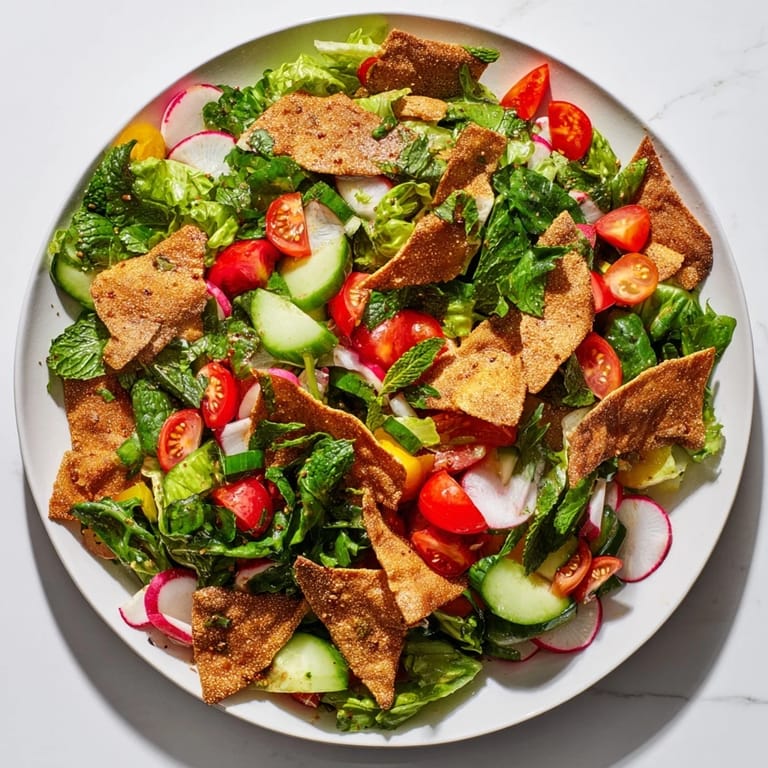
- Right before serving, scatter the cooled pita chips across the top—this is the non-negotiable step if you want them to stay crispy. If you add them too early, they'll soften and you'll have lost the whole point.
 Save
Save What I remember most is how this salad became the thing people asked me to bring to gatherings, not because it was complicated but because it felt generous and intentional in a way that mattered. There's something deeply satisfying about serving food that tastes like you understood something about flavor and texture.
The Texture Game
Fattoush is essentially a study in opposing textures: soft greens against crisp chips, tender herbs against crunchy radishes, the slight chew of the dressing against the snap of fresh vegetables. This contrast is what makes each bite feel interesting rather than monotonous. Pay attention to this balance and you'll understand why every component matters.
Sumac: The Secret Ingredient
Sumac is what separates fattoush from a simple garden salad, bringing a tartness that feels brighter and more complex than just lemon or vinegar alone. It's used throughout Middle Eastern cooking and tastes faintly of lemons with a subtle floral quality that people rarely identify by name but always notice. If you can't find it, your salad will still be good, but it won't be fattoush anymore—it'll be something else entirely.
Making It Your Own
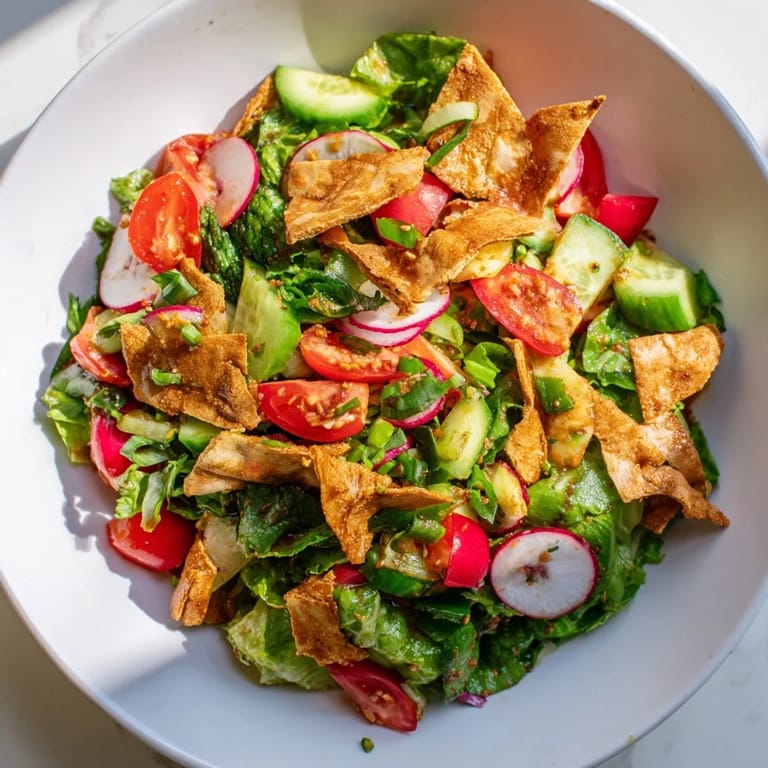
The beauty of fattoush is that it invites improvisation without losing its soul. You can add crumbled feta, sliced olives, or even chickpeas for protein, and it will still feel authentic. The core—the bright dressing, the fresh herbs, the pita chips—should stay, but everything else can shift with what you have and what sounds good.
- Crumbled feta adds a salty richness that pairs beautifully with the sumac dressing.
- Kalamata olives or green olives bring a briny depth that makes the whole salad feel more substantial.
- A handful of chickpeas transforms this from a side dish into something that feels like a complete meal.
 Save
Save Fattoush tastes like generosity and good timing—like knowing exactly what people need to eat without making them wait for it. Make this when you want to feed people something that feels both simple and thoughtful.
Recipe FAQs
- → What gives the salad its unique tangy flavor?
The dressing, made with sumac, lemon juice, and red wine vinegar, provides a refreshing and tangy taste unique to this dish.
- → How are the pita chips prepared for crunchiness?
Pita bread pieces are tossed with olive oil, sea salt, and ground sumac, then baked at 375°F for 8–10 minutes until golden and crispy.
- → Can this dish be made gluten-free?
Yes, by substituting regular pita with gluten-free pita or omitting the chips, you can enjoy a gluten-free version.
- → What herbs enhance the freshness of the salad?
Fresh parsley and mint are used to add aromatic and refreshing notes to the dish.
- → How should the salad be served for best texture?
Serve immediately after adding pita chips to maintain their crispness and the salad’s crunchy texture.