 Save
Save I discovered this dish on a quiet evening when I was searching for something that felt both elegant and oddly intimate—a meal that didn't shout but whispered sophistication. The inspiration struck while I was arranging white bowls on a dark table, and suddenly the whole concept came to life: what if everything on the plate was pale, creamy, and soft, except for those dramatic shadows of black pepper? It felt like cooking in reverse, building an entire dish around the absence of color rather than its abundance.
I made this for the first time when a friend who loves modern art came to dinner, and I wanted the plate to match her aesthetic. She stood there for a moment just looking at it, and that pause—before she even tasted anything—told me I'd gotten something right. The flavors turned out to be as thoughtful as the presentation, which felt like a small victory in the kitchen.
Ingredients
- Boneless, skinless chicken breasts: Four pieces at about 150 g each keeps them delicate and ensures they poach evenly without drying out.
- Cauliflower: One medium head, cut into florets, becomes the creamy foundation that holds everything together.
- White button mushrooms: 250 g sliced thin, these stay pale and tender rather than turning dark and shriveled.
- White onion and garlic: Finely chopped to dissolve into the mushroom sauté and add quiet depth without overpowering.
- Heavy cream, butter, and cream cheese: The holy trinity that transforms cauliflower into something luxurious and velvety.
- Low-sodium chicken broth: 500 ml of clear broth keeps the poaching liquid pale and pristine.
- Extra-virgin olive oil: Two tablespoons for sautéing, chosen for its clean flavor rather than a heavy hand.
- Freshly cracked black pepper: One teaspoon, reserved entirely for the dramatic finish that makes the whole dish work visually.
Tired of Takeout? 🥡
Get 10 meals you can make faster than delivery arrives. Seriously.
One email. No spam. Unsubscribe anytime.
Instructions
- Poach the chicken gently:
- Bring your broth to a bare simmer, the kind where bubbles barely break the surface, then settle the chicken breasts in and cover the pan. You'll know they're done when they feel firm but give slightly to pressure, around 12 to 15 minutes.
- Blend the cauliflower to silk:
- Once your florets are tender enough to break apart with a spoon, drain them well and transfer to a blender with the cream, butter, and cream cheese. Blend until there's not a single lump, tasting and adjusting salt as you go.
- Sauté the mushrooms pale:
- Start with the onions in hot oil until they're translucent, then add the mushrooms and garlic, stirring occasionally so they soften without browning. You're looking for a delicate golden softness, not the deep color they'd develop if you pushed them harder.
- Compose your plate:
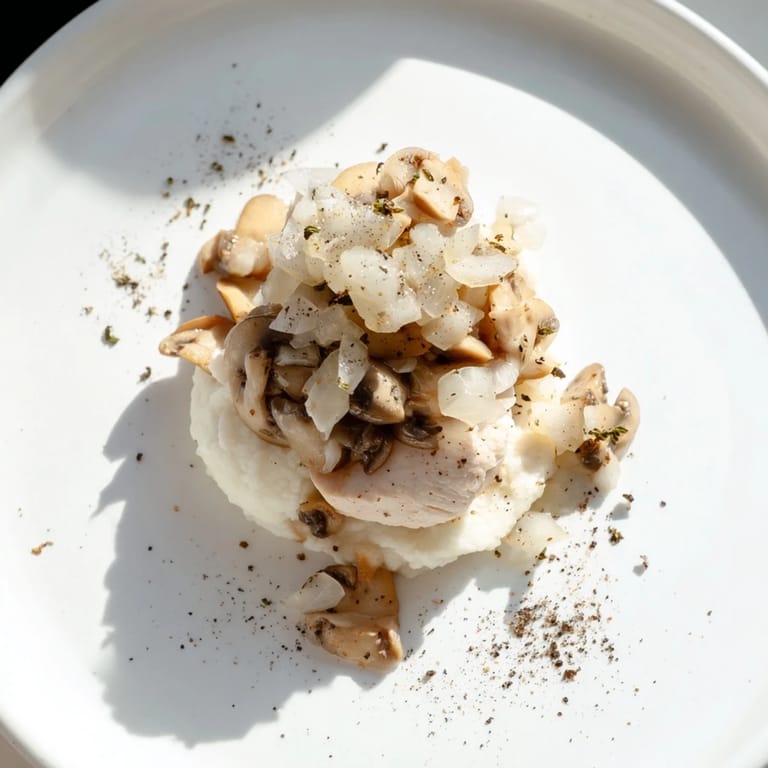
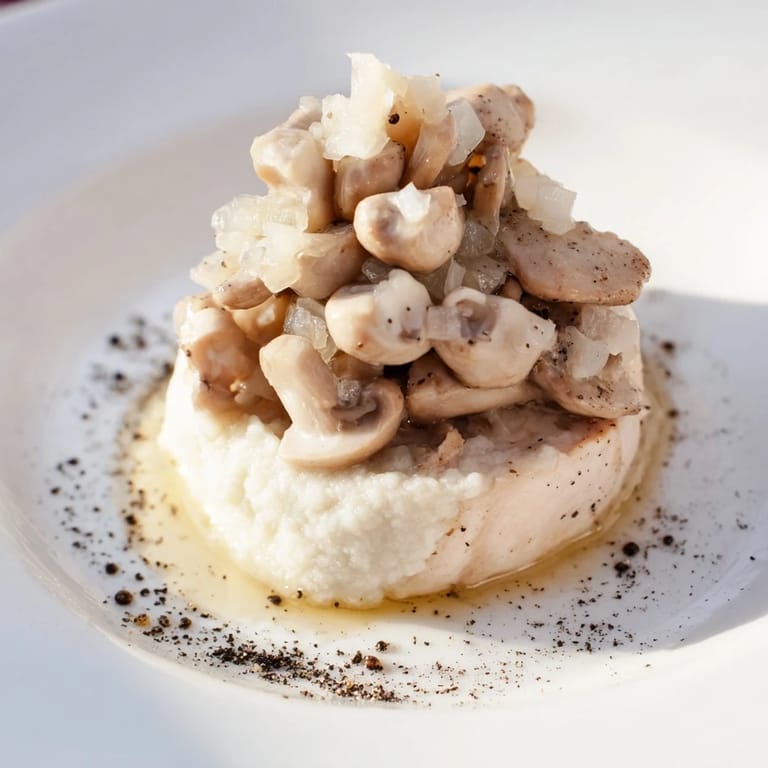
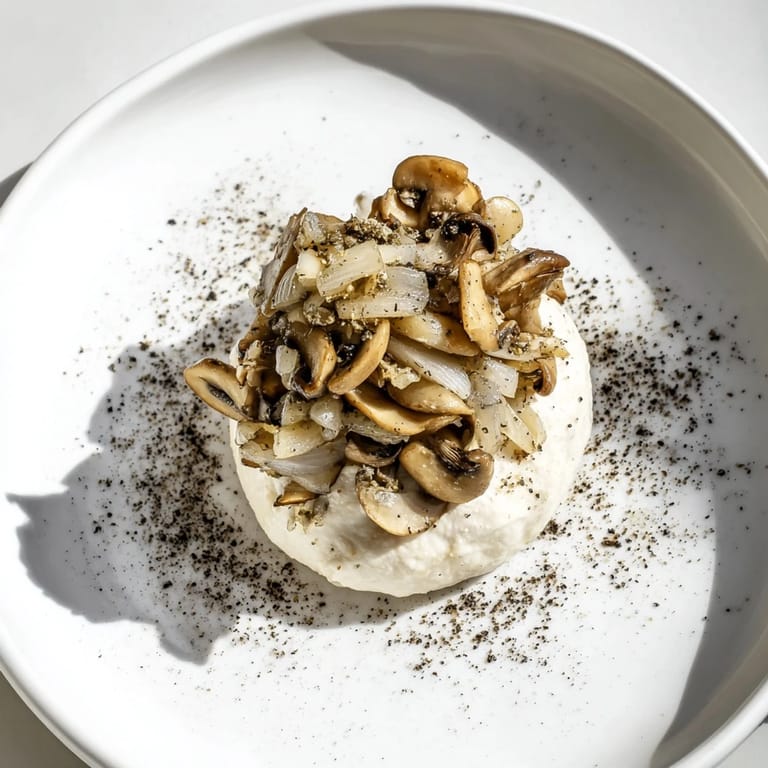
- Spoon the warm purée in the center, arrange the chicken on top, scatter the mushrooms around it, and then—this is the moment—sprinkle the black pepper in an artful arc or scattered pattern to create those mysterious shadows. The pepper should frame the dish, not cover it.
 Save
Save There's something almost ceremonial about finishing this dish, standing back from the plate and watching the black pepper dust settle like a secret being whispered. That moment, right before serving, when you know the visual impact is about to surprise someone—that's when cooking feels less like following instructions and more like creating something that matters.
The Story Behind the Color Palette
I've always been drawn to dishes that use constraint as creativity rather than limitation, and this one does exactly that. By removing bright colors and vibrant contrasts, every element has to earn its place on the plate through texture and flavor alone. The cauliflower isn't just a vegetable; it's the creamy canvas everything else rests on. The mushrooms aren't decoration; they're the subtle earthiness that keeps the chicken from feeling lonely. Even the absence of color becomes a statement.
Playing with Variations
The beauty of this dish is how it invites gentle experimentation without losing its elegant soul. I've tried adding a whisper of white truffle oil to the purée on special occasions, and I've swapped the cream cheese for mascarpone when I wanted something slightly richer. For a vegetarian version, thick slices of roasted celeriac or silken tofu poached in vegetable broth work beautifully, though they cook faster so watch your timing.
The Finishing Touches That Matter
The black pepper isn't just flavor; it's architecture. Cracking it fresh by hand right before plating ensures the pieces are irregular and dramatic, catching light differently depending on how they land on the plate. This is where patience pays off—take a breath, think about where the shadows should fall, and place them with intention rather than a careless shake from a pepper mill.
- If you want to infuse your poaching broth with subtle aroma, crush a garlic clove or slip in a bay leaf, but fish it out before adding the chicken so the liquid stays clear and pale.
- Pair this with a crisp Sauvignon Blanc or a dry Riesling; the acidity cuts through the cream and echoes the quiet sophistication on the plate.
- Serve immediately while everything is warm and the pepper shadows are still perfectly visible and sharp.
 Save
Save This dish lives in the space between comfort and theater, between what feels good to eat and what feels good to create. Every time I make it, I'm reminded that simplicity and visual boldness aren't opposites—they're partners.
Recipe FAQs
- → How do I ensure the chicken stays tender when poaching?
Poach the chicken gently in simmering broth and avoid boiling. Keep the heat low and cook just until done, about 12–15 minutes. Removing the chicken promptly preserves moisture and tenderness.
- → What makes the cauliflower purée creamy and smooth?
Adding heavy cream, butter, and cream cheese to the cooked cauliflower before blending creates a rich and silky purée with a luxurious texture.
- → Why are the cracked black pepper shadows added around the dish?
The freshly cracked black pepper sprinkled around the plate creates a dramatic visual effect, adding mystery and depth without overwhelming flavors.
- → Can I substitute chicken for a vegetarian option?
Yes, thick slices of roasted celeriac or tofu poached in vegetable broth make excellent alternatives, maintaining the dish’s texture and color balance.
- → What is the best way to sauté the mushrooms for this dish?
Sauté sliced white mushrooms with finely chopped onion and garlic in olive oil until soft and lightly golden but still pale to preserve the dish’s all-white appearance.