 Save
Save The first time I made this salad, I was standing at a farmers market in late winter, holding a blood orange in each hand, mesmerized by how the afternoon light glowed through their crimson skin. The vendor mentioned she'd paired them with halloumi once, and something about that unlikely combination stuck with me. I went home, rummaged through my pantry for sumac and pomegranate molasses, and by evening I had this golden, tangy, impossibly vibrant salad that felt like spring had arrived three months early.
I served this to my sister on a Tuesday night when she was stressed about work, and she ate three helpings without saying much of anything until the bowl was nearly empty. Then she just looked up and said the blood oranges tasted like someone had bottled happiness. That's when I realized this wasn't just a salad—it was the kind of dish that quietly lifts the mood of a whole table.
Ingredients
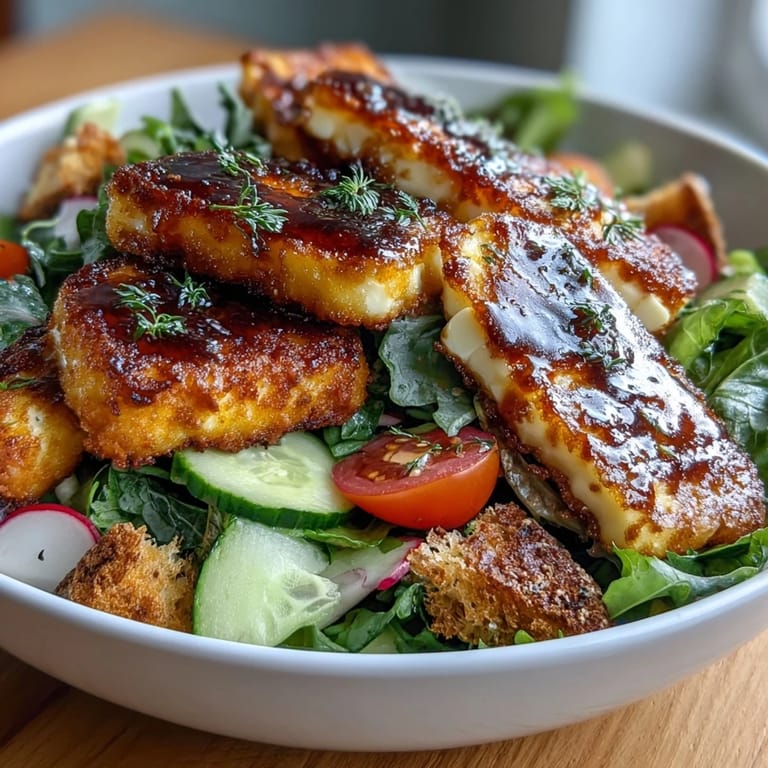
- Halloumi cheese, 200 g sliced into 1 cm pieces: This is the dish's backbone, and the thickness matters because thin slices will shrivel and tough slices won't get that beautiful golden crust; seek out a block you can slice yourself rather than pre-packaged.
- Blood oranges, 2 peeled and segmented: Their deep crimson juice and slight tartness beat regular oranges in every way, but if you can't find them, pink grapefruit or even pomelo will give you that jewel-toned moment.
- Mixed salad greens, 150 g such as romaine, arugula, parsley, mint: Don't skip the herbs; they're what transform this from a basic salad into something with real personality and freshness.
- Cucumber, 1 small diced: English cucumbers have fewer seeds and a more delicate flavor, which keeps the salad from becoming watery.
- Cherry tomatoes, 8 halved: Choose tomatoes that still smell like tomato; pale winter ones will disappoint you.
- Red onion, ½ small thinly sliced: A brief soak in ice water mellows the sharpness if you find raw onion too aggressive.
- Radishes, 2 thinly sliced: They add a peppery crunch that nobody expects but everyone appreciates once they taste it.
- Sourdough bread, 2 thick slices cut into cubes: Day-old bread crisps better than fresh, so plan ahead if you can.
- Olive oil, 5 tbsp total (2 for croutons, 3 for dressing): The quality of your oil matters more here than in any other recipe I make; use something you'd actually want to drink.
- Sea salt, pinch plus ¼ tsp: The texture of sea salt matters for finishing; it dissolves differently than table salt.
- Lemon juice, 1½ tbsp fresh squeezed: Bottled juice will make the dressing taste tired; invest two minutes in squeezing.
- Pomegranate molasses, 1 tbsp: This is the secret that makes people ask what you did differently; it's tart and complex in a way lemon juice alone can never be.
- Sumac, 1 tsp: It adds a tangy, slightly floral note that tastes like the Middle East; don't skip it or substitute it.
- Ground black pepper, ¼ tsp: Freshly cracked is noticeably better.
Tired of Takeout? 🥡
Get 10 meals you can make faster than delivery arrives. Seriously.
One email. No spam. Unsubscribe anytime.
Instructions
- Toast your croutons until they're golden and impossible to resist:
- Preheat the oven to 200°C and toss your sourdough cubes in olive oil and sea salt, spreading them across a baking tray. Watch them bake for 8–10 minutes; you'll know they're ready when they smell like warm bread and look crispy at the edges, and don't let them sit longer than a minute after coming out because they'll continue crisping as they cool.
- Fry the halloumi until it's golden and the edges start to blister:
- Heat a non-stick skillet over medium heat and fry each piece of halloumi for 2–3 minutes per side until you see that beautiful golden-brown crust forming. The sound of it sizzling is oddly satisfying, and you'll want to leave them alone once they're in the pan; resist the urge to flip too early.
- Assemble your greens and vegetables in a large bowl:
- Combine your mixed greens, diced cucumber, halved cherry tomatoes, sliced red onion, sliced radishes, and blood orange segments in whatever salad bowl makes you happiest. This is where you can taste as you go, adjusting quantities based on what you have and what you love.
- Whisk together your dressing with intention:
- In a small bowl, whisk together the olive oil, lemon juice, pomegranate molasses, sumac, black pepper, and sea salt until the mixture emulsifies slightly and smells like something from a Mediterranean market. This should take about a minute of whisking, and you'll know it's right when it tastes balanced—not too sharp, not too mellow.
- Bring everything together at the last possible moment:
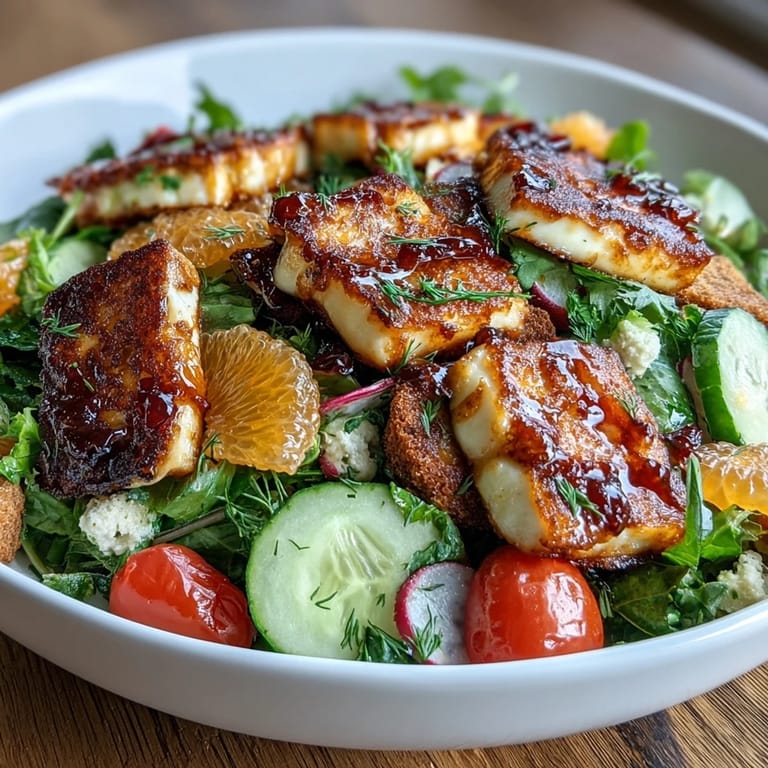
- Add the warm fried halloumi and crispy croutons to the salad bowl, then drizzle with your dressing and toss gently so nothing gets bruised. The warmth of the halloumi will slightly soften the greens in the most perfect way, which is exactly what you want.
- Serve while the halloumi is still warm and the croutons are still crisp:
- This salad is a moment in time, not something that improves with sitting around, so plate it up immediately and eat right away while everything is at its best.
 Save
Save There's a moment during the cooking of this salad when all the components are ready at once—the croutons are still warm, the halloumi is golden, the dressing is whisked, and the greens are cool and waiting. Everything comes together in that single moment, and it feels like choreography. That's when I understood why some recipes work and others don't; it's not always about complexity, sometimes it's about timing.
The Magic of Contrasts
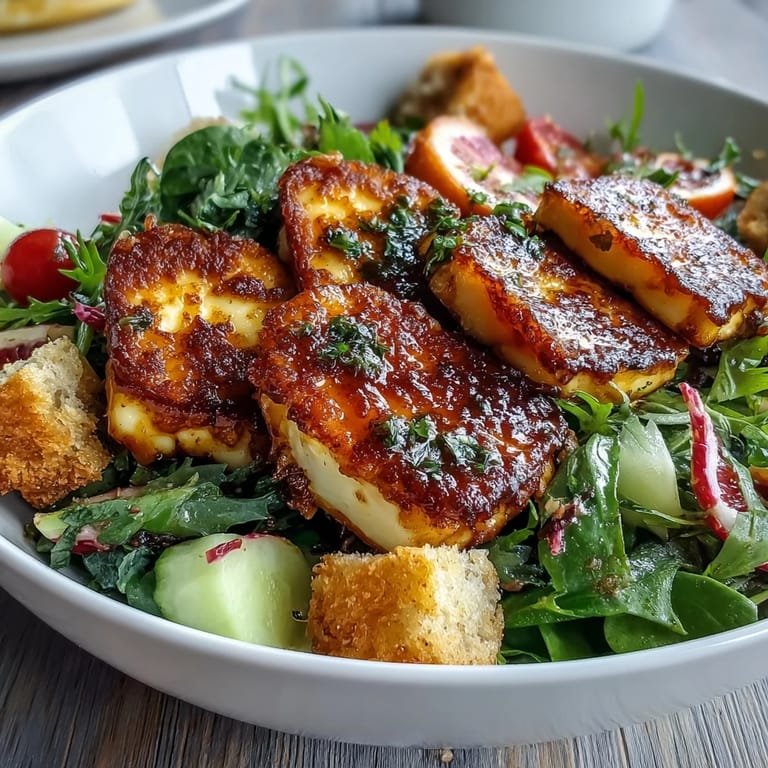
This salad works because it's built on contradiction—warm meets cold, salty meets sweet and tangy, crispy meets tender. I learned this lesson by accident when I once tried to make a version with all soft components, thinking it would be refined, and it was boring. The crunch of the croutons and radishes against the silky halloumi and juicy oranges is what makes your mouth wake up.
Why Pomegranate Molasses Changes Everything
The first time I tasted pomegranate molasses in a dressing, I couldn't identify what made it so compelling—it's tart like lemon but deeper, with a subtle fruitiness that makes people pause mid-bite. It's not an exotic ingredient you can't find; most well-stocked supermarkets carry it near the vinegars and oils, and one bottle lasts for months because you only use a little. Once you've cooked with it, you'll find excuses to add it to vinaigrettes, grain bowls, and roasted vegetables.
How to Make This Feel Like Your Own
The beauty of fattoush is that it's meant to be flexible and seasonal, using whatever vegetables look good at the market that day. I've made versions with pomegranate seeds instead of blood orange, added roasted pistachios for extra richness, and once used thick-cut sourdough croutons because I had leftover bread. The framework stays the same, but the details shift with what inspires you.
- Toasted pistachios or walnuts add a nutty depth that pairs beautifully with the citrus and halloumi.
- Pomegranate seeds make a gorgeous garnish and add pops of tartness throughout the salad.
- If you can't find blood oranges, regular oranges or pink grapefruit will still give you that bright, juicy element the dish needs.
 Save
Save This is the kind of salad that makes you feel like a generous cook and a skilled one, even though it's genuinely simple. Serve it when you want to impress without spending the whole day in the kitchen.
Recipe FAQs
- → What makes fattoush different from other salads?
Fattoush is a Middle Eastern salad distinguished by its use of crispy fried or toasted bread pieces mixed with fresh vegetables and a tangy sumac dressing. The combination of warm halloumi and citrus creates unique flavor layers.
- → Can I prepare the components ahead of time?
You can prepare the dressing, chop vegetables, and segment oranges up to 4 hours ahead. Store croutons in an airtight container and fry halloumi just before serving to maintain its crispy texture.
- → What can I use instead of blood oranges?
Regular oranges, pink grapefruit, or even segmented mandarins work beautifully as substitutes. The key is maintaining that citrus element that balances the salty halloumi.
- → How do I prevent halloumi from becoming rubbery?
Fry halloumi quickly over medium-high heat for 2-3 minutes per side until golden. Avoid overcrowding the pan and serve immediately while still warm for the best texture.
- → Is this salad suitable for gluten-free diets?
While traditional fattoush includes bread, you can make it gluten-free by using gluten-free bread for croutons or substituting with toasted nuts like almonds or pistachios for crunch.
- → What pairs well with this fattoush?
This salad complements grilled meats, roasted vegetables, or stands alone as a light meal. A crisp white wine like Sauvignon Blanc or a dry rosé enhances the citrus notes beautifully.