 Save
Save The scent of gochujang bubbling away on a rainy Tuesday afternoon transformed my tiny apartment into a Seoul street corner. I first tried tteokbokki during my college years when a Korean classmate invited our study group over during finals week. The memory of those chewy rice cakes coated in that vibrant red sauce stayed with me so vividly that I spent weeks perfecting my own version, asking every Korean friend for their family secrets.
Last winter, I made a huge pot of tteokbokki when my sister visited after three years abroad. We stood over the pot, stealing pieces straight from the bubbling sauce, laughing as we tried not to burn our tongues. The steam fogged up the kitchen windows, creating this cozy little world where all that mattered was good food and catching up.
Ingredients
- Korean rice cakes: These chewy cylinders might look unassuming, but theyre the soul of this dish, and I discovered that soaking them beforehand makes all the difference in achieving that perfect tender-yet-chewy texture.
- Gochujang: This fermented chili paste is non-negotiable for authentic tteokbokki, providing a deep, complex heat that basic hot sauce could never match.
- Dried kelp: I once skipped this thinking it was optional, but that umami foundation it creates is what gives the sauce its mysterious depth that keeps everyone coming back for more.
- Green onions: Not just a garnish but a crucial flavor component, the sharp freshness cuts through the richness of the sauce.
- Honey or corn syrup: The slight sweetness balances the heat and helps create that glossy sauce that clings to every rice cake.
Tired of Takeout? 🥡
Get 10 meals you can make faster than delivery arrives. Seriously.
One email. No spam. Unsubscribe anytime.
Instructions
- Prepare the rice cakes:
- Soak those dense little cylinders in warm water for about 10 minutes if theyre hard or refrigerated. This step changed everything for me, as it ensures they cook evenly and develop that dreamy chewy texture.
- Create your flavor base:
- Combine water, kelp, and anchovies in a medium pot and bring to a gentle simmer for 10 minutes. The aroma that fills your kitchen will tell you youre building something special.
- Build the sauce:
- Remove the kelp and anchovies, then add gochujang, gochugaru, soy sauce, sugar, honey, and minced garlic to the broth. Stir until everything dissolves into a smooth, vibrant red sauce that will coat the back of your spoon.
- Cook the rice cakes:
- Add rice cakes, onion, and cabbage to the pot and bring to a gentle boil. I love watching the sauce bubble around the rice cakes as they slowly transform and absorb the flavors.
- Simmer to perfection:
- Let everything simmer for 10-15 minutes, stirring occasionally to prevent sticking. Youll know its ready when the sauce has thickened and the rice cakes have that signature bouncy chew when you test one.
- Add finishing touches:
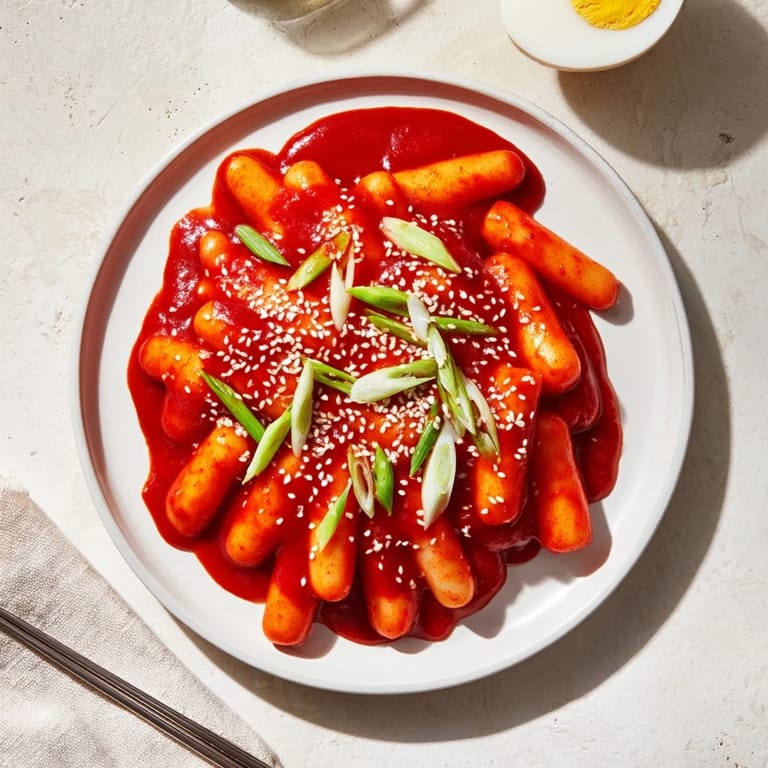
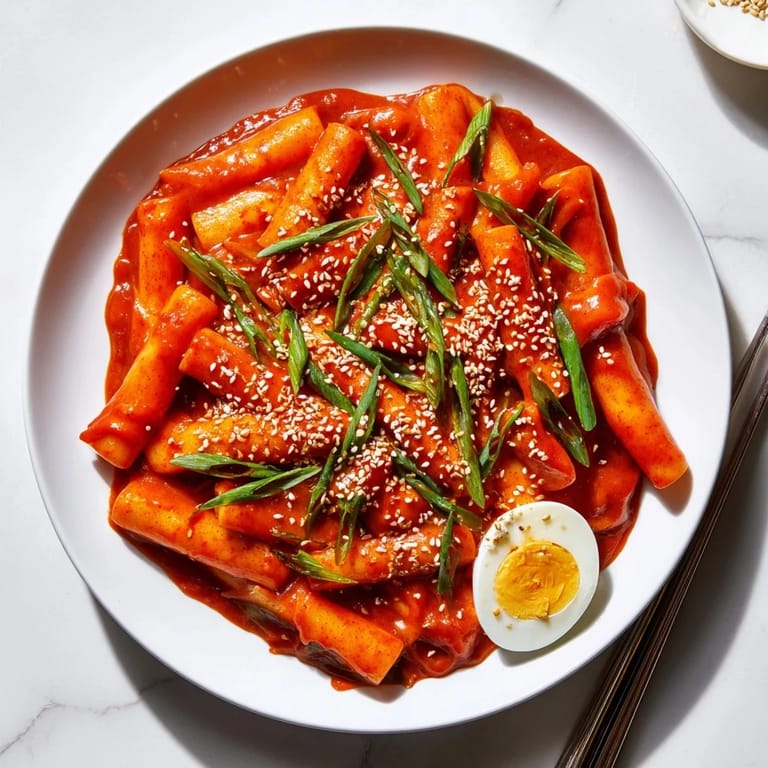
- Toss in green onions and boiled eggs in the last two minutes. This late addition keeps the onions bright and gives the eggs just enough time to warm through without overcooking.
- Serve with style:
- Transfer to a serving dish and sprinkle with sesame seeds. The contrast of the dark seeds against the glossy red sauce always makes me pause to appreciate just how beautiful this humble street food can be.
 Save
Save Last summer, I brought tteokbokki to a potluck where most guests had never tried Korean food. Watching their expressions change from curious hesitation to wide-eyed delight made my heart swell. By evenings end, my usually pristine white serving dish was practically licked clean, and three people had cornered me for the recipe.
Making It Your Own
My vegetarian friend taught me that kombu broth alone creates a fantastic base without anchovies. The key is letting it steep a few minutes longer to extract maximum umami. I was skeptical at first but couldnt tell the difference in a side-by-side taste test, which opened up serving this dish to more of my friends with different dietary needs.
Beyond Basic Tteokbokki
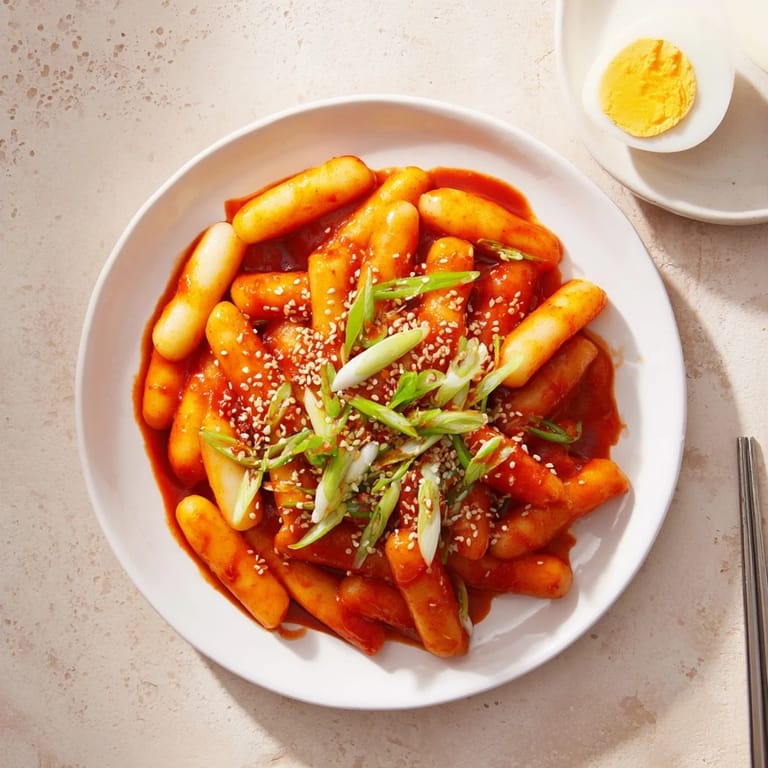
Adding fish cakes transformed my tteokbokki experience completely. These thin, bouncy slices soak up the sauce while adding their own subtle seafood flavor. The first time I included them, I watched my brother-in-law, typically not one for second helpings, quietly return to the pot three times.
Serving Suggestions
Tteokbokki lives its best life with something pickled alongside it, creating that perfect flavor balance that keeps your palate excited. The contrast between spicy, saucy rice cakes and something cold and tangy is what turns this dish from delicious to unforgettable.
- Serve with pickled radish cubes for that traditional Korean pairing that cuts through the richness.
- A simple cucumber salad dressed with rice vinegar makes a refreshing counterpoint to the heat.
- Keep napkins handy, as that beautiful red sauce has a tendency to find its way onto chins and fingertips.
 Save
Save Tteokbokki isnt just a recipe in my collection, its become my go-to comfort on cold evenings and my secret weapon for introducing friends to Korean flavors. Each pot carries memories of laughter around my table and the promise of new stories to come.
Recipe FAQs
- → Can I use frozen rice cakes for tteokbokki?
Yes, frozen rice cakes work perfectly. Simply soak them in warm water for 10-15 minutes until they soften before cooking. This ensures they become tender and chewy rather than mushy.
- → How can I adjust the spice level?
Control the heat by adjusting the gochugaru amount. Start with 1 tablespoon for mild spice, or increase to 2 tablespoons for more heat. The gochujang provides base flavor while gochugaru adds the kick.
- → What can I add to make it more filling?
Enhance the dish with fish cakes, boiled eggs, dumplings, or vegetables like cabbage and carrots. Many enjoy adding instant ramen noodles or melted cheese for a fusion twist.
- → How do I store leftover tteokbokki?
Store in an airtight container in the refrigerator for up to 3 days. The rice cakes will harden when cold, so reheat gently with a splash of water to restore their chewy texture.
- → Is tteokbokki gluten-free?
Traditional tteokbokki can be made gluten-free by using gluten-free soy sauce and verifying that your gochujang contains no wheat. The rice cakes themselves are naturally gluten-free.
- → Can I make this without anchovies for a vegetarian version?
Absolutely. Simply make the broth with kelp only, or substitute with vegetable stock. The gochujang sauce provides robust flavor that stands well on its own without fish-based broth.