 Save
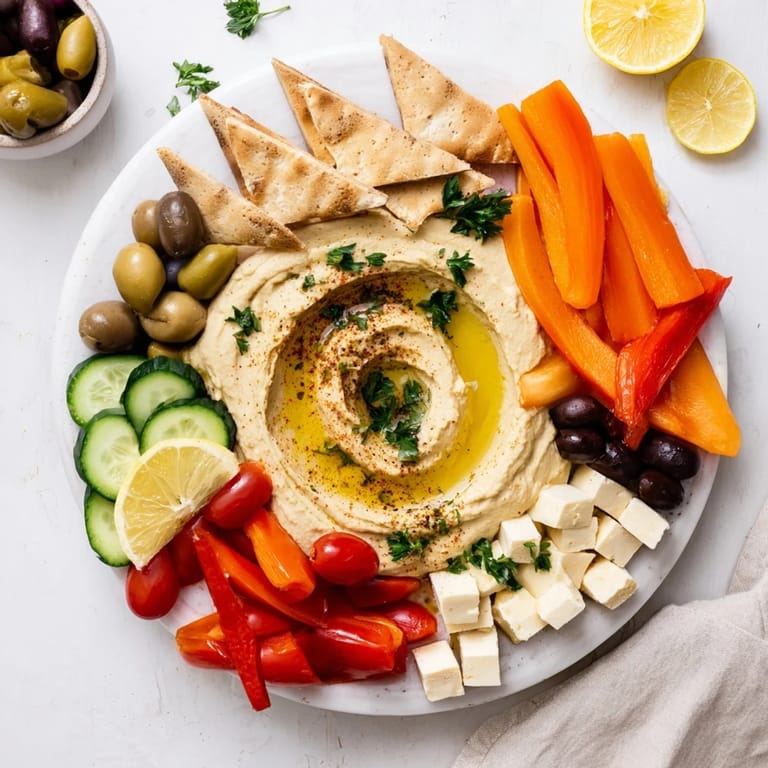
Save The mezze platter was my salvation during a particularly chaotic dinner party last summer. With guests arriving in twenty minutes and my planned main course ruined, I frantically assembled this colorful spread using pantry staples and fresh vegetables from my garden. The room fell silent as everyone gathered around the vibrant arrangement, fingers reaching for pita triangles to scoop creamy hummus. What began as a desperate save became my most requested entertaining trick.
Last month, I brought this mezze platter to a potluck where most contributions were heavy casseroles and rich desserts. My simple arrangement of vibrant vegetables, creamy hummus, briny olives, and warm pita became an unexpected oasis amid the indulgence. Several people took photos before diving in, and an elderly gentleman told me it reminded him of meals from his childhood in Lebanon, his eyes crinkling with pleasure as he selected a perfect olive.
Ingredients
- Chickpeas: I discovered the dramatic difference between canned and home-cooked chickpeas when making hummus warm them slightly before blending for the silkiest texture imaginable.
- Tahini: Splurge on high-quality tahini without additives the pure stuff might separate but produces an infinitely more complex flavor profile.
- Mixed Olives: I combine briny Kalamata with buttery green varieties for a perfect balance of intensity across the platter.
- Feta: Look for cheese packed in brine rather than pre-crumbled for a creamier texture and more pronounced flavor.
- Fresh Vegetables: The contrast between the soft dips and crunchy vegetables creates that perfect textural balance your guests will instinctively crave.
Tired of Takeout? 🥡
Get 10 meals you can make faster than delivery arrives. Seriously.
One email. No spam. Unsubscribe anytime.
Instructions
- Prepare the silky hummus:
- In your food processor, combine chickpeas, tahini, freshly squeezed lemon juice, olive oil, garlic, cumin, and salt until everything begins to come together. Add cold water tablespoon by tablespoon, watching the mixture transform from dense to impossibly creamy.
- Create your centerpiece:
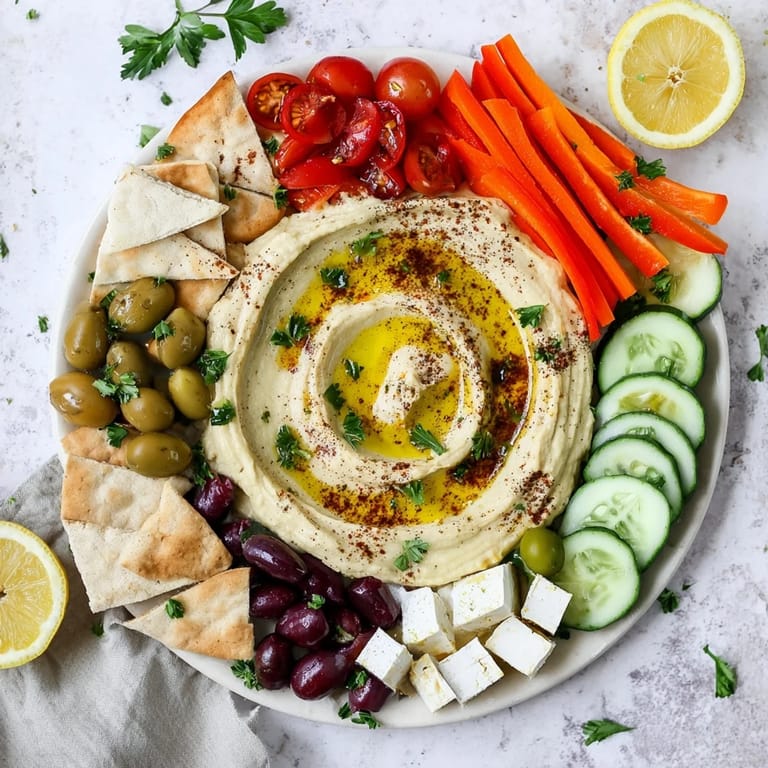
- Spread the hummus on your serving platter with the back of a spoon, creating gentle swoops and valleys that will catch puddles of olive oil. This small detail transforms ordinary hummus into something that looks professionally prepared.
- Build your color palette:
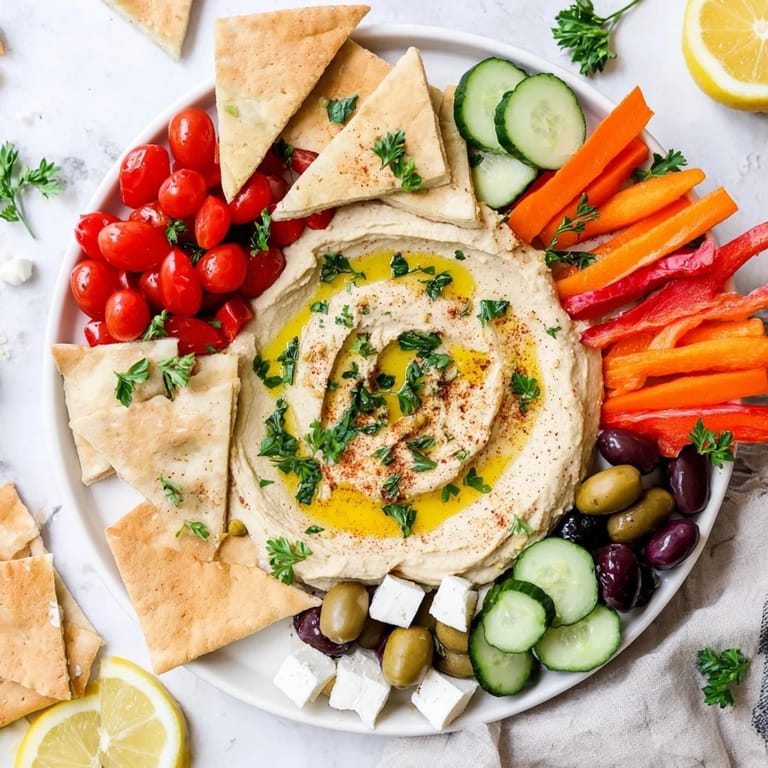
- Arrange your vegetables, olives, and cheese in small clusters around the hummus, alternating colors and textures for visual impact. Think of painting with food each component adding to the canvas.
- Warm the pita:
- Just before serving, warm your pita in the oven or on a dry skillet until it puffs slightly and develops light brown spots. The contrast between warm bread and cool components elevates the entire experience.
- Add final flourishes:
- Drizzle everything with your best olive oil, then sprinkle with sumac or paprika for color and a lemon-peppery flavor boost. Fresh herbs scattered across the platter bring everything to life with their bright green punctuation.
 Save
Save My neighbor brought her ten-year-old daughter over for lunch last weekend, a notoriously picky eater according to her apologetic mother. I set out this mezze platter without comment, and watched as the girl hesitantly tried a carrot dipped in hummus, then a cucumber, then asked if she could try the funny cheese. By meals end, she had tasted everything on the platter, proving that presentation and the freedom to choose can transform even the most selective appetites.
Make-Ahead Strategies
The beauty of a mezze platter lies in its flexibility, not just in ingredients but in timing. I often prepare the hummus up to three days ahead, storing it in an airtight container with a thin layer of olive oil on top to prevent drying. Vegetables can be sliced the morning of your gathering, wrapped in damp paper towels inside airtight containers. Even the platter itself can be partially assembled a few hours ahead and refrigerated, though I always add the pita, final drizzle of oil, and delicate herbs just before serving.
Seasonal Adaptations
In winter months when garden produce isnt at its peak, I pivot to roasted vegetables like sweet beets, caramelized carrots, or golden butternut squash wedges, served at room temperature alongside the traditional components. Summer platters might feature juicy heirloom tomatoes and Persian cucumbers still warm from the garden. Autumn calls for pomegranate arils scattered like rubies across the arrangement, while spring welcomes tender asparagus spears and radishes with their peppery bite. The consistent elements hummus, bread, olives, cheese anchor the platter while seasonal additions keep it perpetually fresh.
Expanding Your Mezze Horizons
Once youve mastered the basic mezze platter, consider it your canvas for culinary exploration beyond the Mediterranean coastline. My version has evolved over years of experimenting with global influences that complement the core components without overshadowing them.
- Add baba ganoush alongside your hummus for a smoky counterpoint that will convert even eggplant skeptics.
- Include dolmas or small portions of tabbouleh in decorative bowls nestled among the vegetable arrangements for texture and flavor variety.
- Offer a small dish of za'atar mixed with olive oil for bread dipping this aromatic herb blend transports your guests directly to the souks of Damascus.
 Save
Save This mezze platter has saved countless gatherings and turned ordinary afternoons into memorable occasions at my table. Its generosity of spirit more than its culinary precision makes it a recipe worth sharing.
Recipe FAQs
- → Can I make the hummus ahead of time?
Yes, hummus can be prepared up to 3 days in advance and stored in an airtight container in the refrigerator. Bring to room temperature and drizzle with fresh olive oil before serving.
- → What can I substitute for tahini?
If tahini is unavailable, you can use natural peanut butter or cashew butter, though the flavor will differ slightly. For a nut-free option, use extra olive oil and a bit of Greek yogurt.
- → How do I warm the pita bread?
Wrap pita bread in foil and heat in a 350°F oven for 5-7 minutes, or warm individually in a dry skillet over medium heat for 30 seconds per side until soft and slightly puffed.
- → What other items can I add to the platter?
Consider adding stuffed grape leaves, falafel, tabbouleh, baba ganoush, or marinated artichoke hearts. Fresh herbs, pickled vegetables, and toasted nuts also make excellent additions.
- → How should I store leftovers?
Store hummus and cut vegetables separately in airtight containers in the refrigerator for up to 3 days. Keep feta in its brine or wrapped in damp paper towels. Store pita in a sealed bag at room temperature.
- → Is this suitable for vegans?
The platter is vegetarian but not vegan due to the feta cheese. Simply omit the cheese or replace it with vegan alternatives to make it fully plant-based.