 Save
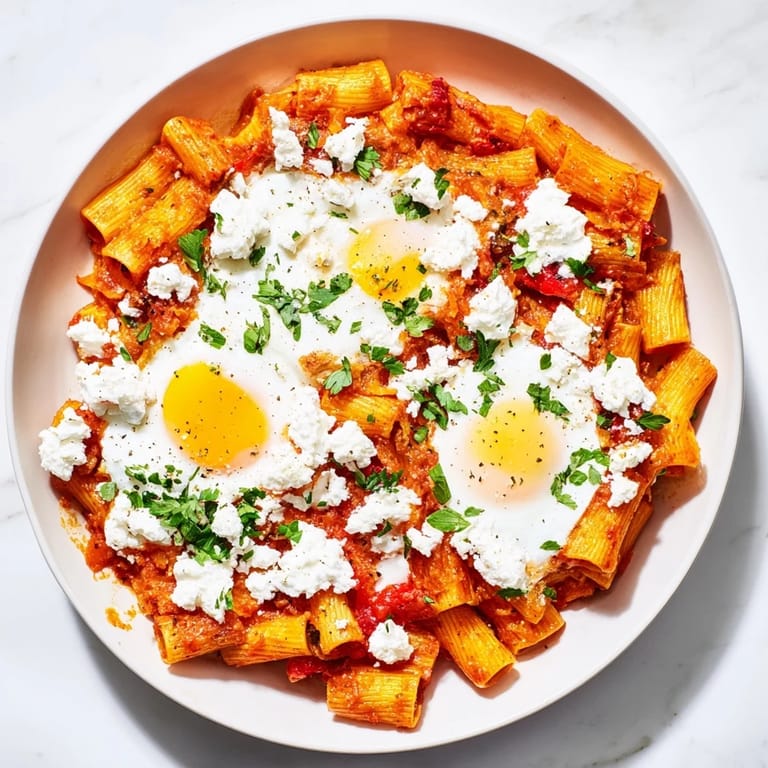
Save There's something about the smell of cumin and paprika hitting hot oil that makes you stop whatever you're doing. I was standing in my kitchen on a Tuesday evening, halfway through assembling what was supposed to be a simple pasta bake, when I realized I had all the makings of shakshuka in my pantry. That moment of improvisation—mixing two different food traditions in one dish—felt like discovering something I'd been craving without knowing it. The result was this warm, spiced, deeply satisfying baked pasta that somehow tastes both familiar and exotic at the same time.
I made this for my neighbor one rainy Saturday, and she sat at my kitchen counter watching the eggs bake, asking questions about every spice in the pan. By the time we pulled it from the oven, she'd already asked for the recipe three times. That's when I realized this dish has a way of making people lean in—the aroma alone gets them curious, and the flavors keep them talking.
Ingredients
- Short pasta (penne, rigatoni, or fusilli): 300g of pasta gives you enough substance without overdoing it; cook it just to al dente because it'll finish cooking in the oven and you don't want mush.
- Medium onion and red bell pepper: These soften into the sauce and add sweetness that balances the spices—don't skip the sauté step or they'll stay too firm.
- Garlic: Three cloves, minced fine; garlic burnt in oil tastes bitter, so add it after the vegetables have softened.
- Olive oil: Two tablespoons for sautéing; use something you actually like to taste since it's a base flavor here.
- Canned diced tomatoes: A 400g can is the backbone; San Marzano varieties tend to be sweeter and more balanced.
- Tomato paste: Two tablespoons concentrated flavor; this is what gives the sauce depth and that slightly caramelized taste.
- Ground cumin, smoked paprika, ground coriander: These three spices are the signature—they're warm, earthy, and transformative in combination.
- Cayenne pepper: Optional but worth a pinch if you like gentle heat; it doesn't overpower but adds complexity.
- Sugar: One teaspoon cuts the acidity of the tomatoes and rounds out the flavors.
- Mozzarella or feta: 100g is optional but recommended; feta gives tanginess, mozzarella adds creamy melt—I often use both.
- Large eggs: Four eggs, one per serving; the runny yolk is the whole point, so don't overbake them.
- Fresh parsley or cilantro: Two tablespoons chopped; add this right before serving so the brightness cuts through the richness.
Tired of Takeout? 🥡
Get 10 meals you can make faster than delivery arrives. Seriously.
One email. No spam. Unsubscribe anytime.
Instructions
- Get your oven ready:
- Preheat to 200°C (400°F) while you prep everything else. An oven-safe skillet will save you a step later; if you don't have one, a regular baking dish works just fine.
- Cook the pasta:
- Boil it in salted water until it's just barely tender—al dente matters here because the oven will cook it further and you're aiming for that slight resistance when you bite into it.
- Build the sauce base:
- Heat olive oil in your skillet, add onion and bell pepper, and let them soften for about five minutes until they're translucent. Stir occasionally so they cook evenly without browning.
- Bloom the spices:
- Add minced garlic along with the cumin, paprika, coriander, and cayenne; cook for about one minute until the kitchen smells incredible and the spices lose their raw edge. This blooming step is what makes these spices sing instead of taste dusty.
- Develop the sauce:
- Stir in tomato paste and let it sit in the heat for a moment before adding the canned tomatoes, sugar, salt, and pepper. Simmer for eight to ten minutes; you'll notice the sauce thickening slightly and the colors deepening, which means the tomato is cooking down and concentrating.
- Combine pasta and sauce:
- Toss the drained pasta into the sauce along with half the cheese if you're using it. Stir until every piece of pasta is coated and the mixture looks cohesive.
- Make the egg wells:
- Spread the pasta mixture evenly in your skillet or transfer it to a baking dish, then use the back of a spoon to create four small indentations where you'll nestle the eggs. These wells keep the eggs from sliding around.
- Add the eggs:
- Crack one egg into each well, sprinkle with remaining cheese if using, and transfer the whole thing to the oven.
- Bake until set:
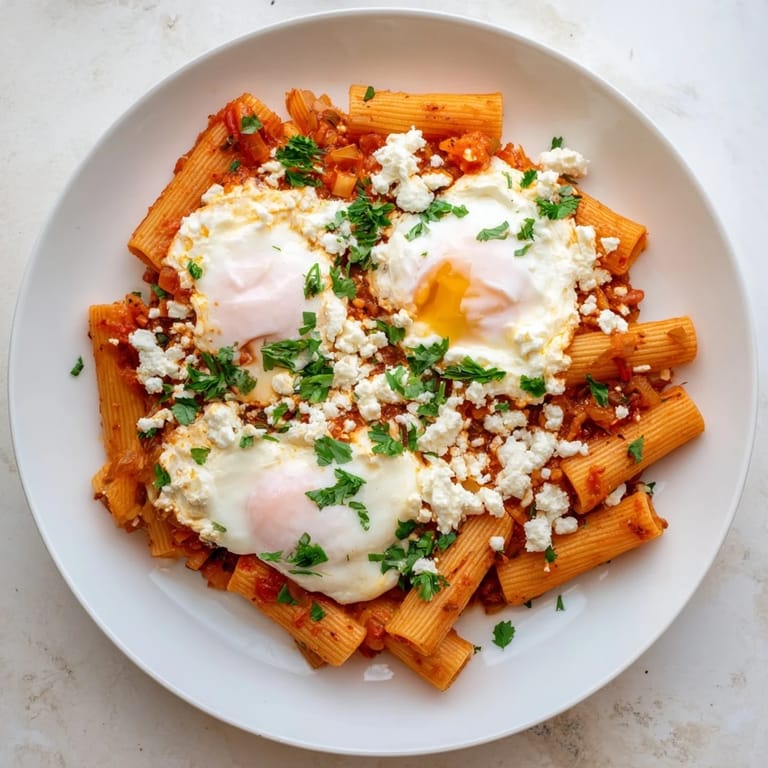
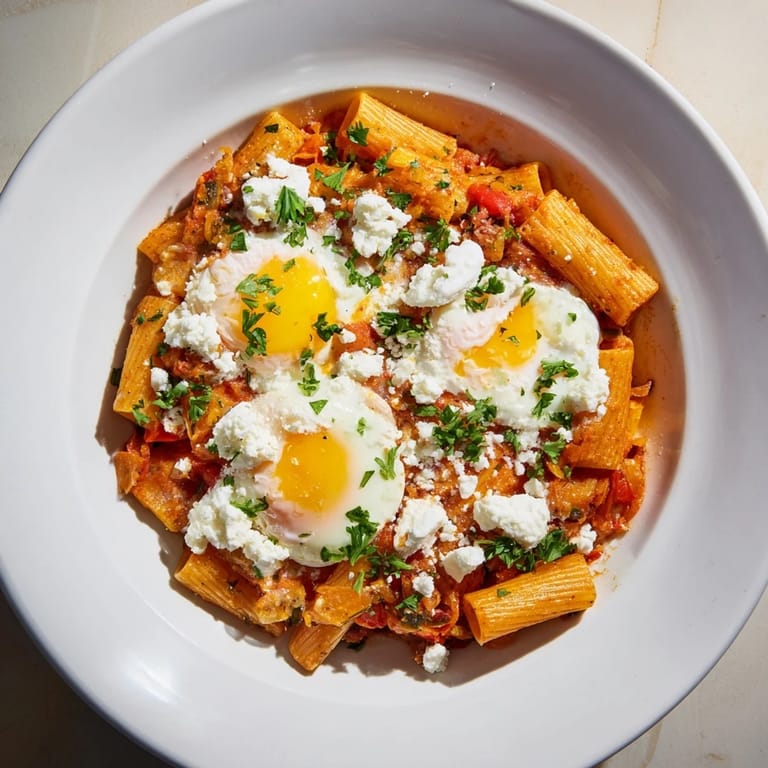
- Bake uncovered for fifteen to eighteen minutes; the egg whites should be opaque and set but the yolks should still jiggle slightly when you gently shake the pan. This is the hardest part—stopping yourself from overbaking because those runny yolks are essential.
- Finish and serve:
- Remove from the oven, scatter fresh herbs over the top, and serve directly from the skillet if you can—it keeps everything hot and makes it feel special.
 Save
Save I learned the real magic of this dish one morning when I had leftovers, reheated them gently in a low oven, and realized they tasted almost better the next day—the spices had deepened, the flavors melded together. That's when this stopped being just a recipe and became something I'd actually make on purpose, not just when I had pasta and eggs lying around.
Why the Spice Combination Works
Cumin brings earthiness, paprika adds a gentle smokiness and color, coriander rounds everything out with a subtle sweetness, and cayenne whispers heat in the background. Together, they create something that tastes intentional and warm, not like you're just dumping spice into tomato sauce. The tomato paste is equally important—it's what gives the sauce body and a slight caramelized depth that makes people ask if you simmered it for hours. You didn't, but the paste did the heavy lifting for you.
The Egg Question
Some people make shakshuka-pasta bakes and hard-cook the eggs, which defeats the whole purpose. The runny yolk is the moment—it breaks, mingles with the hot sauce, and transforms each bite into something rich and silky. If you're nervous about undercooked eggs, buy from a source you trust and know are fresh, or use pasteurized eggs if that's a concern for you.
Customizations and Variations
This dish is remarkably flexible because the spiced tomato base is strong enough to carry other flavors. I've stirred in fresh spinach just before baking, added chickpeas for extra protein and texture, even crumbled in some spiced lamb once when I had leftovers. Serve it with crusty bread to soak up the sauce, or add a simple green salad on the side to cut through the richness.
- Spinach or kale wilts beautifully into the hot sauce if you add it a minute before the eggs.
- Use half feta and half mozzarella for tanginess balanced with creaminess.
- Crusty bread isn't optional—it's how you capture every bit of sauce on your plate.
 Save
Save This is the kind of recipe that feels like a small gift you give yourself on a regular Tuesday—nothing fancy, nothing that requires a special trip to the market, just good food that tastes like you put thought into it. Once you make it, you'll understand why it stays on rotation.
Recipe FAQs
- → What pasta types work best for this dish?
Short pasta shapes like penne, rigatoni, or fusilli help hold the sauce well and remain firm after baking.
- → Can I prepare the dish in advance?
You can assemble it ahead and refrigerate before baking, then add eggs and bake freshly to maintain yolk texture.
- → How do I get runny egg yolks after baking?
Bake until whites are set but yolks still jiggle, typically 15–18 minutes at 200°C/400°F.
- → What variations can add extra flavor?
Adding baby spinach or kale before baking enhances nutrition and richness; sprinkle feta or mozzarella for creaminess.
- → Is this dish suitable for vegetarians?
Yes, it contains no meat; omitting eggs and cheese can adapt it for vegan preferences.