 Save
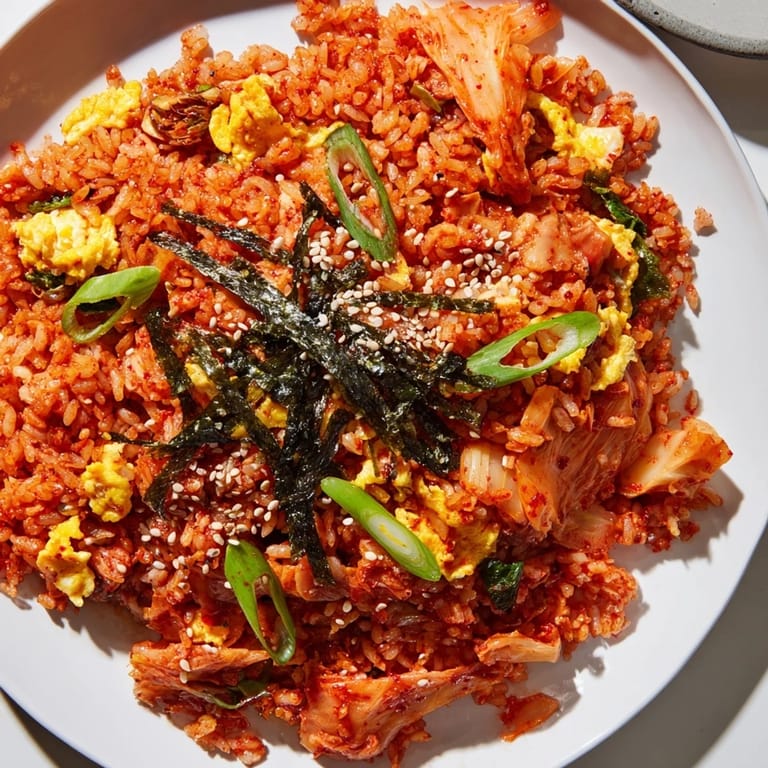
Save The sizzle of the wok on a rainy Tuesday night became my salvation after a particularly exhausting day at work. With nothing but leftover rice and a jar of kimchi in my fridge, I stumbled upon what would become my go-to comfort meal. The pungent aroma of kimchi filled my tiny apartment kitchen, immediately lifting my spirits as the rice crisped at the edges. Something about the combination of tangy fermented cabbage and warm, savory rice felt like exactly what my soul needed.
Last winter, my friend Min visited from Seoul and watched me making my version of kimchi fried rice with an amused expression. She gently took the wooden spoon from my hand and showed me how her grandmother made it, adding that crucial splash of kimchi juice that Id been missing all along. We ate cross-legged on my living room floor, steam rising from our bowls as she told stories of late-night post-study sessions in Korea where this dish was the ultimate fuel.
Ingredients
- Day-old white rice: The slightly dried out texture of refrigerated rice prevents mushiness and helps each grain stay distinct and absorb all the flavors.
- Napa cabbage kimchi: Look for kimchi with some age to it as the increased fermentation brings out deeper, more complex flavors in the final dish.
- Gochujang: This fermented chili paste adds that signature Korean heat and umami depth that really cant be substituted with other hot sauces.
- Sesame oil: Just a small drizzle at the end completely transforms the dish with its nutty aroma, so dont be tempted to skip this finishing touch.
- Kimchi juice: The secret ingredient that adds tanginess and helps the seasonings coat every grain of rice uniformly.
Tired of Takeout? 🥡
Get 10 meals you can make faster than delivery arrives. Seriously.
One email. No spam. Unsubscribe anytime.
Instructions
- Build your flavor base:
- Heat your vegetable oil in a large wok or skillet until it shimmers, then add your diced onion, white parts of green onion, and carrot. Listen for that gentle sizzle as the vegetables release their moisture and begin to soften.
- Wake up the kimchi:
- Add your chopped kimchi to the pan and let it caramelize slightly, noticing how the aroma intensifies and fills your kitchen. This quick stir-fry concentrates the flavors and removes some of the raw bite.
- Create your sauce:
- Stir in the gochujang, soy sauce, and sugar if using, coating the vegetables in this glossy, vibrant mixture. The gochujang should melt into a smooth consistency as it heats.
- Add the protein:
- Push everything to one side of the pan and crack your eggs into the empty space. Scramble them just until they begin to set but still look slightly wet.
- Bring it all together:
- Break up your cold rice with your fingers as you add it to the pan, making sure there are no clumps. Pour that precious kimchi juice over everything and toss until every grain is glossy and coated.
- Final touches:
- Drizzle with sesame oil and fold in the green parts of your green onions and any optional additions. The sesame oil should hit the hot pan and release its nutty aroma immediately.
 Save
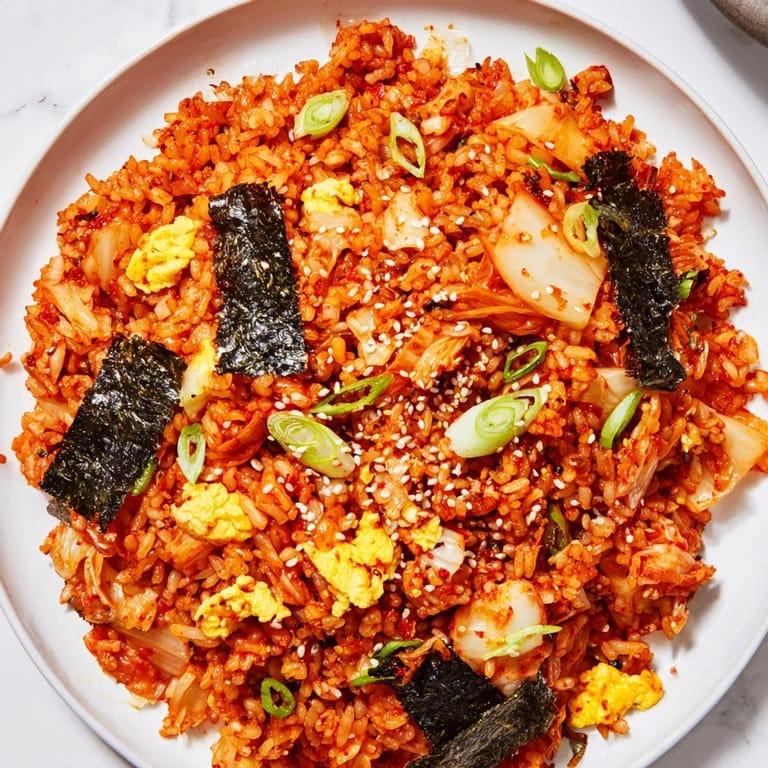
Save During my first year living alone, this kimchi fried rice became more than just dinner, it was a ritual that marked the transition from work to relaxation. Id put on music, pour a small glass of soju or tea, and methodically chop the ingredients while letting go of the days stress. Friends started inviting themselves over on kimchi fried rice nights, and what began as a simple leftover solution evolved into the dish people now request when they visit.
Perfect Rice Selection
After multiple attempts with different rice varieties, Ive discovered that medium-grain white rice hits the sweet spot for this dish. Short-grain can become too sticky while long-grain tends to break and doesnt hold the flavors as well. The ideal scenario is rice thats been refrigerated for at least 8 hours, allowing the grains to firm up and develop the perfect texture once reheated with all our delicious additions.
Customization Ideas
The beauty of kimchi fried rice lies in its adaptability to whatever you have on hand. Ive made versions with cubed firm tofu that soaks up the kimchi juice beautifully, and others with leftover rotisserie chicken that adds another layer of savory goodness. When Im feeling particularly indulgent, I top the finished dish with a fried egg instead of scrambling it in, letting that luscious yolk create a silky sauce when broken over the hot rice.
Serving Suggestions
While this dish stands perfectly well on its own, pairing it with simple banchan (Korean side dishes) elevates the experience to a proper Korean meal. A small dish of quick cucumber kimchi provides cooling crunch, while some lightly steamed greens can balance the richness of the fried rice.
- Serve in a stone bowl to keep it piping hot throughout the meal, especially nice on cold evenings.
- A fried egg with a runny yolk placed on top just before serving turns this into a more substantial meal.
- Keep a bottle of gochujang sauce on the table for those who want to adjust the heat level to their preference.
 Save
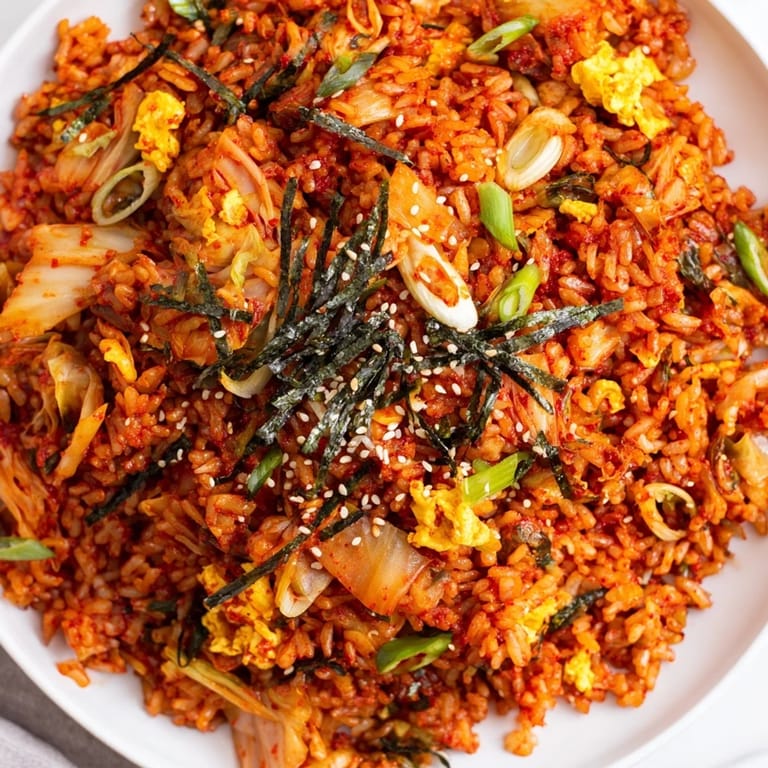
Save This humble bowl of kimchi fried rice has traveled with me through apartments, relationships, and life changes, always providing comfort with its spicy, tangy embrace. Its not just sustenance, but a reminder that sometimes the most satisfying things come from making the most of what you already have.
Recipe FAQs
- → Can I use freshly cooked rice instead of day-old rice?
Day-old rice works best because it's drier and separates easily, preventing mushy fried rice. If using fresh rice, spread it on a baking sheet and refrigerate for 30 minutes to remove excess moisture before cooking.
- → How spicy is this dish and can I adjust the heat level?
The spice level depends on your gochujang amount and kimchi fermentation. Start with 1 tablespoon of gochujang for mild heat, or use up to 3 tablespoons for extra spice. You can also add gochugaru (Korean chili flakes) for more kick.
- → What can I substitute for kimchi juice?
If you don't have enough kimchi juice, substitute with rice vinegar or a splash of water mixed with soy sauce. The juice adds tanginess and helps distribute flavors, so a small amount of acidity is helpful.
- → How do I make this dish vegan?
Omit the eggs and use firm tofu instead, crumbling it into the pan. Ensure your kimchi is vegan (no fish sauce or shrimp paste) and check that your gochujang doesn't contain animal products. Many brands offer vegan versions.
- → Can I meal prep this fried rice?
Yes, this dish stores well in airtight containers for up to 3 days in the refrigerator. Reheat in a skillet over medium heat with a splash of water or in the microwave. The flavors actually deepen after a day, making it excellent for meal prep.
- → What protein options work well in this dish?
Traditional options include pork belly, bacon, or Spam. For lighter choices, try chicken, shrimp, or firm tofu. Add proteins during step 6, ensuring they're fully cooked beforehand. Each protein brings its own flavor profile to complement the kimchi.