 Save
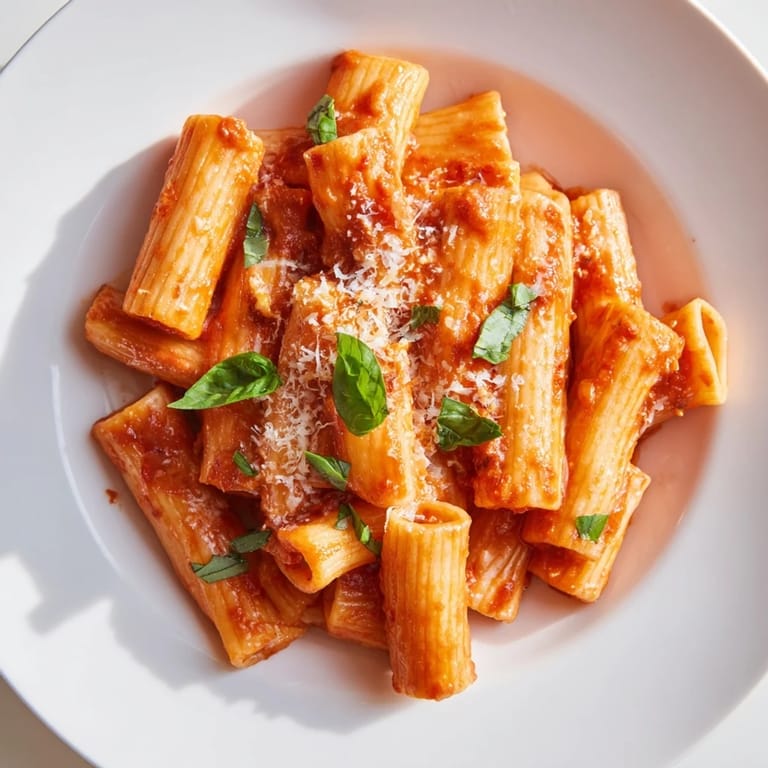
Save The kitchen window was fogged up from the steam, and I had just drained the rigatoni when my neighbor knocked on the door with a jar of her homemade chili oil. She handed it to me with a wink and said, Try a little heat tonight. I did, and that simple suggestion turned a basic tomato cream sauce into something I now make at least twice a month. The way the red pepper flakes bloom in the olive oil, releasing that warm, tingling aroma, it gets me every time. This dish became my weeknight comfort food, the one I reach for when I need something satisfying without spending an hour at the stove.
I made this for my sister the night she got back from a long work trip, and she ate two full bowls without saying much, just humming between bites. Later she told me it was exactly what she needed, something rich and a little fiery to snap her out of travel exhaustion. We sat at the table long after the plates were empty, catching up and laughing, and I realized how often the best conversations happen over a simple, well made meal. That night, this pasta became more than dinner, it became a ritual for reconnecting.
Ingredients
- Rigatoni pasta: The tubes and ridges are perfect for holding onto the creamy sauce, and I always cook it one minute shy of the package time so it finishes in the skillet.
- Olive oil: Use a decent quality oil here because it is the base of your flavor, and you will taste it in every spoonful.
- Yellow onion: Finely chopped onion melts into the sauce and adds a sweet, savory backbone that balances the heat.
- Garlic: Fresh garlic minced small blooms beautifully in the oil and gives the sauce that unmistakable aromatic depth.
- Crushed red pepper flakes: Start with a teaspoon and taste as you go, because heat tolerance varies and you can always add more but you cannot take it back.
- Tomato paste: Caramelizing the paste for a couple of minutes deepens the flavor and removes any tinny taste.
- Canned crushed tomatoes: I keep a few cans in the pantry at all times because they are the secret to a quick, reliable sauce that tastes like it simmered for hours.
- Heavy cream: This transforms the tomato sauce into something silky and luxurious, and just half a cup is enough to make a big difference.
- Parmesan cheese: Freshly grated melts into the sauce and adds a nutty, salty richness that ties everything together.
- Fresh basil: A handful of torn basil on top brings a bright, herbal note that cuts through the richness and makes the dish feel alive.
Tired of Takeout? 🥡
Get 10 meals you can make faster than delivery arrives. Seriously.
One email. No spam. Unsubscribe anytime.
Instructions
- Boil the pasta:
- Bring a large pot of salted water to a rolling boil, then add the rigatoni and cook until just al dente, saving half a cup of that starchy pasta water before you drain. That water is liquid gold for adjusting the sauce later.
- Sauté the aromatics:
- Heat olive oil in a large skillet over medium heat, add the chopped onion, and let it soften for a few minutes until it turns translucent and smells sweet. Toss in the garlic and red pepper flakes, stirring constantly for about a minute until your kitchen smells like an Italian trattoria.
- Caramelize the tomato paste:
- Stir in the tomato paste and cook it for two minutes, letting it darken slightly and lose its raw edge. This step is small but mighty, it builds a rich, deep flavor base.
- Simmer the tomatoes:
- Pour in the crushed tomatoes and let the sauce bubble gently for eight to ten minutes, stirring now and then, until it thickens and the oil starts to separate at the edges. You will see the sauce transform from watery to glossy and concentrated.
- Finish with cream and cheese:
- Lower the heat, stir in the heavy cream and Parmesan, and season with salt and pepper. Let it simmer gently for a couple of minutes until the sauce is creamy and cohesive, tasting as you go.
- Toss and adjust:
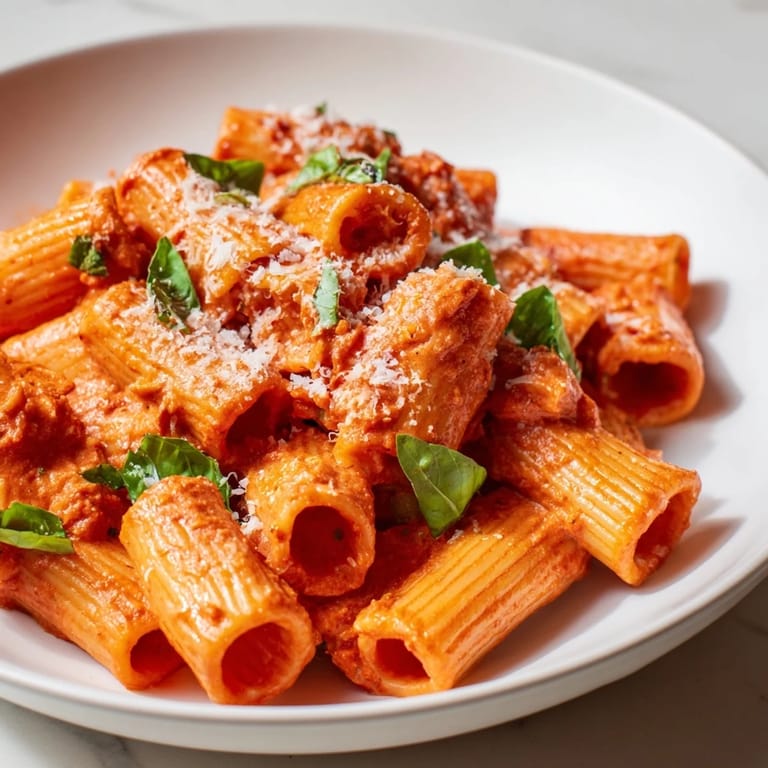
- Add the drained rigatoni to the skillet and toss everything together, adding splashes of reserved pasta water if the sauce feels too thick. The pasta should be glossy and fully coated, with just enough sauce pooling at the bottom of the bowl.
- Garnish and serve:
- Plate it up hot, scatter fresh basil and extra Parmesan on top, and bring it to the table while steam is still rising. This dish tastes best when it is eaten immediately, so gather everyone before you plate.
 Save
Save There was a rainy Saturday last fall when I made this pasta for myself and ate it straight from the skillet, standing at the counter with a glass of cold white wine. No one was watching, no table to set, just me and the quiet hum of the rain outside. It felt indulgent and a little rebellious, and I remember thinking that cooking for yourself with the same care you would for guests is one of the kindest things you can do. That bowl of spicy rigatoni became a small act of self love, and I have carried that feeling with me ever since.
How to Adjust the Heat Level
Start with half a teaspoon of red pepper flakes if you are unsure, then taste the sauce after it simmers and add more if you want extra kick. I learned to bloom the flakes in the oil with the garlic because it releases their flavor more evenly, and you get warmth throughout instead of random bursts of fire. If you accidentally go too heavy, a little extra cream or a squeeze of honey can mellow things out without losing the character of the dish. Heat should enhance the tomato and cream, not overpower them, so trust your palate and adjust as you go.
Choosing the Right Pasta Shape
Rigatoni is my first choice because the wide tubes and ridges grab onto the sauce like they were made for each other, but penne and ziti work beautifully too. Avoid delicate shapes like angel hair or farfalle here, because they do not hold up to the thick, clingy sauce the way sturdy tube pasta does. I once used shells in a pinch, and while it was good, the sauce pooled inside instead of coating evenly, which changed the whole experience. Stick with something tubular and textured, and you will get that perfect bite every time.
Making It Your Own
This recipe is a foundation, and you can build on it depending on what is in your fridge or what sounds good that day. I have stirred in sautéed pancetta for a smoky, salty depth, and I have added crumbled Italian sausage when I wanted something heartier and more filling. A handful of spinach or a few sun dried tomatoes tossed in at the end brings extra flavor and color without much effort.
- For a non vegetarian version, cook diced pancetta or sausage with the onions and let the fat render before adding garlic.
- Swap heavy cream for half and half if you want a lighter sauce, though it will be less rich and velvety.
- Toss in a handful of fresh spinach or arugula right before serving for a pop of green and a peppery bite.
 Save
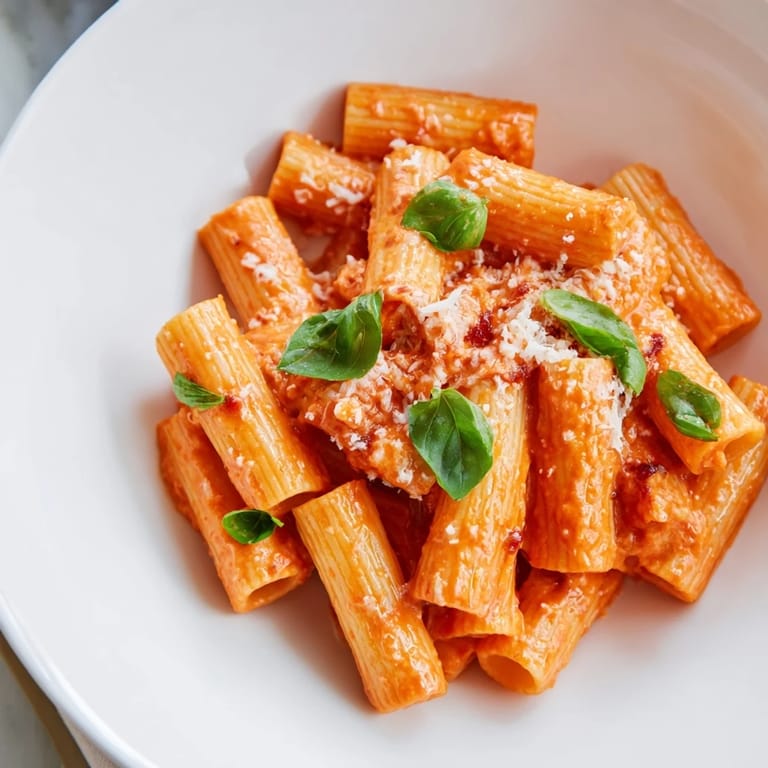
Save This spicy rigatoni has become one of those recipes I do not have to think about anymore, my hands just know what to do. I hope it finds a spot in your weekly rotation too, because everyone deserves a dish that feels like a warm hug with a little spark.
Recipe FAQs
- → How do I achieve al dente rigatoni?
Cook rigatoni according to package instructions, but taste a few minutes before the stated time. It should be tender with a slight firmness when bitten, not mushy. Reserve pasta water before draining to adjust sauce consistency later.
- → Can I adjust the spice level?
Absolutely. Start with ½ teaspoon of red pepper flakes and increase gradually to your preference. You can also add fresh chili or reduce the amount entirely for a mild version. Taste as you go during the cooking process.
- → What's the best way to prevent the cream from curdling?
Reduce the heat to low before adding cream and ensure the tomato sauce has cooled slightly. Stir in the cream gradually while keeping the temperature gentle. Never allow the sauce to boil once cream is added.
- → How can I make this non-vegetarian?
Sauté diced pancetta or crumbled Italian sausage with the onions in step 2 before adding garlic. This adds smoky, meaty depth. Drain excess fat before proceeding with the remaining steps.
- → Why should I reserve pasta water?
Starchy pasta water helps emulsify and loosen the sauce to your desired consistency. It creates a silkier finish than plain water and helps the sauce cling better to the pasta tubes for superior coating.
- → Can I prepare this ahead of time?
Prepare the sauce up to 2 days ahead and refrigerate. Reheat gently on low heat, stirring occasionally. Cook pasta fresh just before serving and toss with the warm sauce for best texture and flavor.