 Save
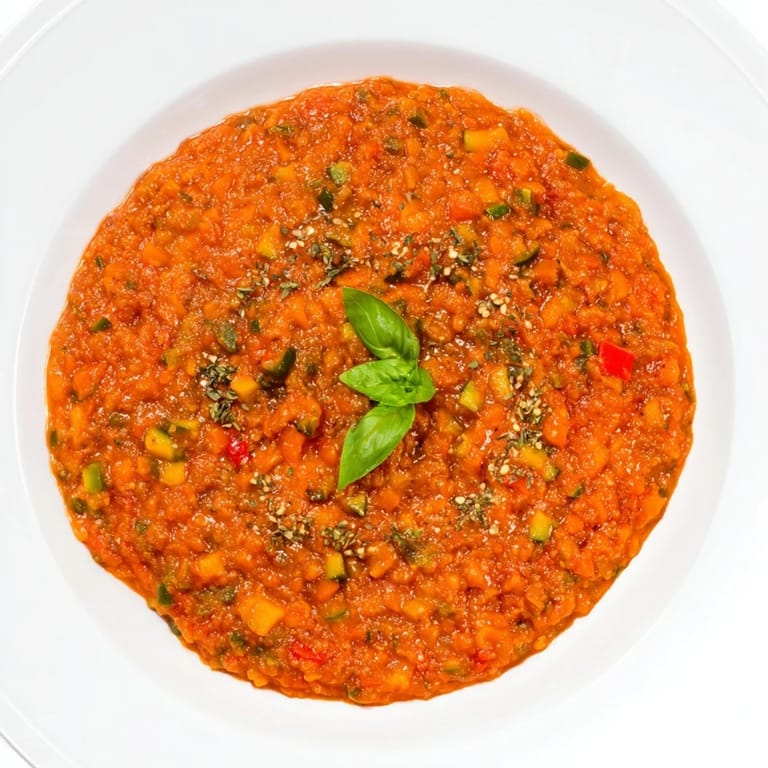
Save There's something magical about the moment a pot of humble vegetables transforms into something that tastes like it simmered for hours. I learned this truth on a weeknight when I had a fridge full of colorful vegetables but very little time, and somehow ended up with a sauce so vibrant and smooth that my partner asked if I'd been secretly taking cooking classes. That discovery—that you could sneak nutrition into comfort food without anyone noticing—became my kitchen shortcut for busy evenings when I still wanted to feel like I was cooking something real.
I made this sauce for my sister who'd just moved in temporarily, and she kept asking what restaurant I'd ordered from because she couldn't believe I'd made it in her kitchen. That moment, watching her taste something I'd actually created, made me realize this recipe was worth keeping in my regular rotation—not just as a side dish, but as proof that simple ingredients in the right order become something unexpectedly delicious.
Ingredients
- Carrots: They add natural sweetness that balances the tomato's acidity, and when blended, they disappear into the sauce while making it feel rich and complete.
- Zucchini: This vegetable practically melts into the sauce, adding volume and creaminess without overpowering flavors.
- Bell pepper: Red or orange peppers bring sweetness and a subtle fruity note that makes the sauce taste fuller and more developed.
- Onion: The foundation that makes everything taste deeper; don't skip the caramelizing step as it builds the base flavor.
- Garlic: Just enough to whisper its presence without shouting—add it after the other vegetables soften so it doesn't burn.
- Celery: Often overlooked, but it adds a subtle savory note that makes people say the sauce tastes incredible without knowing why.
- Crushed tomatoes: Use two cans for body and richness; they're the backbone that holds everything together.
- Tomato paste: This concentrated flavor is your secret weapon—it deepens the sauce and makes it taste like you've been cooking since morning.
- Olive oil: Just enough to coat the pan and build flavor; this isn't a heavy sauce.
- Oregano and basil: These dried herbs are your Italian backbone; fresh basil at the end is the final touch that makes it sing.
- Salt, pepper, and sugar: The salt draws out vegetable juices, pepper adds bite, and sugar is your quiet referee—it doesn't announce itself, but tomato sauce without it tastes slightly off.
Tired of Takeout? 🥡
Get 10 meals you can make faster than delivery arrives. Seriously.
One email. No spam. Unsubscribe anytime.
Instructions
- Sauté the vegetables:
- Heat olive oil in a large saucepan over medium heat and add the onion, carrot, celery, zucchini, and bell pepper. You're looking for that moment when they start smelling sweet and the onion turns translucent—about 8 to 10 minutes—which means their flavors are starting to wake up and blend together. Don't rush this step; it's where the magic starts.
- Bring in the garlic:
- Add your minced garlic and stir constantly for just 1 minute until your kitchen smells unmistakably garlicky. This quick sauté releases its flavor without letting it burn into bitterness.
- Add the tomato paste:
- Stir in the tomato paste and let it cook for a full minute, coating the vegetables and deepening in color. This concentrated flavor becomes the soul of your sauce.
- Build your sauce:
- Add both cans of crushed tomatoes along with the oregano, basil, salt, pepper, and sugar if using. Stir everything together until it looks unified, then bring it to a gentle simmer—not a rolling boil, which can make the sauce taste sharp instead of rounded. The gentle heat is what transforms raw flavors into something harmonious.
- Simmer and soften:
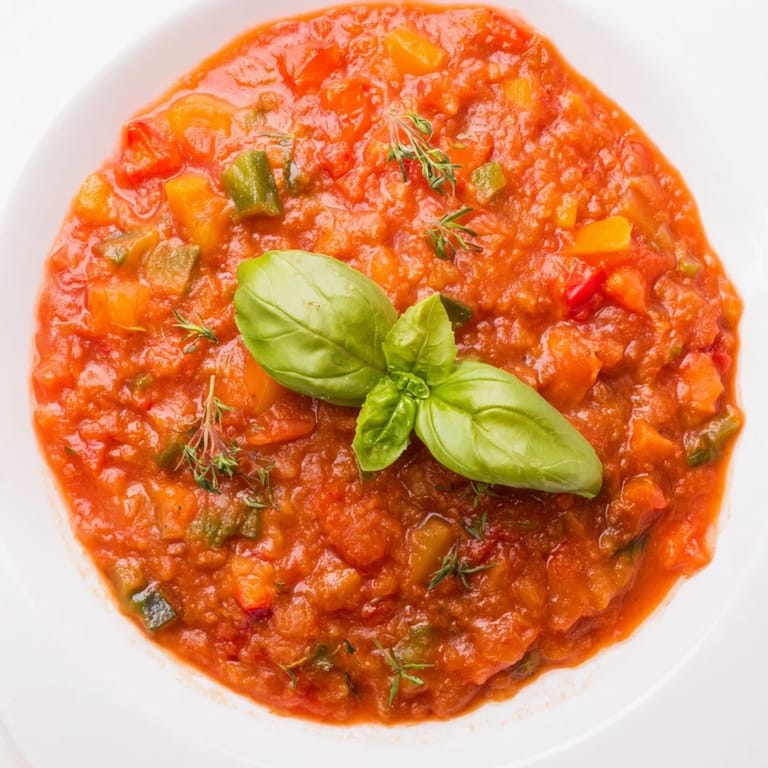
- Cover your pot and let it bubble gently for 20 to 25 minutes, stirring occasionally, until the vegetables have completely softened and lost their structure. You should be able to easily crush a carrot piece against the side of the pot with your wooden spoon.
- Blend to smoothness:
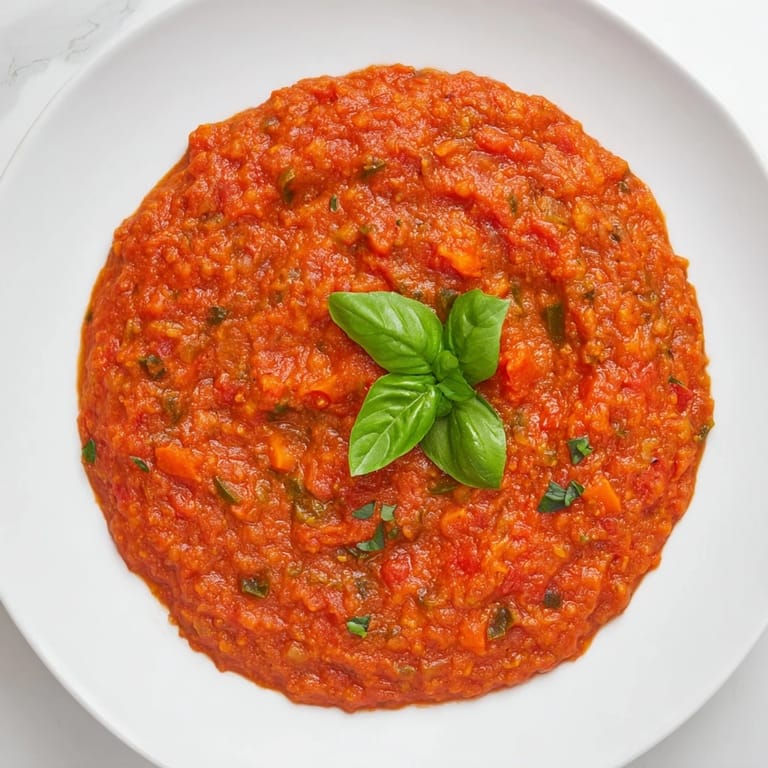
- Remove from heat and use your immersion blender to purée everything into a completely smooth sauce, working in batches if needed. This is where the vegetables disappear and the sauce becomes silky and elegant.
- Final simmer and taste:
- Return the sauce to low heat and let it simmer uncovered for 5 to 10 minutes, which allows some moisture to escape and flavors to concentrate. Taste it now and adjust your salt, pepper, or sugar as needed—this is your moment to make it exactly right.
- Serve with joy:
- Pour it over hot pasta and finish with a handful of fresh basil. Photograph it if you want, because it's surprisingly beautiful for something that started with chopped vegetables.
 Save
Save My mom once told me that good cooking is really just vegetables prepared with attention and respect, and this sauce proved her right. It's become my proof that you don't need fancy ingredients or complicated techniques to create something that feeds not just hunger, but the feeling of being cared for.
Making It Your Own
This sauce is a canvas waiting for your personal touch. Add a small handful of fresh spinach or broccoli florets to the vegetables at the beginning if you want even more nutrition without changing the taste. Stir in cooked lentils or white beans after blending if you want something heartier for eating on its own, or mix in a splash of heavy cream or coconut milk for a slightly richer version that feels almost indulgent.
Freezing and Storage
This sauce freezes beautifully for up to three months, which means you can make it in a quiet moment and have restaurant-quality pasta nights whenever you need them. Cool it completely before freezing, portion it into containers you'll actually use, and label with the date because frozen things have a way of becoming mysterious kitchen mysteries otherwise.
Serving Suggestions and Notes
Serve this sauce over whatever pasta speaks to you—traditional spaghetti, heartier whole-wheat noodles, or gluten-free varieties all work beautifully. The sauce is neutral enough to pair with nearly any protein, or stand confidently on its own for vegetarian nights. Finish with fresh basil, a crack of black pepper, or a small sprinkle of parmesan cheese if you're in the mood for something more indulgent.
- Make this with whole-wheat pasta for extra fiber and a slightly nuttier flavor that complements the vegetables.
- Keep the fresh basil separate and add it right before serving for brightness and color that makes the dish feel just-made.
- This sauce tastes even better the next day, so don't hesitate to make a double batch.
 Save
Save This sauce is a reminder that the best meals often come from working with what you have and giving it genuine attention. Keep making it until it becomes the version that tastes like home to you.
Recipe FAQs
- → Can I use fresh tomatoes instead of canned?
Fresh tomatoes can be used, but canned crushed tomatoes provide consistent texture and flavor. If using fresh, ensure they are fully ripe and peeled, then cook longer to achieve similar consistency.
- → What vegetables can I add to boost nutrition?
Spinach, broccoli florets, or cooked lentils can be added during cooking or after blending for added nutrients and texture.
- → How do I achieve a smooth sauce texture?
Use an immersion blender or regular blender to purée the sauce until completely smooth after simmering, then simmer a bit longer uncovered to thicken.
- → Is it possible to make this sauce spicier?
Yes, adding a pinch of red pepper flakes while simmering enhances heat without overpowering the natural vegetable flavors.
- → How long does the sauce keep in the freezer?
The sauce freezes well for up to 3 months when stored in airtight containers, retaining flavor and quality.
- → Can this be prepared vegan and nut-free?
Yes, the sauce contains no animal products or nuts, making it suitable for vegan and nut-free diets.