 Save
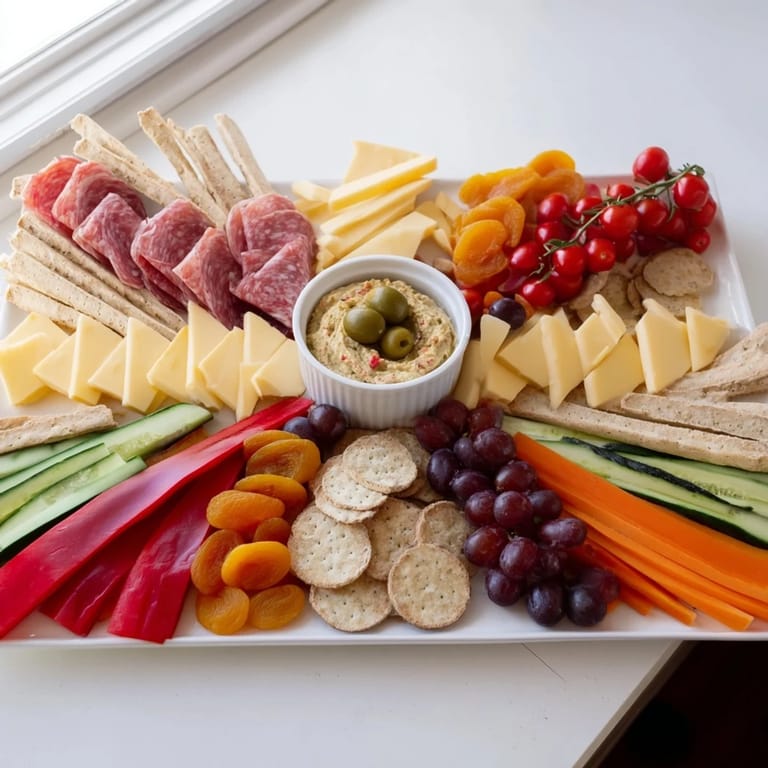
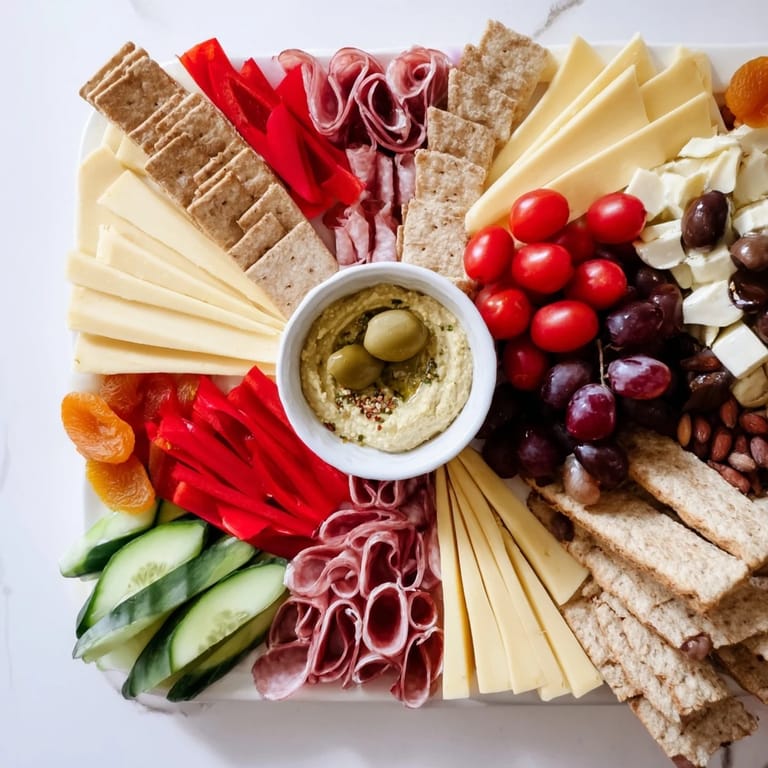
Save I discovered the magic of directional boards at a dinner party where a friend arranged everything pointing toward a central bowl of hummus, and it completely changed how I thought about entertaining. There was something almost mesmerizing about how your eye followed the flow of cheese triangles and prosciutto folds all converging toward that creamy center. That night, I realized a charcuterie board didn't just have to sit there looking pretty—it could tell a visual story, guide your hand, and make everyone feel like they were part of something intentionally designed just for them.
I made this for my sister's birthday gathering, and watching six different conversations happen around the board as people traced the lines toward the dip told me everything. Someone said it felt like 'edible architecture,' and honestly, that stuck with me. It's the kind of board that makes people linger, taste thoughtfully, and actually enjoy the moment instead of just grabbing and going.
Ingredients
- Aged cheddar, cut into triangles (100 g): The sharpness cuts through richness beautifully, and cutting them into triangles gives you natural directional pieces that point themselves
- Brie, sliced into wedges (100 g): Those creamy wedges feel luxurious and wedge shapes are perfect for the arrow effect—they naturally suggest movement
- Gouda, cut into strips (100 g): The smoky sweetness balances everything, and strips are naturally linear, which reinforces your directional theme
- Prosciutto, folded (100 g): Paper-thin folds drape elegantly and catch light in ways that guide the eye; omit for vegetarian
- Salami, sliced and folded (100 g): Creates visual depth with its deep color, and folded coins have a sculptural quality; omit for vegetarian
- Seedless grapes in small clusters (1 cup): Their round shapes provide relief from angular pieces and their natural sweetness is refreshing after salty meats
- Cherry tomatoes, halved (1 cup): The red brings energy and those half-circles naturally point when you arrange them intentionally
- Cucumber, sliced diagonally (1 small): Diagonal slices feel modern and the cool crispness grounds the richness; they're also inherently directional
- Red bell pepper, sliced into strips (1 small): The bright color pops and strips reinforce your arrow pattern while adding textural contrast
- Artisan crackers (1 cup): Different shapes create visual interest, and their neutral tone lets colors shine; use gluten-free if needed
- Baguette, sliced on the bias (1 small): Bias slices are longer and more elegant than straight cuts, and they naturally angle in ways that support your directional flow
- Marcona almonds (½ cup): Buttery and slightly salty, they fill gaps while adding luxury; tree-nut free options work equally well
- Dried apricots (¼ cup): Their chewy sweetness offers contrast, and their small size lets you use them to connect larger components
- Olives (¼ cup): Dark, briny, and small enough to tuck into spaces while reinforcing the visual rhythm
- Herbed hummus or whipped feta dip (100 ml): This is your north star—the bowl that everything points toward, so choose something you genuinely love
Tired of Takeout? 🥡
Get 10 meals you can make faster than delivery arrives. Seriously.
One email. No spam. Unsubscribe anytime.
Instructions
- Set your focal point:
- Place your dip bowl at one corner or end of the board—this is your arrow's destination, so choose placement thoughtfully. The bowl becomes the visual anchor that everything else refers back to, so make sure it sits solidly and confidently in its spot.
- Create the cheese flow:
- Arrange your cheese triangles and wedges so their points naturally face toward that dip bowl, fanning them out from the opposite direction. Think of yourself as creating rays of light all converging toward a center point. Each piece should feel like it's leaning slightly toward the destination.
- Position the meats with intention:
- If using prosciutto and salami, fold them into natural lines that also direct toward your dip. You'll notice folded meats naturally drape in ways that suggest movement. Let them guide the eye just like the cheeses do.
- Layer vegetables and fruit diagonally:
- Place sliced cucumbers, tomatoes, and peppers so they angle inward toward the bowl. Scatter grape clusters along these lines—their roundness contrasts beautifully with angular pieces while still participating in the directional flow. Stand back frequently to check that the movement feels natural, not forced.
- Arrange crackers and bread as guide rails:
- Position these in radiating lines all pointing toward the dip, like roads on a map leading to a destination. The bias-cut baguette slices are particularly effective here because their length naturally suggests direction and movement.
- Fill the spaces with purpose:
- Scatter almonds, apricots, and olives along the lines between larger components. These smaller pieces reinforce the directional pattern while filling visual gaps. They're like punctuation marks that emphasize the flow without overwhelming it.
- Step back and refine:
- Look at your board from different angles. Adjust pieces for balance—you want the arrangement to feel dynamic from any viewing angle. Fill any remaining gaps, but avoid random placement; even small pieces should feel like they're contributing to the overall arrow design.
 Save
Save The moment I understood the real power of this board was when I watched someone who'd never even met me before arrive at the party, and their immediate reaction wasn't 'wow, that looks good' but 'oh, I see where I'm supposed to go.' It transformed a snack into an experience, a static board into an invitation. That's when food stopped being about feeding people and started being about the feeling you create.
Color and Texture Strategy
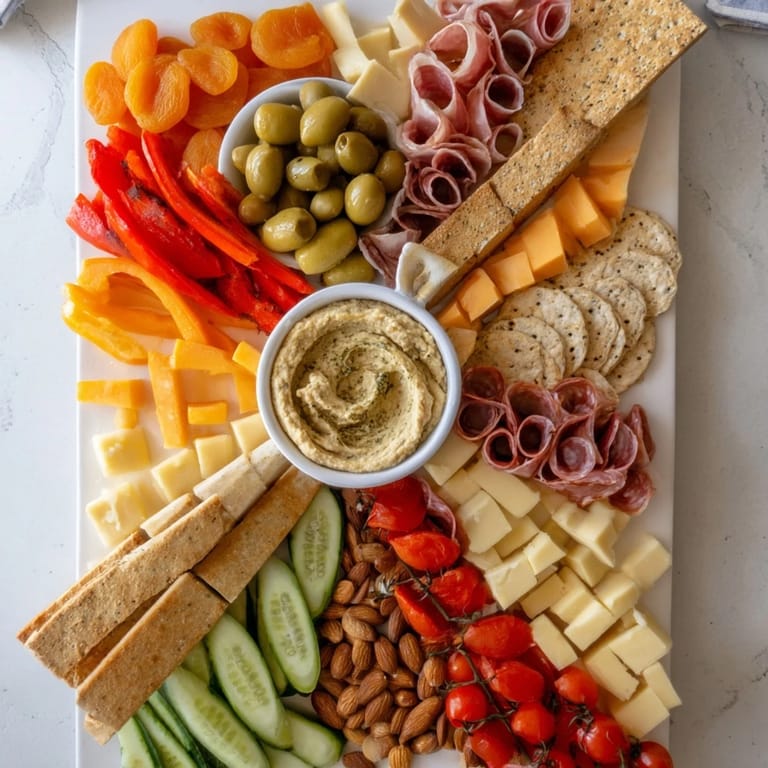
The secret to making this board visually striking is understanding that contrast is your best friend. When you arrange deep purple olives next to bright red tomatoes, when creamy white brie sits alongside golden almonds, you're not just feeding different tastes—you're creating a visual rhythm that naturally guides the eye toward your dip bowl. Think of yourself as a painter using the board as your canvas. The aged cheddar's warm orange, the prosciutto's deep pink, the cucumber's cool green—these aren't accidents of ingredient selection, they're intentional brushstrokes. Every color choice either supports or distracts from your directional flow, so choose pieces that complement each other while maintaining that convergence toward the center.
Timing and Temperature Considerations
Since there's no cooking involved, timing is less about heat and more about freshness. Assemble this board no more than two to three hours before guests arrive—cheeses taste better at room temperature and develop better flavor, while vegetables stay crispest if not sitting too long. The magic window is about thirty minutes before service, when everything is arranged but still has that just-prepared freshness. If you're making this ahead, keep components in separate containers and assemble only when ready. Your dip should be at room temperature too—cold straight-from-the-fridge hummus or whipped feta tastes muted, but bring it out just before guests arrive and it blooms with flavor.
Pairing and Serving
This board pairs beautifully with a crisp Sauvignon Blanc that echoes the fresh vegetables, or a light Pinot Noir if you want something that doesn't overshadow the delicate balance of flavors. I've learned that serving suggestions matter—a simple 'everything points to the dip' explanation makes guests smile and feel like they're in on a little secret. Offer three to four different dips if you're feeling ambitious: keep the herbed hummus in the center, but surround it with tiny bowls of beet hummus, tzatziki, or whipped ricotta around the board. It transforms the entire concept and gives people more to explore. The vegetarian version is equally stunning—simply add extra cheese varieties, more vegetables, or substitute the meats with roasted vegetables or marinated mushrooms.
- Cut vegetables no more than two hours before serving to preserve crispness and prevent browning
- Arrange meats last, just before guests arrive, so they don't dry out
- Use a large board—at least 14 by 10 inches—because cramped boards lose the elegant directional flow
 Save
Save This board is more than just an arrangement—it's an invitation to slow down and notice the care you've taken. Every time I make it, I'm reminded that hospitality isn't about perfection, it's about showing someone that you've thought about their experience.
Recipe FAQs
- → How do I create the arrowhead effect on the board?
Position the dip bowl at one end or corner of the board. Arrange cheeses, meats, fruits, and crackers so their shapes and angles point toward the dip, creating a cohesive directional flow.
- → What cheeses work best for this layout?
Aged cheddar cut into triangles, brie sliced into wedges, and gouda in strips provide distinct shapes that enhance the visual arrowhead effect.
- → Can this board be made vegetarian?
Yes, simply omit the prosciutto and salami, then increase cheese or vegetable portions to maintain balance and variety.
- → What dips pair well with this board?
Herbed hummus or whipped feta are ideal, but alternatives like beet hummus, tzatziki, or whipped ricotta also complement the flavors.
- → How should I arrange the crackers and nuts?
Lay crackers and bread slices in radiating lines pointing toward the dip, and scatter nuts and dried fruits along gaps between main items to reinforce the directional pattern.