 Save
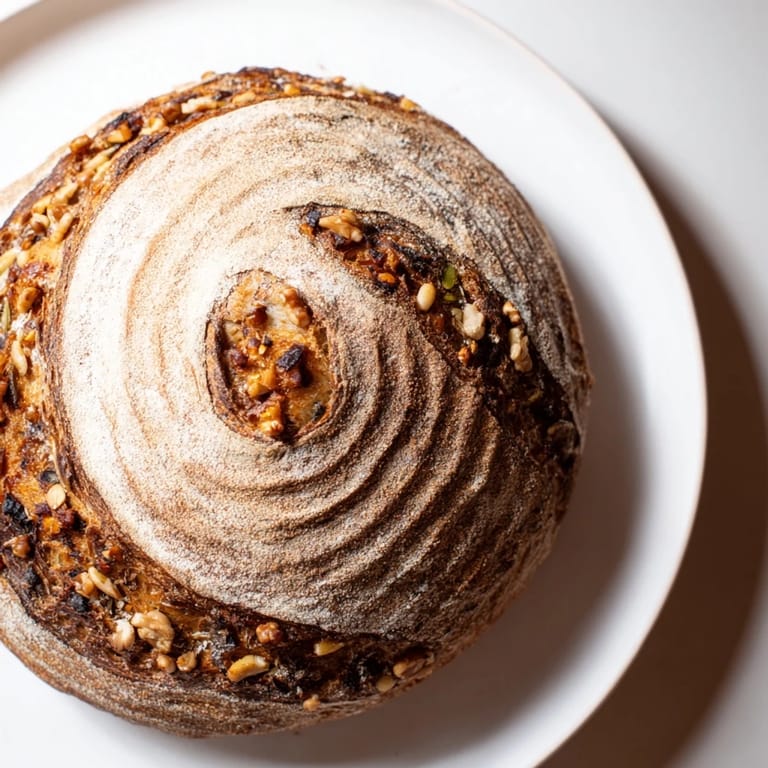
Save I'll never forget the afternoon I stumbled upon a book about sacred geometry in baking. There, on a weathered page, was a photograph of a bread shaped like the Fibonacci spiral—nature's most perfect pattern, spiraling outward with increasing abundance. I had to make it. Hours later, when I pulled that golden loaf from the oven, I understood why ancient bakers believed mathematics and bread were one and the same. The spiral wasn't just beautiful; it was a edible conversation between science and soul.
I made this for my sister's housewarming, and I watched grown adults stop mid-conversation to photograph it. One guest—who'd sworn off bread—asked for the recipe before dessert was even served. That's when I knew this wasn't just bread; it was edible art that somehow tasted even better than it looked.
Ingredients
- 500 g strong bread flour: This is your foundation. Strong flour has higher protein content, which builds the gluten network that gives you that tender, open crumb. Don't substitute with all-purpose; it simply won't have the strength for this long fermentation.
- 350 ml lukewarm water: Temperature matters more than you'd think—too cold and fermentation stalls, too hot and you'll kill your starter. Lukewarm feels like bathwater on your inner wrist, nothing more.
- 100 g active sourdough starter or 7 g instant yeast: If using sourdough, feed it 4–6 hours before mixing so it's at peak activity, bubbly and alive. This is non-negotiable for flavor.
- 10 g fine sea salt: Use fine sea salt, not kosher—the granules are smaller and dissolve more evenly, controlling fermentation pace without harsh pockets.
- 15 ml olive oil: A good olive oil adds richness and helps the dough stay supple during the long rise. It's subtle but essential.
- 20 g toasted sunflower seeds: Toast them yourself for maximum flavor and crunch. This is your smallest spiral segment, your starting point.
- 30 g chopped walnuts: Use fresh walnuts if you can—rancid nuts ruin everything. Chop them by hand; a food processor makes them too fine.
- 40 g pumpkin seeds: Raw or roasted work, but raw keeps their delicate flavor from being overshadowed by the other ingredients.
- 50 g grated hard cheese: Gruyère and Parmesan are your friends here—they add umami depth and don't melt into oblivion. Grate it fresh.
- 60 g chopped sun-dried tomatoes, drained: Pat them dry before chopping or they'll add too much moisture. Their intensity is exactly what the middle spirals need.
- 70 g mixed olives, pitted and chopped: Use olives you'd actually eat on their own. Briny, flavorful ones transform the bread into something Mediterranean and alive.
- 80 g sautéed spinach, well-drained: This is crucial—spinach releases a shocking amount of water. Sauté it, let it cool, then squeeze it dry in a kitchen towel until it feels almost brittle. Your final spiral depends on this restraint.
Tired of Takeout? 🥡
Get 10 meals you can make faster than delivery arrives. Seriously.
One email. No spam. Unsubscribe anytime.
Instructions
- Rest the flour and water together (autolyse):
- In a large bowl, combine the flour and lukewarm water, stirring with your fingers until every speck of flour is wet. It'll look shaggy and rough—that's exactly right. Cover the bowl with a damp cloth and step away for 30 minutes. This rest period allows the flour to fully hydrate and begins gluten development naturally, setting you up for success later.
- Bring the dough to life:
- Add your active sourdough starter (or instant yeast), salt, and olive oil to the autolysed dough. Using wet hands or a wooden spoon, mix until everything is incorporated and a sticky, somewhat rough dough forms. The salt might seem to resist at first—keep mixing. Once combined, transfer to a lightly floured surface and knead for 8–10 minutes. Feel for smoothness and elasticity; the dough should spring back slightly when poked. This is when you know gluten has properly developed.
- Let time do the heavy lifting:
- Oil a large bowl lightly and transfer your kneaded dough to it. Cover with a damp cloth or plastic wrap and let it rest at room temperature for 8–12 hours. Room temperature matters—if your kitchen is chilly, it might take the full 12 hours; if it's warm, check at 8 hours. You're looking for the dough to roughly double in size and feel alive with small bubbles when you gently poke it. This long, cool fermentation is what builds flavor.
- Divide with intention:
- Once fully risen, turn your dough gently onto a lightly floured surface. Using a dough scraper or bench knife, divide it into exactly 7 equal portions. Use a scale if you want precision, but eyeballing works if you're practiced. Each piece should feel like a small, puffy cloud.
- Build your spirals, ingredient by ingredient:
- Here's where the Fibonacci magic happens. Take your first portion and gently knead the toasted sunflower seeds into it until evenly distributed—this is your innermost spiral. Work calmly; rough handling deflates fermentation progress. Repeat with each subsequent portion, moving through the walnuts, pumpkin seeds, cheese, sun-dried tomatoes, olives, and finally the spinach, which goes into your largest portion. Each segment should feel distinct, flavored, and alive.
- Form the spiral:
- Roll each kneaded portion into a rope about 8–10 inches long. On a parchment-lined baking sheet, place your smallest rope (sunflower) in the center and coil it tightly. Then coil the walnut rope around it, pressing the end to seal. Continue outward with each rope, creating concentric circles that grow larger and larger, like a nautilus shell or fern unfurling. Press all ends firmly so they don't unravel during the oven spring.
- Give it one final rise:
- Cover the shaped loaf loosely with a cloth and let it rise at room temperature for 1.5 hours. You're looking for it to become noticeably puffy and pillowy, with a light, airy feel when you gently press it. It should not feel dense or heavy.
- Prepare for steam and heat:
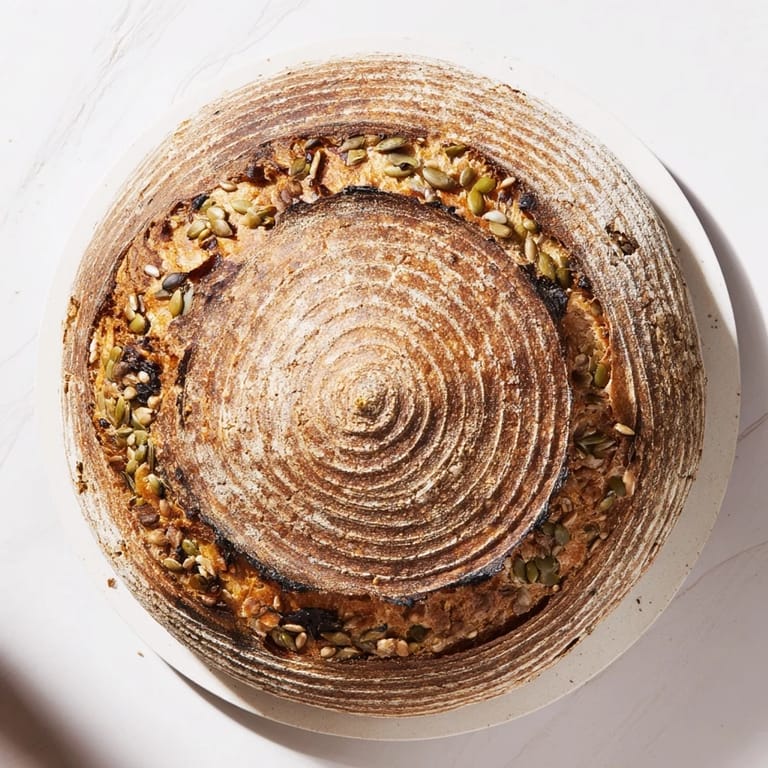
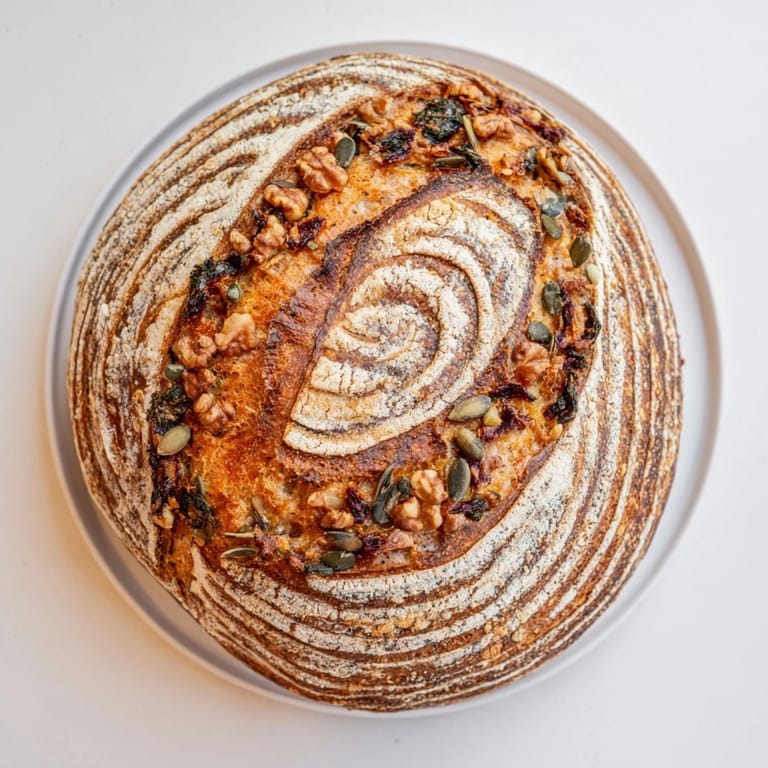
- Preheat your oven to 230°C (445°F) and place an empty baking tray or cast-iron skillet on the oven floor. Steam is your secret to a crispy, blistered crust. Dust your proofed loaf generously with flour, coating every visible surface. Using a sharp blade, lame, or even a clean razor blade, score the top in a spiral pattern, following the coils beneath. These slashes control where the bread expands.
- Bake with steam:
- Carefully pour a full cup of hot water into the preheated tray on the oven floor—the sizzle and steam are music. Immediately transfer your scored loaf to the oven. Bake for 40 minutes, rotating the baking sheet halfway through for even browning. The crust should turn deep golden brown, almost nutty-looking, and sound hollow when tapped on the bottom. If it's still pale after 35 minutes, give it the full 40. Trust the color.
- Cool completely:
- Transfer your finished loaf to a wire rack and let it cool completely—at least 2 hours, ideally 3. This is torture, I know. But the crumb continues to set during cooling, and slicing too early will collapse your beautiful structure into gumminess. Patience is the final ingredient.
 Save
Save The first time someone cut into this bread at my table and gasped at the layers—seeing the precise progression from seeds to herbs spiraling outward—I understood that food can be art. It's not pretentious; it's love made visible. Every slice tells a story of patience, intention, and the quiet magic of fermentation.
The Science of Your Spiral
The Fibonacci sequence appears everywhere in nature—in sunflowers, pinecones, nautilus shells—and it represents the most efficient way to pack growth into a space. By building your bread in increasing segments, you're not just showing off; you're working with natural proportions. Each spiral supports the next, distributing weight and flavor evenly so that every slice contains the entire journey. The increasing density of ingredients also affects how the bread rises and bakes, creating pockets of texture that make each bite feel like an exploration.
Fermentation: The Heart of Flavor
This bread's soul comes from its long, cool fermentation. During those 10–12 hours, microorganisms are breaking down the flour, developing organic acids that create tang, complexity, and digestibility. You're not just making bread; you're orchestrating a microscopic symphony. If you rush it, you get a loaf that's technically sound but emotionally hollow. If you honor the time, you get something that tastes like it was made in a Tuscan bakery, even if you're in a suburban kitchen at midnight in your pajamas.
Customizing Your Spiral
The beauty of this formula is that it's endlessly adaptable. Don't have sun-dried tomatoes? Try caramelized onions. No Gruyère? Use sharp cheddar or pecorino. Hate olives? Swap them for roasted garlic cloves or fresh herbs mixed with a bit of oil. The only rule is to respect the increasing quantities—start small, increase gradually. This isn't just a recipe; it's a framework for your creativity.
- Roasted garlic, caramelized onions, and fresh thyme create an earthy, Provençal version.
- Everything bagel seasoning, cream cheese powder, and dried dill make a deli-inspired spiral.
- Dried cranberries, candied walnuts, and orange zest transform it into something almost sweet, perfect for breakfast with butter and jam.
 Save
Save Make this bread and you've mastered something that feels magical but is really just flour, water, time, and respect for process. That's the secret every great baker knows.
Recipe FAQs
- → What makes the spiral layers unique?
Each spiral features increasing amounts of ingredients like seeds, nuts, and cheese, creating layered textures and flavor gradients within the loaf.
- → How long does the dough rise?
The dough rests initially for 30 minutes, then undergoes a long fermentation of around 8 to 12 hours to develop structure and flavor before shaping.
- → Can this bread be made vegan?
Yes, by omitting or substituting the grated hard cheese with a plant-based alternative, the loaf can easily be made vegan.
- → Why is steam used during baking?
Adding steam at the start of baking helps create a crisp, golden crust while allowing the bread to expand fully.
- → What tools are needed for shaping the loaf?
A large mixing bowl, dough scraper, parchment paper, baking sheet, sharp blade, and kitchen scale are helpful for preparation and shaping into spirals.
- → What flavor profile does the bread have?
The combination of toasted seeds, nuts, savory cheese, sun-dried tomatoes, olives, and spinach delivers a rich, layered, and earthy flavor.