 Save
Save I discovered the magic of fractal tree platters at a dinner party where a friend arranged appetizers in a mesmerizing branching pattern. It stopped conversations mid-sentence. Guests circled it like it was edible art, and honestly, it was. Since that night, I've been obsessed with recreating that moment—that feeling when food becomes a conversation starter and your hands reach before your mind catches up. This platter isn't just appetizers arranged on a plate; it's an invitation to play with your food in the best way possible.
I remember making this for my sister's book club, and the women actually gasped when they saw it. One of them said it felt wrong to take the first piece, like breaking a spell. By the end of the evening, it was completely demolished, and they were still talking about it weeks later. That's when I knew this wasn't just food—it was theater.
Ingredients
- 1 large breadstick (about 25–30 cm long): This is your anchor, your tree trunk. Choose one that's sturdy enough to hold its shape but not so hard it's impossible to bite into. A good quality crusty breadstick works best—it gives you that satisfying crunch when guests finally reach for it.
- 6 slices prosciutto or vegetarian deli slices: These become your first major branches. They're salty, they drape beautifully, and they create visual drama. If you're vegetarian, use thinly sliced cheese, roasted vegetables, or cured tofu for that same silky effect.
- 6 mini mozzarella balls or small cheese cubes: Creamy little punctuation marks in your composition. Fresh mozzarella balls are ideal because they catch the light and look almost jewel-like on the platter.
- 6 baby pickles or gherkins: The tangy surprise, the little green flourishes that add brightness and contrast. They're small enough to feel like delicate branches but interesting enough to make someone stop and eat one.
- 12 cherry tomatoes, halved: Your red layer, your color pop. These move the eye around the platter and feel substantial enough for the second tier of branches.
- 12 thin cucumber slices: Cool, crisp, and the perfect textural contrast. They can overlap slightly to create visual flow down the platter.
- 12 green or black olives: The Mediterranean touch that ties everything together. They're like little spheres anchoring your botanical design.
- 18 small basil leaves: Fresh, fragrant, and the final flourish. These should be added last so they stay vibrant green and don't bruise.
- 18 roasted red pepper strips: These thin, flexible strips follow the curves and spaces naturally, like branches reaching outward. If you can't find roasted peppers, roast them yourself—the depth of flavor is worth it.
- 18 small crackers or crostini: The finishing touches that complete your fractal arms. They add texture and give guests something to place other ingredients on if they want.
Tired of Takeout? 🥡
Get 10 meals you can make faster than delivery arrives. Seriously.
One email. No spam. Unsubscribe anytime.
Instructions
- Create Your Trunk:
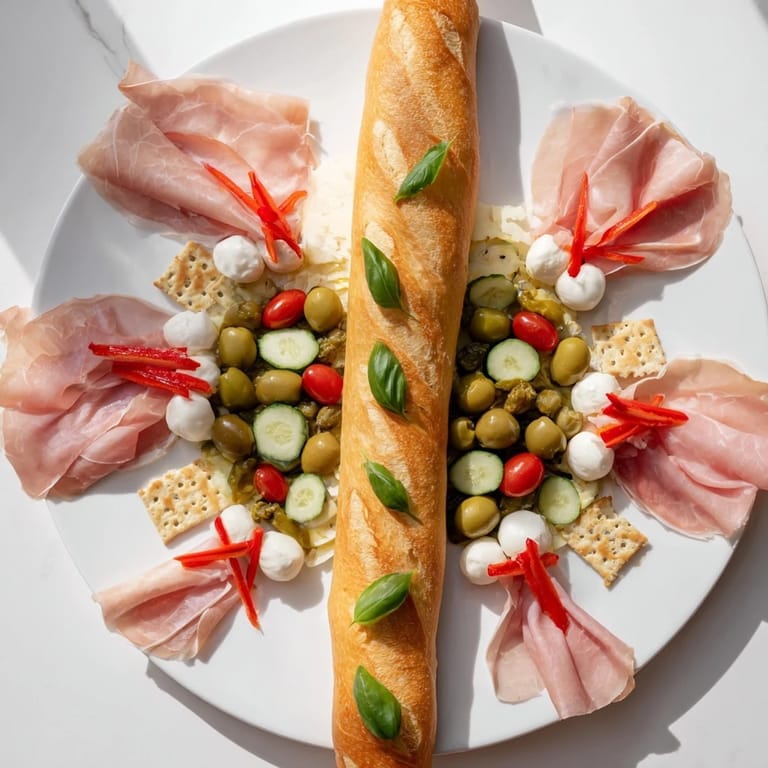
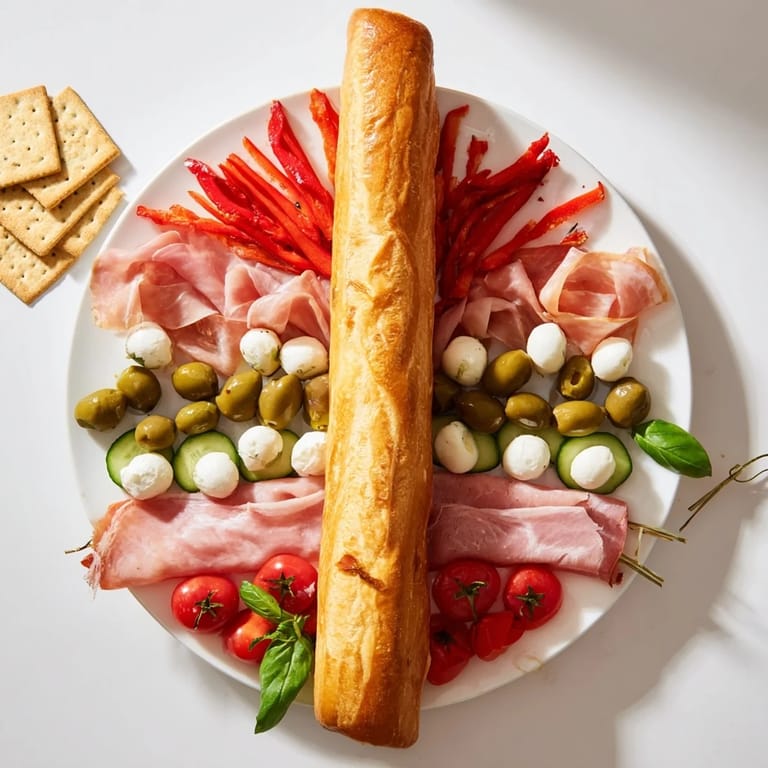
- Place your breadstick in the very center of the largest platter you have. Step back and look at it. This is your anchor point, your reference. Everything radiates from this moment forward. If the breadstick rolls, no shame—use a small dollop of something sticky on the back to keep it in place.
- Build Your First Branches:
- Now comes the satisfying part. Take your prosciutto slices and arrange them in pairs on either side of the breadstick, leaning outward at an angle, like they're reaching away from the trunk. Nestle a mozzarella ball or cheese cube at the base of each pair, then tuck a baby pickle beyond that. These three elements together form your largest branches. Make sure they're symmetrical—your eye will tell you when it feels right.
- Add Your Second Layer:
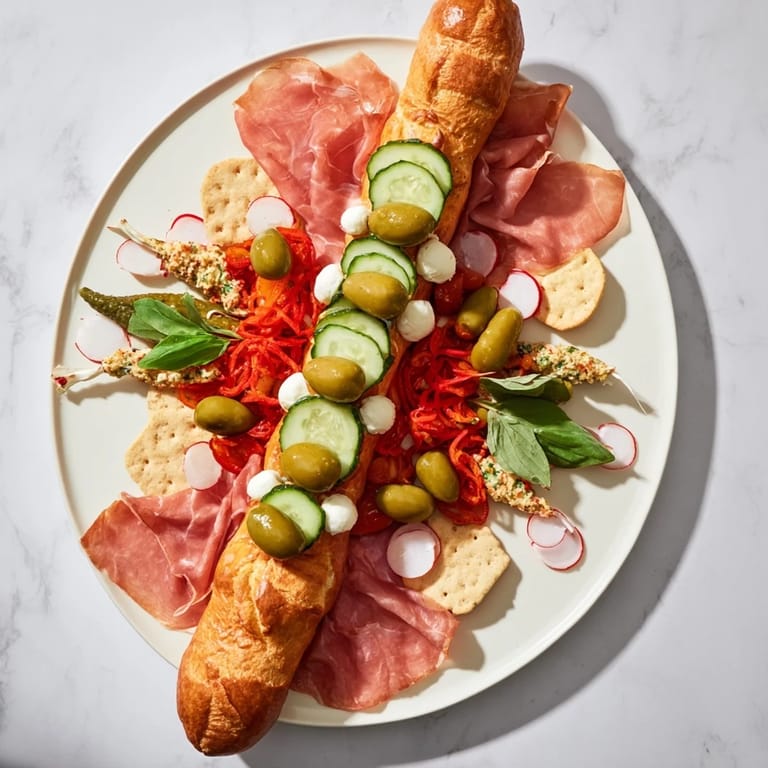
- This is where the fractal really starts to speak to you. Between and around your first branches, create smaller arrangements using your cherry tomatoes, cucumber slices, and olives. Each small group should feel like it's branching off from the larger ones, creating a cascading effect. Overlap slightly, let them fan outward. Think of how a real tree's branches get denser as they spread.
- Complete Your Smallest Branches:
- Fill any remaining spaces with your basil leaves, roasted red pepper strips, and crackers. These are the delicate tendrils at the edges, the tips of the branches. Arrange them in smaller groups of three—a leaf, a pepper strip, a cracker. Let them taper toward the outer edges of the platter.
- Fine-Tune Your Fractal:
- Step back. Squint at it. Move things if they don't feel balanced. This is the moment where you're not following a recipe anymore—you're creating. Adjust spacing so there's breathing room but also visual density that draws the eye inward toward the trunk and outward along the branches. It should feel organic, like nature designed it.
- Add Final Magic:
- Right before serving, if you want, drizzle a little olive oil over the whole thing and crack some black pepper across the surface. This isn't necessary, but it catches the light and adds a final touch of intentionality.
 Save
Save There's something almost spiritual about making this platter. Your hands slow down. You start noticing textures, colors, the way a cherry tomato catches light differently than a basil leaf. It becomes less about feeding people and more about creating a moment they'll remember. And maybe that's the real recipe here—attention, care, and the willingness to make something beautiful just because it matters.
Vegetarian and Dietary Variations
This platter is endlessly adaptable, which is part of why I love it. For a completely vegetarian version, swap the prosciutto for thin slices of smoked cheese, roasted eggplant, or grilled zucchini. You can introduce marinated artichoke hearts, sun-dried tomatoes, roasted chickpeas, or sliced avocado as branch alternatives. The beauty is that every substitution changes the visual story while keeping the fractal structure intact. I once made an entirely purple and white version with purple cabbage, white cheese, purple olives, and white cauliflower florets for a bridal shower. It was unexpected and unforgettable. For gluten-free guests, use gluten-free breadsticks and crackers. For dairy-free, plant-based cheese works surprisingly well, and it doesn't affect the visual impact at all.
Pairing and Presentation
This platter deserves company and conversation. Serve it with a dry white wine—a Sauvignon Blanc or Pinot Grigio echoes the freshness of the vegetables. Sparkling water works beautifully too if you're keeping things non-alcoholic. The key is something with acidity to cut through the richness of the cheese and cured meats. Place the platter on a table where people naturally gather, not off to the side. You want it to be the focal point. I always place small napkins nearby and make sure forks are available, but honestly, most people will grab with their hands, and that's the whole point. It's meant to be touched, explored, and experienced.
Storage and Make-Ahead Tips
Here's what I've learned the hard way: you can prep your ingredients hours in advance, but the assembly happens right before guests arrive. Keep your prosciutto, cheese, and pickles in the fridge until the last moment. Cherry tomatoes and cucumbers can be sliced and refrigerated, covered, for up to four hours. Basil should never be in the fridge—it hates cold. Keep it at room temperature, even loosely in water like flowers, until you're ready to arrange. If you're serving this at a party, consider making it one of the last appetizers you put out. That way, it stays fresh and maintains its visual impact. Leftovers are good for about a day, but honestly, there usually aren't any.
- Prep everything in advance, assemble only when you're ready to serve
- Keep basil at room temperature to preserve its vibrancy and aroma
- The platter is at its most beautiful in the first hour, so time your assembly accordingly
 Save
Save Every time I make this platter, I remember why I started cooking in the first place—not for nutrition or obligation, but for the joy of creating something beautiful that brings people together. This recipe is permission to slow down and make something with intention.
Recipe FAQs
- → How is the fractal tree pattern achieved?
By arranging ingredients in layers radiating from a central breadstick, each subsequent layer decreases in size, mimicking natural branching.
- → Can I substitute prosciutto with vegetarian alternatives?
Yes, replace prosciutto with extra cheese slices or grilled vegetables for a vegetarian version.
- → What breads work best for the central trunk?
A long breadstick around 25–30 cm is ideal to create a sturdy, visually striking center for the platter.
- → How to serve this platter effectively?
Place on a large flat platter and invite guests to pick ingredients from each branching layer for an interactive experience.
- → Are there allergen considerations?
The dish contains gluten and dairy by default; gluten-free breadsticks and plant-based cheeses can be used for alternatives.
- → What drinks pair well with this dish?
Dry white wine or sparkling water complement the flavors and keep the palate refreshed.