 Save
Save There's this moment when you're standing in front of the farmers market stall, surrounded by glossy eggplants and crimson peppers, and you realize you want to make something that tastes like the Mediterranean without having to plan a trip. That's when this hummus bowl came into my life—not from a recipe, but from watching someone's hands work the food processor with the kind of confidence that comes from repetition. The first time I made it, I burned the pine nuts, but the charred vegetables saved the day, their smoky sweetness cutting through everything perfectly.
I made this for a potluck last spring, and honestly, I was nervous because hummus felt too simple against everyone else's complicated casseroles. But it was gone in minutes, and someone came up to me asking what made it taste so good, pointing at the charred eggplant corners. That's when I understood—sometimes the magic isn't in the technique, it's in knowing which ingredients to lean on.
Ingredients
- Canned chickpeas (1½ cups, drained and rinsed): Use good quality canned chickpeas or cook your own—the liquid they come in can make the hummus grainy if you don't rinse thoroughly.
- Tahini (¼ cup): This is the soul of the hummus; buy it from somewhere you trust because old tahini turns bitter and separates unpredictably.
- Fresh lemon juice (2 tablespoons): Never use bottled—the brightness matters more here than anywhere else.
- Garlic clove (1, minced): Just one, because raw garlic can overwhelm the delicate balance if you're not careful.
- Extra-virgin olive oil (3 tablespoons, plus more for drizzling): This isn't just cooking oil; it's flavor, so spend a little here.
- Ground cumin (½ teaspoon): Toast it briefly in a dry pan first if you have time—it wakes up the flavor.
- Sea salt (½ teaspoon) and cold water (2–3 tablespoons): Salt by taste, and add water slowly until you hit that sweet spot between thick and cloud-like.
- Red bell pepper, zucchini, red onion, eggplant: Cut them into pieces that will char but not disintegrate—roughly consistent sizes help.
- Smoked paprika (½ teaspoon): This is the secret that makes people ask what spice you used.
- Pine nuts (3 tablespoons): Toast them yourself and watch carefully—they go from golden to burnt in about thirty seconds.
- Fresh parsley, sumac or zaatar (optional): These are the finishing notes that make it feel intentional.
Tired of Takeout? 🥡
Get 10 meals you can make faster than delivery arrives. Seriously.
One email. No spam. Unsubscribe anytime.
Instructions
- Heat your oven and prep the vegetables:
- Get the oven to 425°F—this high heat is what creates those smoky, charred edges. While it preheats, cut your vegetables into pieces that are roughly the same size so they cook evenly; I aim for bite-sized but chunky enough to hold their shape.
- Toss and roast:
- Coat everything with olive oil, smoked paprika, salt, and pepper, then spread it out on a baking sheet in a single layer so nothing steams itself. Roast for 22–25 minutes, stirring once halfway through, until the edges are dark and the vegetables are tender enough to pierce easily.
- Blend the hummus:
- While the vegetables roast, combine your chickpeas, tahini, lemon juice, garlic, olive oil, cumin, and salt in a food processor. Blend until completely smooth, which takes longer than you'd think—keep going until it's creamy rather than grainy.
- Adjust the texture:
- Add cold water a tablespoon at a time, pulsing between additions, until the hummus reaches that cloud-like consistency. Taste it now and adjust seasoning if needed—this is your chance to correct anything.
- Toast the pine nuts:
- In a dry skillet over medium heat, toast the pine nuts for 2–3 minutes, stirring constantly so they don't burn. They should smell nutty and toasted, not acrid.
- Assemble and serve:
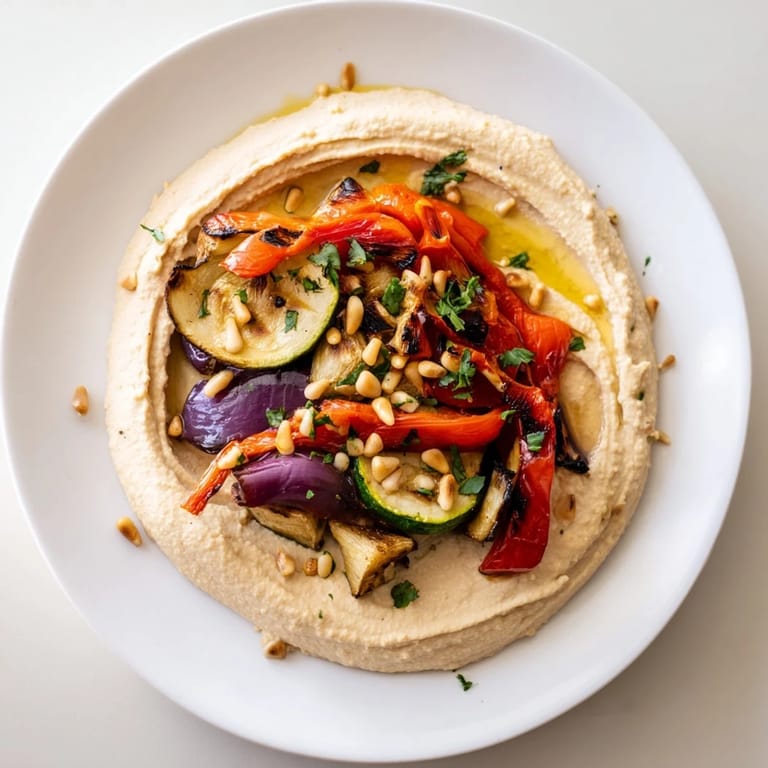
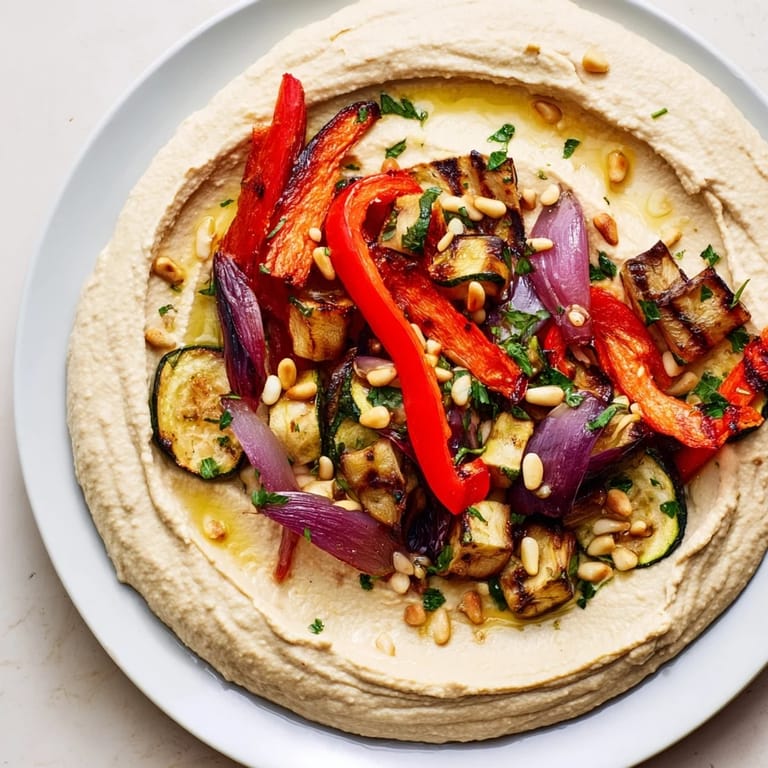
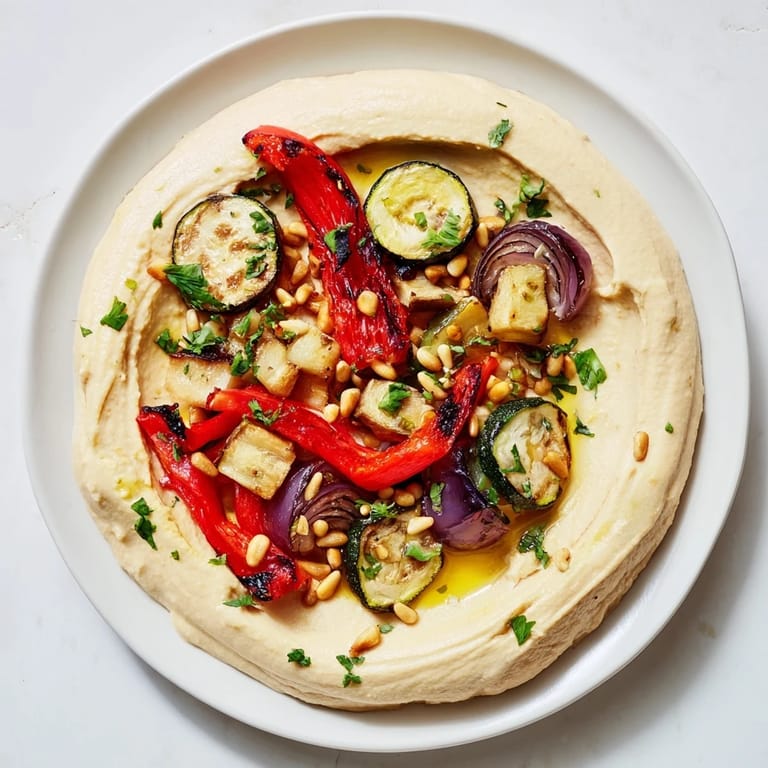
- Spread the hummus onto your serving dish in a generous swoosh, creating little valleys for the vegetables to nestle into. Top with the warm roasted vegetables, scatter the pine nuts over everything, add the parsley and sumac if using, then drizzle with good olive oil and serve immediately.
 Save
Save The thing that made me fall in love with this dish wasn't the taste, though it's delicious—it was watching someone break off a piece of warm pita and pile it high with hummus and vegetables, then eat it with the kind of contentment that comes from food that feels both nourishing and celebratory. That's the magic of something simple done thoughtfully.
The Art of Charring
Charring isn't burning—it's the Maillard reaction creating depth and complexity. When the eggplant cubes get dark spots and the bell pepper edges crisp up, that's not a mistake, that's flavor development. I learned this by overdoing it once, and while some pieces were genuinely blackened, the ones that were properly charred had this haunting sweetness that made everything taste better. Start watching around the 20-minute mark, and don't be afraid of the dark spots.
Hummus as a Canvas
The beauty of hummus is that it's neutral enough to carry whatever vegetables you have on hand, but rich enough to hold its own. I've made this with roasted carrots in winter, grilled zucchini in summer, and charred cauliflower when I was feeling ambitious. The technique stays the same, but the personality of the dish shifts. This flexibility is why I keep making it—it fits whatever the season or my mood demands.
Serving Ideas and Variations
This works as an appetizer, a light lunch when paired with greens, or even a side dish to grilled protein. I've served it on warm pita, on crudités, on sourdough toast, and even as a base for a grain bowl. The roasted vegetables can change based on what's available—mushrooms, zucchini, squash, or even potatoes all work beautifully. Some days I add a drizzle of harissa or a pinch of chili flakes to the hummus itself for extra heat.
- Try fresh herbs like mint or dill sprinkled on top for brightness.
- A dollop of Greek yogurt or tahini mixed with pomegranate molasses creates an unexpected contrast.
- Make it ahead—the hummus keeps for days and tastes even better as the flavors meld.
 Save
Save This is the kind of dish that reminds you why cooking for yourself matters—not because it's complicated, but because it's thoughtful. Serve it warm and watch people's faces change.
Recipe FAQs
- → What vegetables work best for roasting?
Bell peppers, zucchini, red onions, and eggplants are excellent choices, but carrots, cauliflower, or mushrooms also roast well.
- → How can I achieve a creamy consistency for the whipped base?
Blend chickpeas with tahini, lemon juice, garlic, olive oil, and a bit of cold water gradually until smooth and silky.
- → Can I substitute pine nuts with other toppings?
Yes, toasted walnuts or almonds add similar crunch and richness if pine nuts are unavailable.
- → What does sumac or zaatar add to the dish?
Sumac offers a tangy, lemony flavor, while zaatar brings herbal, earthy notes enhancing the overall flavor profile.
- → How should the roasted vegetables be prepared for best flavor?
Toss vegetables in olive oil, smoked paprika, salt, and pepper, then roast until tender and charred for a smoky depth.