 Save
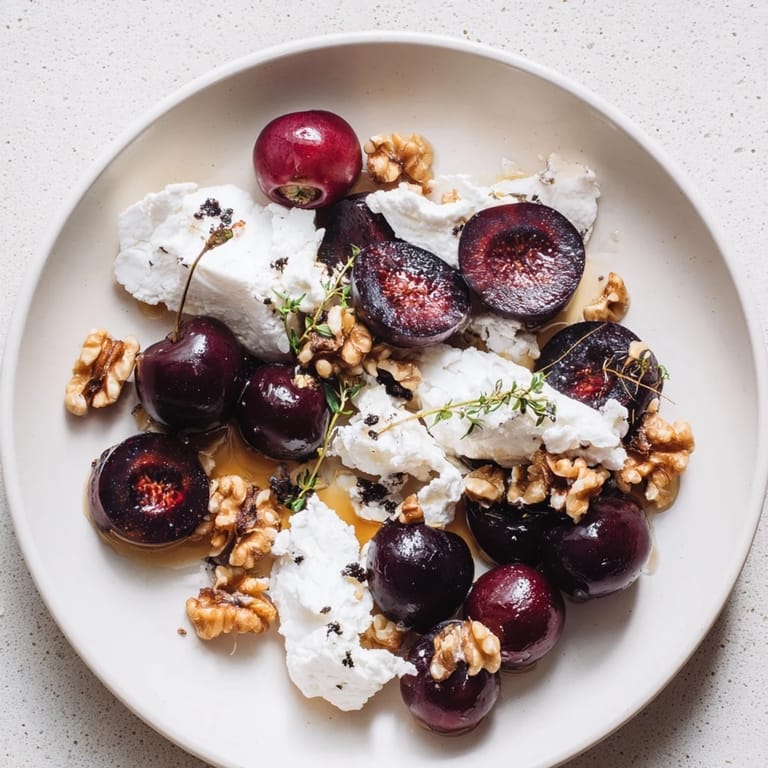
Save There's something about assembling a fruit and cheese platter late in the evening that feels like creating edible art. I discovered this particular combination on a quiet night when my fridge held beautiful purple grapes, dark cherries, and a wedge of ash-coated goat cheese that caught the lamplight like something from a gallery. The contrast between the tart, creamy cheese and the juicy sweetness of the fruit became my go-to when I wanted something that looked intentional without fussing.
I remember plating this for a dinner party where one guest mentioned she'd been craving something interesting but light, and watching her face when she tasted the walnut-honey combination with the goat cheese reminded me why these simple compositions matter. There's real power in knowing when to let good ingredients speak for themselves.
Ingredients
- Dark cherries: Their deep color and jammy sweetness anchor the platter visually and flavor-wise; pitting them fresh makes all the difference in texture.
- Ripe plums: Choose ones that give slightly to pressure—they should taste summery and juicy, not mealy.
- Purple grapes: Halving them releases their juice slightly and makes them easier to pair with cheese.
- Black-ashed goat cheese: That ash coating isn't just for looks; it brings an earthy complexity that balances the fruit's sweetness beautifully.
- Toasted walnuts: The nuttiness and slight bitterness they add is essential for depth, so don't skip the toasting step.
- Honey: A light drizzle adds gentle sweetness and catches the light when plated.
- Fresh thyme: A few sprigs tucked between fruits add a whisper of herbal grace without overwhelming anything.
Tired of Takeout? 🥡
Get 10 meals you can make faster than delivery arrives. Seriously.
One email. No spam. Unsubscribe anytime.
Instructions
- Start with color:
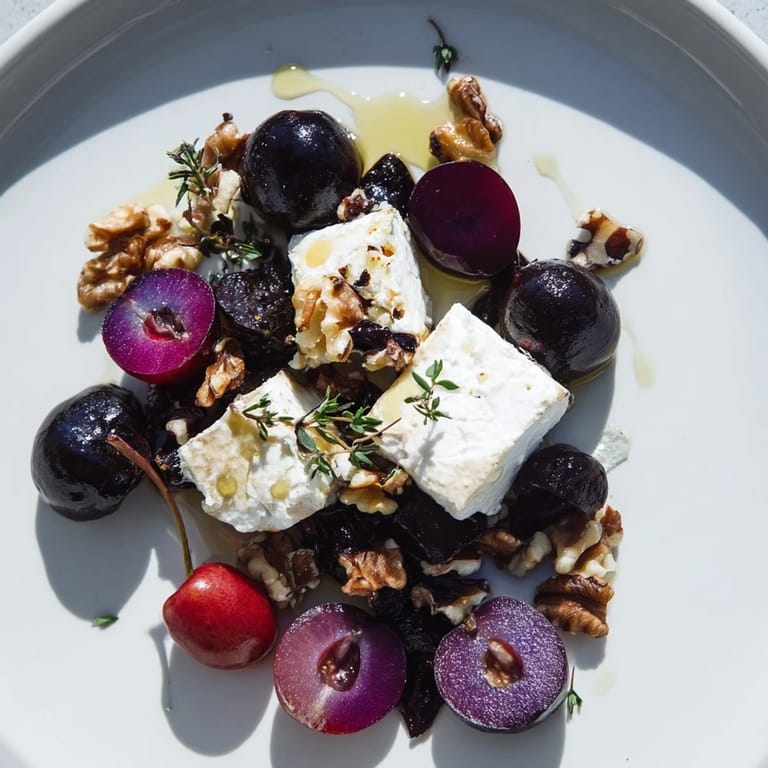
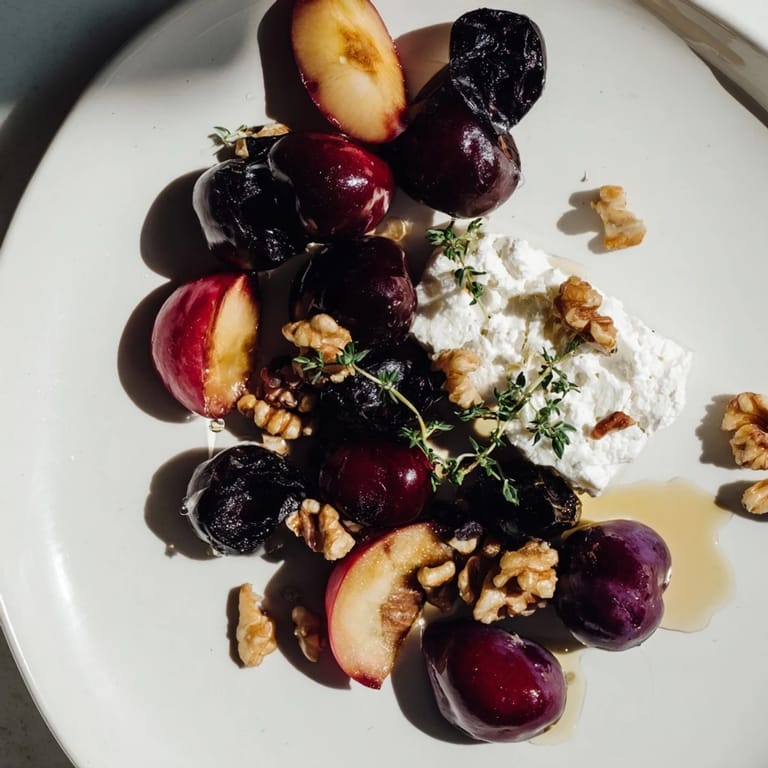
- Arrange the cherries, plums, and grapes on your platter in loose groupings, thinking about how the deep purples and reds play against each other. Step back and look at it—this is when you decide if the composition feels balanced to your eye.
- Introduce the cheese:
- Slice or crumble the goat cheese directly onto the platter, letting it nestle into spaces between the fruit. The contrast between the white interior and dark ash coating becomes part of the visual story.
- Add warmth and texture:
- Scatter your toasted walnuts across the board and drizzle honey in thin threads—you're aiming for hints of sweetness, not coating everything.
- Final flourish:
- Tuck fresh thyme sprigs into gaps and across the platter like you're finishing a painting. It adds color and signals that care went into the assembly.
- Serve with intention:
- Bring it to the table while everything is still cool and fresh, inviting people to build their own bites by combining fruit, cheese, and nuts however they like.
 Save
Save This platter became my answer to that moment when someone asks, "Can you bring something?" and you want to show up with something that feels personal and considered. It's one of those rare dishes where the effort feels intentional without being exhausting.
Why This Works as an Ending
A fruit and cheese board naturally bridges the gap between savory and sweet in a way that feels appropriate after a meal. It's light enough that no one feels overfull, yet rich enough in flavor and texture that it registers as a real course. The goat cheese especially—with its tangy depth—transforms this from simple fruit into something with actual complexity.
Pairing Possibilities
The beauty of this platter is that it plays well with almost anything you'd serve before it. I've followed bold pasta courses with it, and I've offered it on its own as an evening's centerpiece. Wine-wise, dry sparkling works beautifully, as does a light-bodied red or even a crisp white if you want to stay cool.
Small Details That Elevate
It's the small choices that push a cheese board from adequate to memorable. Use a platter you actually love looking at, take time to pit those cherries cleanly, and toast your walnuts fresh rather than using pre-toasted ones from the pantry. These aren't complicated gestures, but they compound into something that tastes better because it was assembled with presence.
- Serve on something with visual weight—a dark slate or wooden board makes the colors pop.
- If you're adding crackers or toasted baguette, keep them on the side so they stay crisp.
- Make this platter no more than 20 minutes before serving to keep everything at its peak.
 Save
Save At its heart, this is about understanding that sometimes the most elegant thing you can serve is simply really good ingredients arranged with care. It's an appetizer or dessert that reminds people why they love eating together in the first place.
Recipe FAQs
- → What fruits complement the black-ashed goat cheese?
Dark cherries, ripe plums, and purple grapes provide a perfect balance of flavors and textures that complement the creamy goat cheese.
- → Can this platter be made vegan?
Yes, by substituting the black-ashed goat cheese with a plant-based ash-coated cheese alternative.
- → How long does it take to prepare this platter?
Preparation takes about 15 minutes, with no cooking required, making it a quick and elegant option.
- → What garnishes enhance the platter’s flavor?
Toasted walnuts add crunch, honey offers sweetness, and fresh thyme sprigs provide a fragrant herbal note.
- → What beverages pair well with this platter?
A dry sparkling wine or a light-bodied red wine complements the fruit and cheese beautifully.