 Save
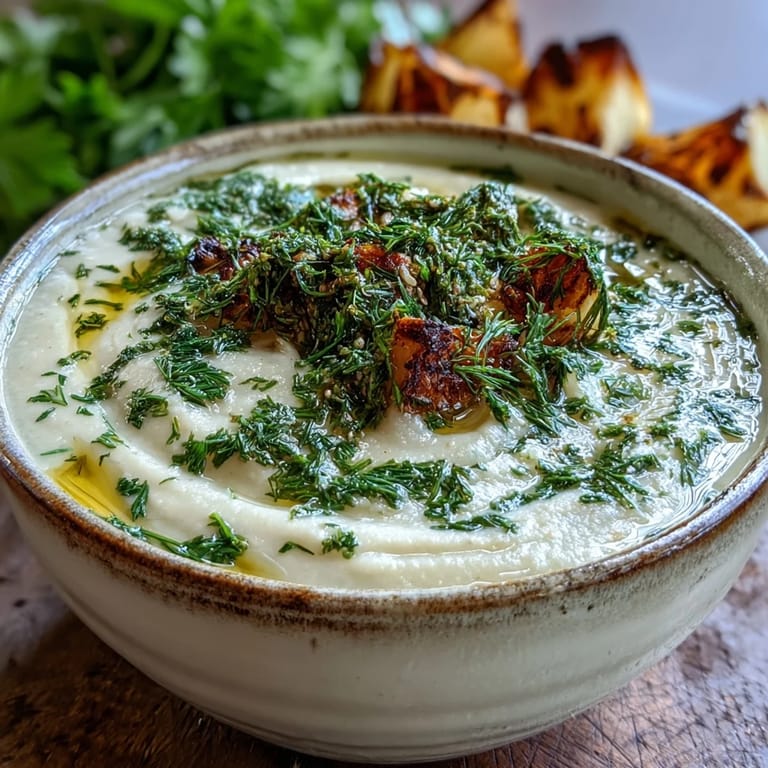
Save There's something about autumn that makes parsnips feel like the only vegetable worth cooking. I discovered this soup quite by accident one October evening when my farmer's market haul was heavier on root vegetables than I'd planned, and I needed something that would turn those pale, sweet parsnips into actual dinner. The first spoonful surprised me—that deep, almost nutty richness from roasting, mellowed by cream, then lifted by a scatter of fresh herbs that made the whole bowl taste alive.
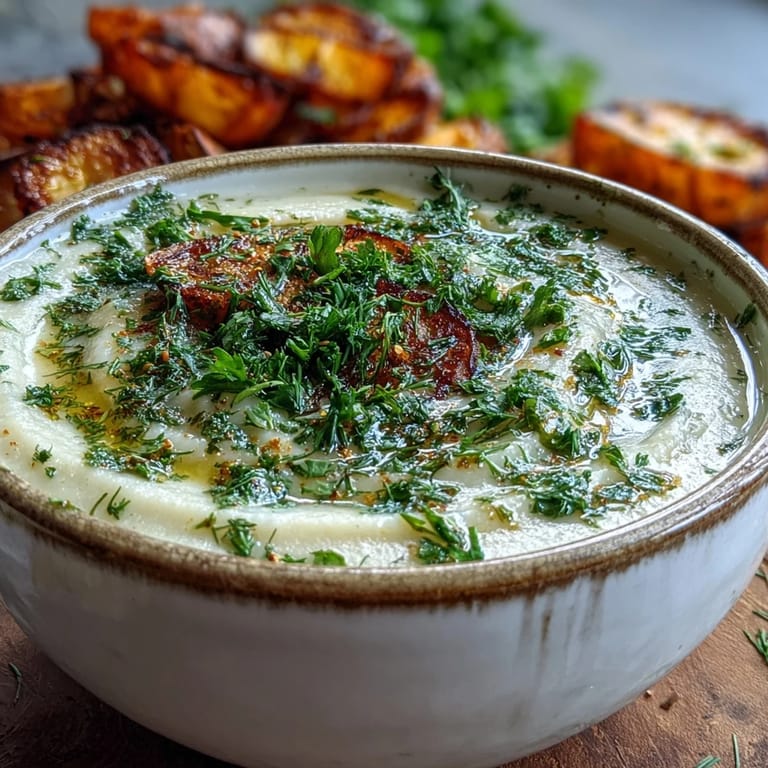
I made this for my mum on a grey Sunday afternoon when she mentioned feeling under the weather. She was skeptical about parsnips until I set the bowl in front of her—the herbs had turned everything such an appealing pale green, and the smell alone seemed to lift her spirits. Watching her eyes light up on the second spoonful made me realize this soup does something beyond nourishing; it somehow says 'I'm thinking of you' in a way words can't quite manage.
Ingredients
- Parsnips, 800 g peeled and chunked: These are the star, so choose ones that feel firm and smell faintly sweet; smaller ones tend to be less woody in the center.
- Potato, 1 medium peeled and diced: This adds body and helps create that silky texture without needing cream to do all the work.
- Onion, 1 medium chopped: The foundation of flavor—I always chop mine into larger pieces for roasting so they caramelize properly.
- Garlic cloves, 2 peeled: Keep them whole during roasting; they'll soften into sweet little morsels that blend seamlessly into the finished soup.
- Vegetable stock, 1 L: A good quality stock makes an enormous difference; if yours tastes thin, this soup will too.
- Whole milk or plant-based milk, 200 ml: The milk goes in after blending to preserve that silky mouthfeel without making it feel heavy.
- Olive oil, 2 tbsp: Use this for roasting and save a bit more for drizzling at the end; it brings out everything else.
- Bay leaf, thyme, white pepper: These three work together during the simmer to deepen flavors without overpowering the parsnip's natural sweetness.
- Fresh parsley, chives, and dill: These are stirred in at the very end and make the difference between 'nice soup' and 'why does this taste so good'.
- Salt: Taste as you finish the soup; you'll likely need more than you'd expect once you add the milk.
Tired of Takeout? 🥡
Get 10 meals you can make faster than delivery arrives. Seriously.
One email. No spam. Unsubscribe anytime.
Instructions
- Roast your vegetables until golden:
- Heat the oven to 200°C, toss your parsnips, onion, and garlic cloves with olive oil and salt, spread them on a baking tray in a single layer, and let them roast for 25–30 minutes, turning halfway through. You'll know they're ready when the edges are deeply golden and a fork slides through without resistance.
- Build the soup base:
- Tip your roasted vegetables into a large saucepan, add the diced potato, bay leaf, thyme, white pepper, and vegetable stock. Bring everything to a boil, then lower the heat and let it simmer for 15 minutes until the potato is completely soft and starting to fall apart.
- Blend until completely smooth:
- Fish out the bay leaf, then use an immersion blender or regular blender to turn everything into a silky puree—don't leave lumps, as they'll interrupt the texture. Be careful with hot soup if you're using a regular blender; blend in batches and let it cool slightly first.
- Add the milk and warm through:
- Return the blended soup to the pan over low heat and stir in the milk, then let it warm through gently without boiling. This keeps the flavors bright and the texture from becoming grainy.
- Stir in fresh herbs and taste:
- Add your chopped parsley, chives, and dill, then taste and season with salt and white pepper until it feels balanced. The herbs should be bright and present, not subtle.
- Serve and finish:
- Ladle into warm bowls and top with an extra pinch of fresh herbs and a small drizzle of olive oil or cream if you'd like. The contrast of warm soup with those fresh, cold herbs on top is part of the appeal.
 Save
Save My neighbor came over one evening just as I was ladling bowls, and I almost didn't invite her to stay, but she caught a whiff from the kitchen and I couldn't bring myself to let her leave. We ended up sitting at the table for two hours over that soup, talking about nothing particularly important but somehow everything that mattered. It's become one of those meals I make when I want someone to feel genuinely welcomed.
Why Roasting Changes Everything
The difference between a roasted parsnip and a boiled one is enormous. When you roast them, the natural sugars concentrate and caramelize at the edges, creating depth and complexity that boiling simply can't achieve. I learned this the hard way by making a bland version the first time, and it taught me to respect the vegetable enough to give it proper technique.
The Art of Finishing
This soup teaches you something about cooking that extends beyond the kitchen: that final touch is often what separates forgettable from memorable. The herbs stirred in at the end aren't decoration; they're the voice of the dish. I've served the exact same soup base two ways, once without herbs and once with them, and the difference is genuinely dramatic.
Variations and Serving Moments
This soup is quietly flexible, which is part of why I come back to it. I've made it with celeriac alongside the parsnips, added a tiny whisper of nutmeg in autumn when I'm feeling nostalgic, and once tried a pinch of cumin which shouldn't have worked but somehow did. Serve it with crusty bread when you want something substantial, or with a crisp Sauvignon Blanc if you're making it the centerpiece of an elegant lunch.
- A pinch of ground nutmeg or cumin adds unexpected warmth if you're in the mood to experiment.
- Vegan? Use plant-based milk and skip the cream garnish; the soup is creamy enough on its own.
- Make it ahead and reheat gently; soups like this often taste even better the next day as flavors settle.
 Save
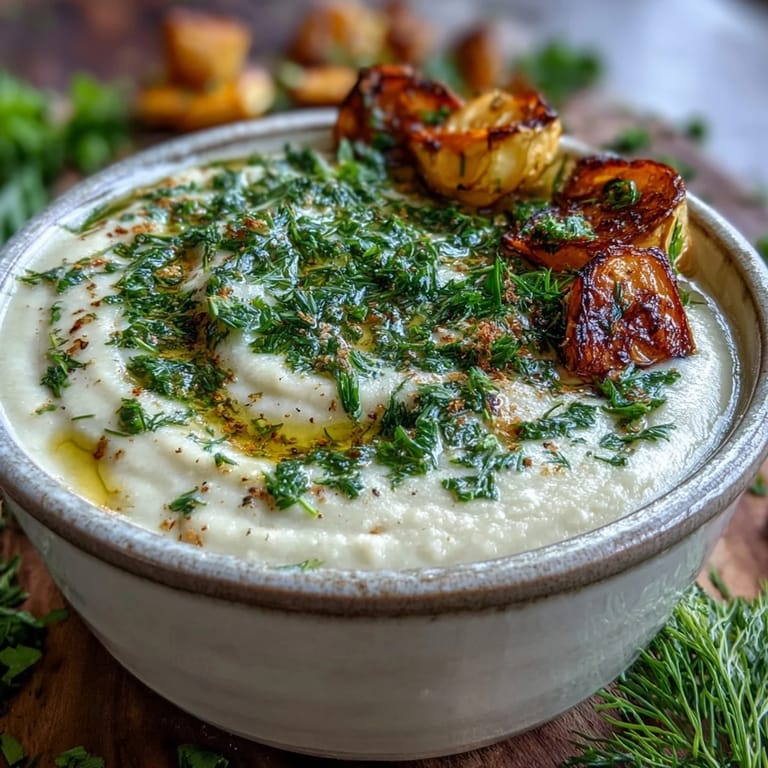
Save This soup has quietly become my answer to 'what do I cook when I need to feel grounded and want someone else to feel cared for'. It's that simple and that good.
Recipe FAQs
- → Can I freeze this soup?
Yes, this soup freezes well for up to 3 months. Cool completely before transferring to freezer-safe containers. Thaw overnight in the refrigerator and reheat gently, adding a splash of milk if needed to restore consistency.
- → What herbs work best in this soup?
Parsley and chives provide the best balance, while dill adds a lovely aromatic finish. You can also try tarragon for an anise-like note or fresh coriander for a different flavor profile. Add herbs at the end to preserve their bright flavor.
- → How do I make it vegan?
Simply replace the whole milk with your favorite unsweetened plant-based milk—oat, almond, or coconut milk all work beautifully. Skip the cream garnish or use a dollop of coconut cream or cashew cream instead.
- → Why roast the parsnips first?
Roasting caramelizes the natural sugars in parsnips, creating a sweeter, deeper flavor that you can't achieve through boiling alone. The golden-brown edges add complexity to the finished soup, making it taste richer without additional ingredients.
- → Can I use other root vegetables?
Absolutely. Try adding carrots for sweetness, celeriac for a savory note, or sweet potato for extra creaminess. Keep the total weight roughly the same and adjust roasting time as needed—softer vegetables like sweet potato may need less time.
- → How can I make this soup thicker?
The potato already helps thicken the soup naturally. For extra body, try adding more potato or reducing the stock slightly. You can also purée a small portion of the soup longer than the rest or stir in a spoonful of cream or coconut milk at the end.