 Save
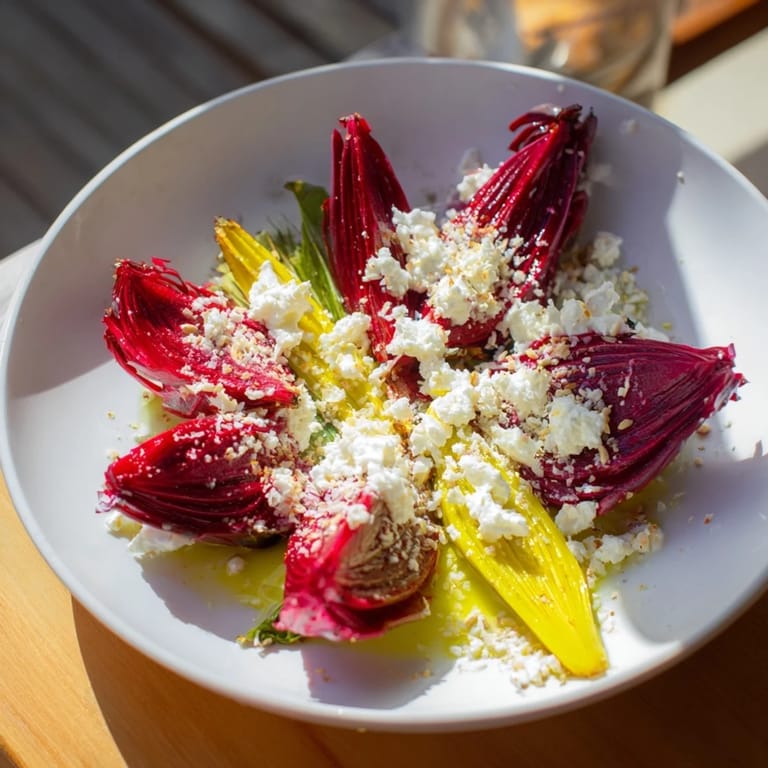
Save I'll never forget the moment I discovered the magic of arrangement. Years ago, at a small farm-to-table restaurant in Provence, I watched a chef transform ordinary vegetables into pure art on a plate. She didn't use complicated techniques or exotic ingredients—just her knife, her patience, and an understanding that sometimes the most elegant dishes speak through their presentation. That evening sparked an obsession with creating food that stops people mid-conversation, and this Radial Symmetry Sunburst salad became my answer to that feeling.
I made this for my sister's engagement dinner last spring, and I watched her literally gasp when she walked into the room. Her fiancé called it a masterpiece before tasting a single bite. That's when I realized this dish does something special—it makes people feel celebrated just by being in its presence. Now it's become my go-to move for impressing without stress.
Ingredients
- 1 medium golden beet, peeled and thinly sliced: Golden beets have a sweeter, earthier flavor than red ones, and their pale yellow brings warmth to the composition. I learned to slice them last because they stain less than red beets, keeping everything pristine.
- 1 medium red beet, peeled and thinly sliced: These are your jewel tones. Their deep crimson creates striking visual contrast and adds an earthy sweetness that anchors the whole arrangement.
- 1 small zucchini, thinly sliced: Raw zucchini brings a delicate, almost water-like quality that keeps the dish light. Slice these on a slight bias for more elegant crescents.
- 1 small yellow squash, thinly sliced: The companion to zucchini, offering a slightly sweeter flavor and buttery color that bridges the gap between greens and golds in your sunburst.
- 1 medium watermelon radish, thinly sliced: This is your conversation starter—those shocking pink and white concentric rings feel like nature's own art. The flavor is mild and slightly peppery, adding complexity without overwhelming.
- 1 large carrot, peeled and thinly sliced: Choose the sweetest carrot you can find. These slices fan beautifully and their natural sugars play wonderfully against the goat cheese's tang.
- 100 g goat cheese, crumbled: This is your creamy anchor in the center. The tanginess cuts through the sweet vegetables perfectly and creates a luxurious mouthfeel.
- 2 tbsp crème fraîche: Mix this with the goat cheese to make it spreadable and cloud-like. It's the secret to a center that feels indulgent without being heavy.
- 2 tbsp extra-virgin olive oil: Use something you actually love tasting—this is where it shines without being cooked down.
- 1 tbsp freshly squeezed lemon juice: Fresh is non-negotiable here. Bottled tastes flat against the delicate vegetables. This brightens everything and prevents oxidation.
- 1 tsp honey: Just enough to round out the lemon's sharpness and marry all the flavors together.
- Salt and pepper, to taste: Don't under-season. The vegetables are mild, so these become your seasoning foundation.
- 2 tbsp fresh chives, finely chopped: Their mild onion flavor adds sophistication. Chop them just before serving so they stay vibrant.
- 1 tbsp toasted sesame seeds: These add a subtle nuttiness and provide textural contrast against the silky vegetables. Toast them yourself—the difference is remarkable.
- Edible flowers (optional): Nasturtiums, pansies, or borage flowers add an ethereal final touch that transforms this from impressive to restaurant-quality.
Tired of Takeout? 🥡
Get 10 meals you can make faster than delivery arrives. Seriously.
One email. No spam. Unsubscribe anytime.
Instructions
- Slice with intention:
- Get all your vegetables prepped and sliced as thinly as possible. A mandoline is your friend here, but if you're using a sharp knife, let it do the work without pressing hard. Think of each slice as a brushstroke. Pat the slices dry with paper towels—any excess moisture will make them slip around during arrangement and water down your dressing later.
- Mark your center:
- Place your small bowl or ramekin right in the middle of your large round platter. This is your focal point, your sun. Step back and make sure it's perfectly centered. This visual anchor will guide every slice you place.
- Build your sunburst:
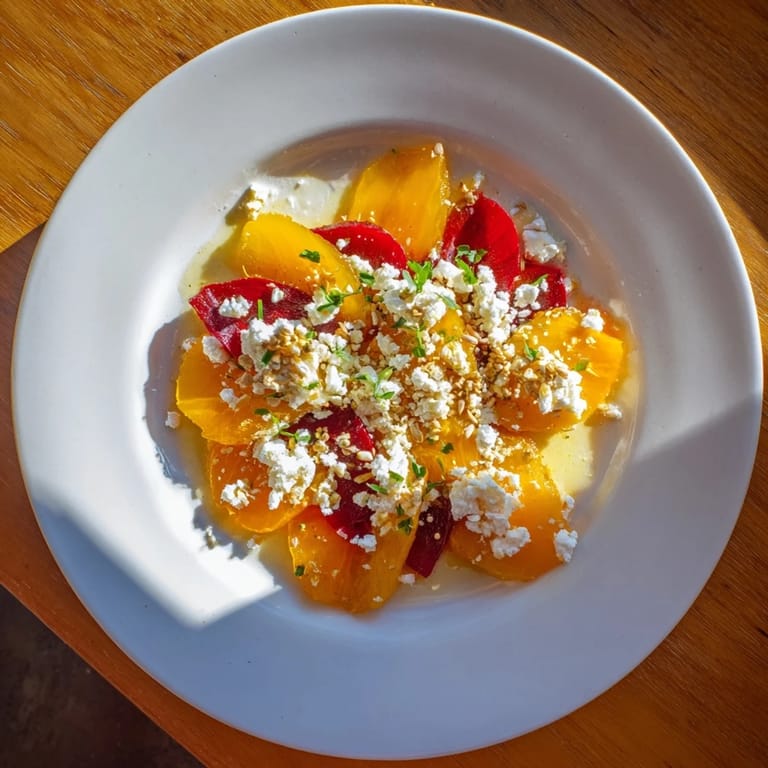
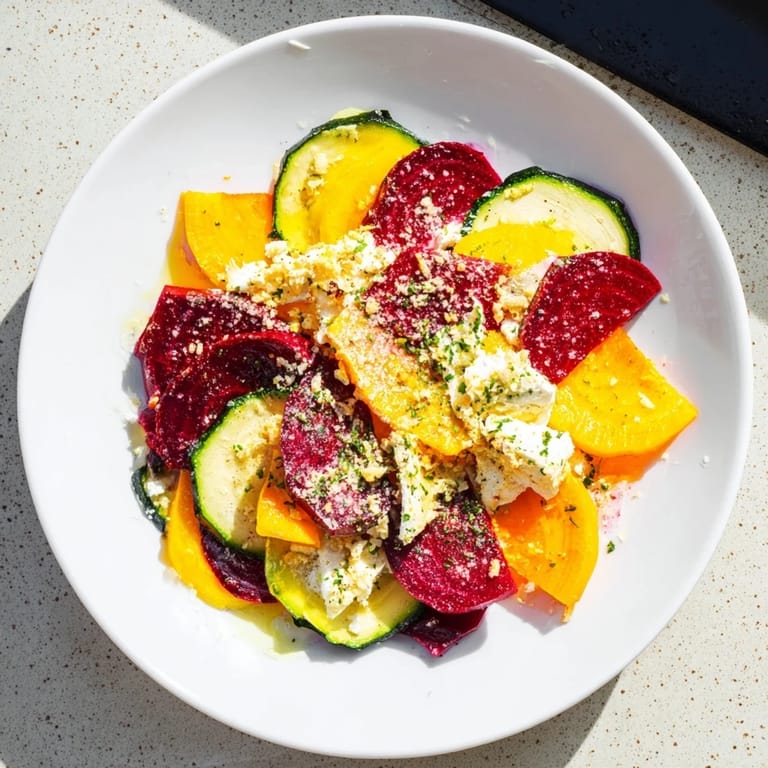
- Start with one color—I recommend the golden beet as your innermost ring. Fan each slice outward from the central point, overlapping them just slightly like roof tiles. As you complete one full circle, move to the next vegetable. Alternate colors and shapes as you spiral outward: red beet, then zucchini, then yellow squash, watermelon radish, and finally carrot on the outer edge. The overlapping creates depth and catches light beautifully. This part takes patience, but that's where the magic happens.
- Fill the center:
- Remove the bowl or ramekin. Now you have an empty space that's the heart of your sunburst. Mix the crumbled goat cheese with the crème fraîche until it's smooth and cloud-like. Spoon this into the center, spreading it gently so it fills the space but doesn't entirely hide the hole you just revealed. Leave just a touch of the platter visible for elegance.
- Dress with grace:
- In a small bowl, whisk together the olive oil, fresh lemon juice, and honey. Taste it—it should make your mouth water slightly. Add salt and pepper and taste again. Now drizzle this dressing evenly over the entire arrangement. Don't drown it; just enough so each slice glistens slightly.
- Garnish with purpose:
- Scatter the chopped chives across the whole thing, then sprinkle the toasted sesame seeds throughout. If you have edible flowers, tuck them into a few gaps in the arrangement. They should look like they could have just bloomed there naturally.
- Serve immediately:
- This is important. Raw vegetables don't wait forever. Bring it to the table while everything is crisp and the dressing hasn't absorbed into the vegetables. Watch people's faces when they first see it.
 Save
Save My partner once told me that watching me arrange this salad was like watching someone paint. I'd never thought of cooking that way before—as art first, food second. But standing there with the golden afternoon light streaming through the kitchen window, carefully placing each slice just so, I understood what they meant. That's when a recipe becomes a ritual, and a dish becomes a moment.
Why Arrangement Matters More Than You Think
In most cooking, technique is about flavor and texture. But with this dish, presentation is flavor. When food looks this beautiful, your brain expects it to taste extraordinary, and somehow it does. The anticipation heightens your senses. The simple lemon dressing tastes brighter because you're looking at something this radiant. The delicate vegetables feel more precious because someone took time to honor them. That's not magic—that's psychology meeting craft, and it's entirely intentional.
Variations That Still Sing
Once you understand the principle here, you can adapt this freely. In summer, add thinly sliced cucumber and heirloom tomatoes. In spring, raw asparagus spears fanned just slightly and paper-thin radishes create a completely different energy. You can replace the goat cheese with whipped ricotta, creamy burrata, or even a tangy feta. The dressing stays the same, but the composition shifts with the seasons. This recipe isn't really a recipe—it's a framework for celebrating whatever looks beautiful at the market.
Pairing and Serving Wisdom
This is elegant enough for the start of a dinner party, but it's also substantial enough to stand alone as a light lunch. Pair it with a crisp white wine—a Sauvignon Blanc is perfect, but an Albariño or even a dry Riesling would be beautiful. The acidity in these wines echoes the lemon in your dressing and keeps the whole experience feeling fresh and refined. Serve it on your most beautiful plate, because this dish deserves to be seen exactly as you've arranged it.
- Make sure your platter and all vegetables are cold before you begin arranging—this keeps everything crisp and prevents wilting.
- If you're nervous about the arrangement, sketch it lightly on a piece of paper first. Seriously. A quick pencil drawing of your sunburst pattern takes the anxiety out of it.
- This dish travels well to potlucks or dinners if you keep the dressing in a small jar and dress it just before serving at your destination.
 Save
Save This salad taught me that sometimes the most nourishing food is the kind that feeds the eyes first and the soul second. It's a reminder that cooking can be both generous and beautiful, humble and show-stopping, all at once.
Recipe FAQs
- → How should the vegetables be sliced for best results?
Vegetables should be sliced as thinly as possible using a sharp knife or mandoline to create a delicate and even layering effect.
- → Can I substitute goat cheese with other cheeses?
Yes, ricotta or feta can be used as alternatives, offering a similar creamy texture and mild flavor.
- → What is the purpose of arranging vegetables in radial symmetry?
The arrangement creates an eye-catching sunburst pattern that highlights the vibrant colors and shapes of the ingredients.
- → How can I adjust the dressing to suit dietary preferences?
The dressing combines olive oil, lemon juice, and honey, but you can reduce sweetness or replace honey with maple syrup for vegan preferences.
- → Are there any allergen considerations to keep in mind?
This dish contains dairy and sesame seeds; omit sesame seeds if allergies exist and verify cheese labeling for any additional allergens.
- → What garnishes complement this sunburst salad?
Fresh chives, toasted sesame seeds, and edible flowers enhance both flavor and presentation with subtle herbal notes and texture.