 Save
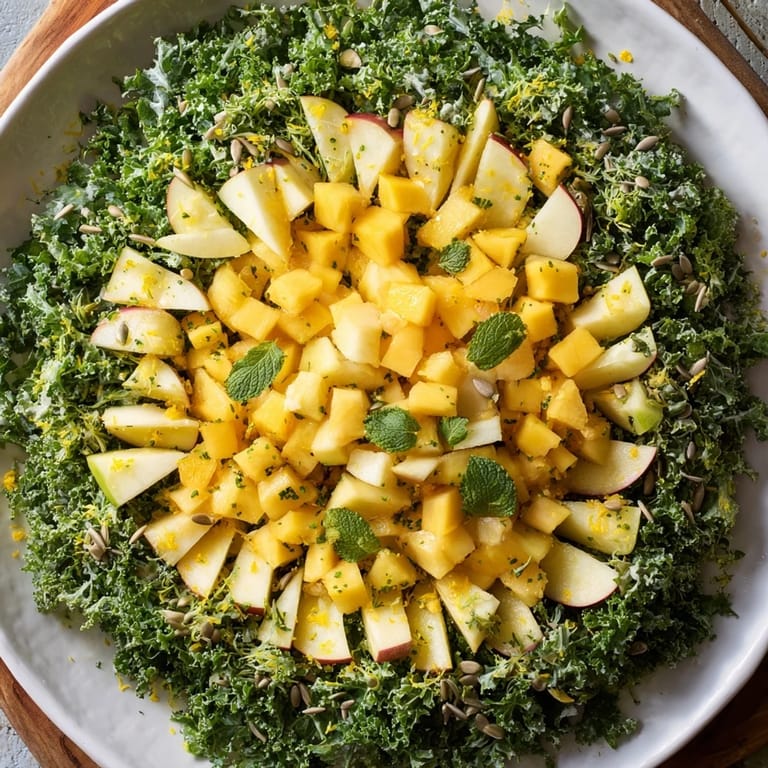
Save There's something about arranging fruit in concentric circles that makes you feel like you're painting on a plate. One afternoon, standing in my kitchen with a cutting board scattered with golden mango and sliced peach, I realized I'd been overthinking salads my whole life—treating them like obligations rather than art. That's when this salad was born: a celebration of color and flavor that tastes as good as it looks, built on the simple idea that green and gold belong together.
I served this at a spring gathering last year, and what surprised me most wasn't the compliments—it was watching people slow down to really look at their plates before eating. Someone asked if I'd studied food styling, and I laughed because honestly, I'd just been inspired by a walk through a park where wildflowers surrounded a meadow. Sometimes the best recipes come from noticing the world around you rather than scrolling through cookbooks.
Ingredients
- Ripe mango: Choose one that yields slightly to pressure but isn't mushy; the sweetness and creamy texture are what make this salad sing.
- Pineapple: Fresh is non-negotiable here because its bright acidity balances the richness of the olive oil.
- Golden apple: Use varieties like Honeycrisp or Golden Delicious for that honeyed flavor and crisp bite that holds up without browning.
- Yellow peach: If peaches aren't in season, ripe nectarine works beautifully and adds the same silky contrast.
- Kale: Massaging it with dressing is the secret to transforming it from tough to tender without any cooking involved.
- Fresh herbs: Mint, basil, and parsley aren't just garnish here; they're what make each bite feel fresh and alive.
- Extra-virgin olive oil: This is your foundation, so use something you actually enjoy tasting on its own.
- Lemon juice: Freshly squeezed makes all the difference; bottled just doesn't have the same brightness.
- Maple syrup: A small amount adds body to the dressing without making it sweet, and it helps everything emulsify together.
- Dijon mustard: The emulsifier that holds this dressing together and adds subtle depth.
Tired of Takeout? 🥡
Get 10 meals you can make faster than delivery arrives. Seriously.
One email. No spam. Unsubscribe anytime.
Instructions
- Build your dressing:
- In a small bowl, whisk olive oil with lemon juice, maple syrup, Dijon mustard, salt, and pepper until everything comes together in an emulsified stream. This is your magic potion—taste it and adjust the lemon or salt until it sings with brightness.
- Soften the kale:
- Pour half the dressing over your shredded kale and massage it with your hands for about a minute, almost like you're giving it a spa treatment. You'll feel it relax and darken, losing that raw edge while staying vibrant and alive.
- Toss the greens together:
- Add your spinach, parsley, mint, and basil to the massaged kale and toss everything gently so the herbs stay tender and the colors stay bright. The goal is a verdant tangle of green.
- Create the landscape:
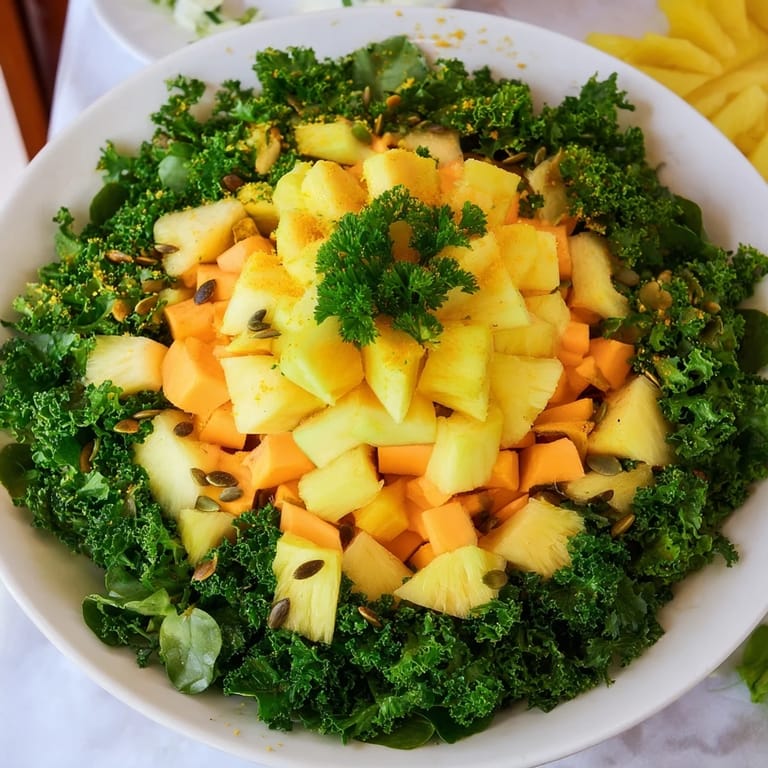
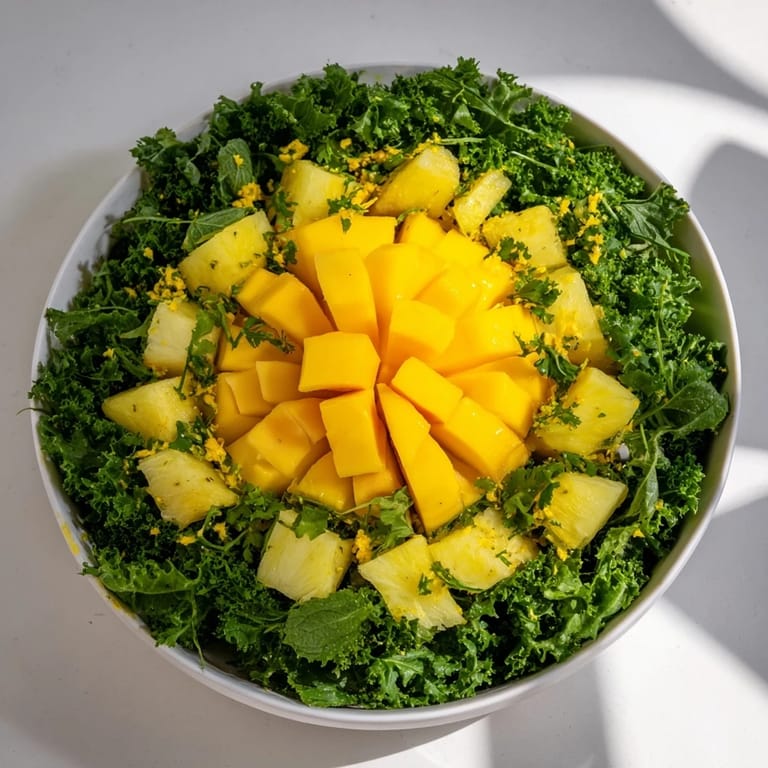
- Spread the dressed greens around the outer edge of a wide, shallow bowl, making them thick and forest-like, then pile your diced fruits in the glowing center. This is where the magic happens—the composition transforms a salad into a scene.
- Finish with intention:
- Drizzle the remaining dressing over the fruits and sprinkle with toasted pumpkin seeds and lemon zest if you're using them. Serve immediately so everything stays at its crispest and brightest.
 Save
Save There's a specific moment when you step back and look at the finished salad—really look at it—and realize you've created something beautiful enough to photograph but delicious enough to immediately dive into. That collision of aesthetics and appetite is what keeps me coming back to this recipe.
Choosing Your Yellow Fruits
The yellow fruits are the stars here, and while the combination I've suggested is tried and true, you have room to improvise based on the season and what calls to you. Ripe papaya brings a silky sweetness, golden kiwi adds tartness and those beautiful seeds, and even yellow cherry tomatoes can add an unexpected twist if you want to play with expectations. The rule is simple: pick fruits that are ripe and fragrant, ones that taste like summer or warmth, whatever that means in your kitchen right now.
The Dressing That Matters
I used to make vinaigrettes the same way every time until someone pointed out that mustard is actually an emulsifier, which changed everything. By whisking the mustard with the acidic lemon juice first before adding the oil, you create a stable emulsion that coats every leaf and piece of fruit instead of pooling at the bottom of the bowl. The maple syrup might seem like an odd choice, but it adds just enough body to carry all those flavors forward while keeping the dressing bright rather than heavy.
Adaptations and Extensions
This salad is flexible enough to bend to what's available but structured enough that it always works. On days when I want more substance, I'll add thin avocado slices or crumbled coconut yogurt. On other days, I layer in some toasted sunflower seeds or even a handful of cooked farro if I want it to feel more like a grain salad. The core formula—massaged greens, bright fruits, herbaceous freshness, and a punchy dressing—stays the same.
- Add sliced avocado for creaminess and richness without losing the fresh feeling.
- Toss in some cooked grains like farro or quinoa if you want this to be a complete meal rather than a side.
- Try a handful of toasted nuts like pistachios or almonds for crunch and earthiness that plays well with the tropical fruits.
 Save
Save This salad reminds me that sometimes the simplest recipes are the ones that make people feel most seen and cared for—not because they're complicated, but because they're beautiful. Serve it when you want to say something without words.
Recipe FAQs
- → What fruits are used in the Sunlit Glade?
The dish features ripe mango, pineapple, golden apple, and yellow peach, creating a bright and flavorful mix.
- → Which greens and herbs complement the fruits?
Shredded kale, baby spinach, fresh parsley, mint, and basil combine to add texture and herbal notes.
- → How is the dressing prepared?
An emulsified mixture of extra-virgin olive oil, fresh lemon juice, maple syrup, Dijon mustard, salt, and pepper balances sweetness and tang.
- → Can any ingredients be substituted?
Yellow kiwi or papaya can replace the fruits, and avocado slices add creaminess if desired.
- → How should the dish be served for best presentation?
Arrange the dressed greens in a wide bowl forming a ring, then mound the yellow fruits at the center for a striking visual contrast.
- → Are there any allergen concerns?
Contains mustard from Dijon mustard and seeds if toasted pumpkin seeds are included; check labels for other allergens.