 Save
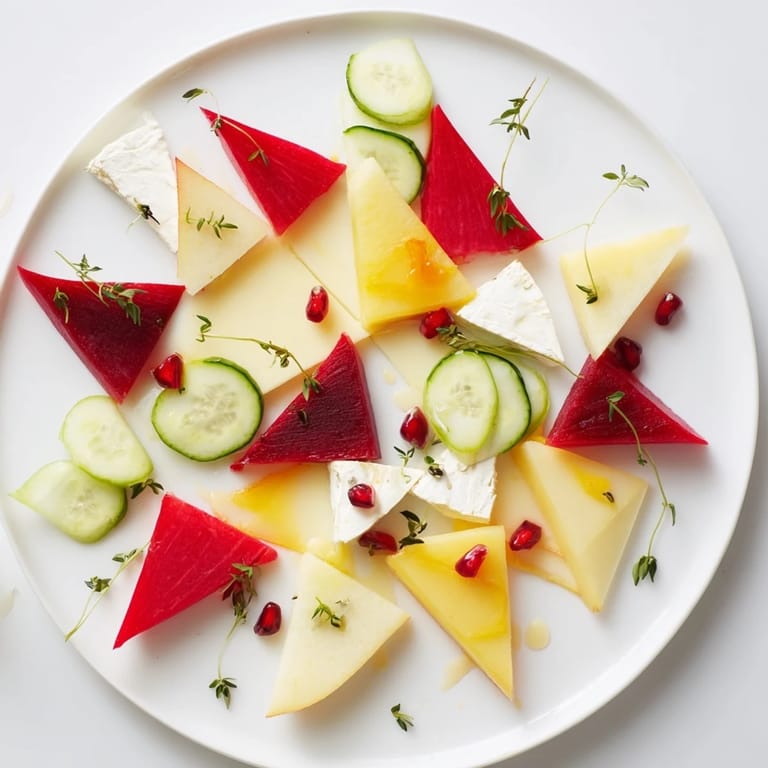
Save I'll never forget the moment I first saw a tessellation board at a dinner party—it was like edible geometry had walked right into the room. My friend Sarah had spent an entire afternoon cutting everything into perfect triangles, and watching guests pause before eating it felt like watching them admire a piece of art. That night, I realized that food doesn't just nourish; sometimes it speaks a language all its own. Now, whenever I want to create that same magic in my own kitchen, I make this Tessellation Triangle board. It's become my favorite way to say "I care" without saying a word.
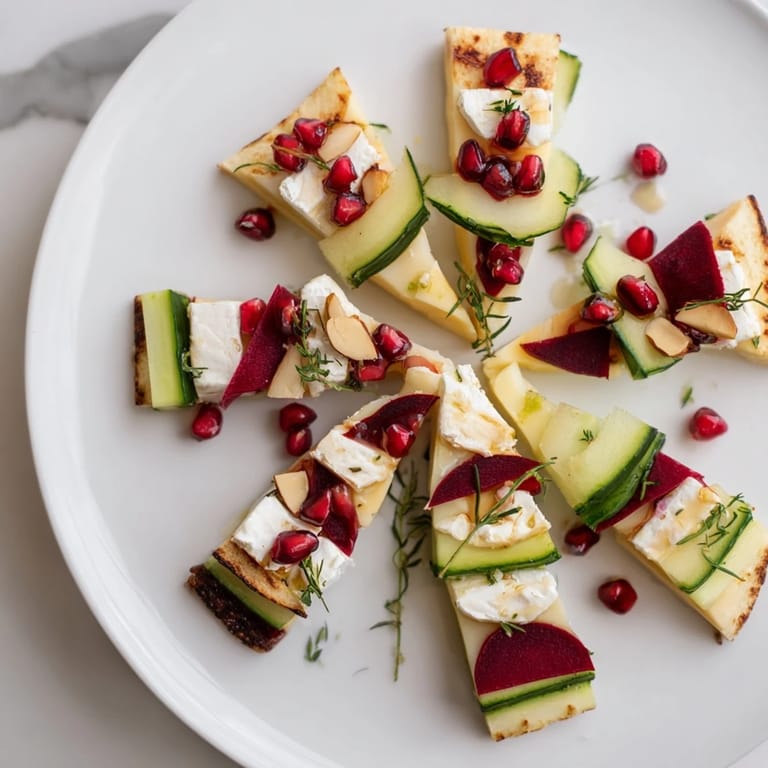
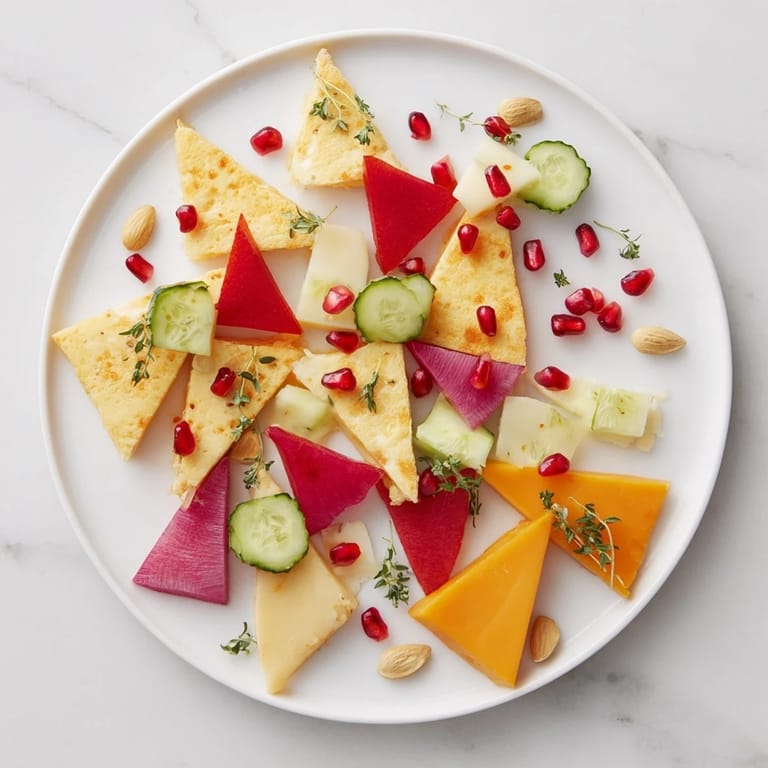
I made this for my cousin's engagement party last spring, and I swear I watched her pick up her phone to photograph it before she even tasted it. The way the deep reds of the beet triangles played against the pale gold of the aged cheddar, with pops of pomegranate red scattered throughout—it felt like putting a sunset on a board. That moment taught me that presentation isn't superficial; it's an invitation. It's saying, 'I thought about you while I made this.'
Ingredients
- Aged Cheddar (100 g, sliced into triangles): This is your bold anchor. Aged cheddar has a sharpness and crystalline texture that catches the light beautifully and tastes like it means business. Slice it about 1/4-inch thick for the perfect thickness—thin enough to feel delicate, thick enough not to crumble.
- Manchego (100 g, sliced into triangles): This Spanish sheep's milk cheese brings a nutty sweetness that balances the sharpness of the cheddar. It's firm enough to hold its triangle shape and adds a subtle golden tone to your pattern.
- Goat Cheese (100 g, chilled and cut into triangles): Keep this cold right up until arranging. The creamy white color is essential for contrast, and its tanginess plays beautifully against sweet pears and grapes.
- Cucumber (1 medium, peeled and sliced into thin triangles): This is your refreshing, light note. Peel it so the triangles are a clean pale green—it's about creating visual harmony as much as flavor.
- Red Bell Pepper (1 large, seeded and cut into triangles): A jewel-toned accent. Cut away the white pith so your triangles are pure, vibrant red. This is your board's ruby.
- Beet (1 small, cooked and sliced into very thin triangles): Roast or steam it until just tender, then chill before slicing paper-thin. The deep burgundy creates drama and visual depth. Wear gloves when handling—learned that the hard way.
- Pear (1 large, cored and sliced into thin triangles): Choose one that's just ripe, with a subtle sweetness. The pale ivory triangles are almost translucent when thin-sliced, and they catch light like frosted glass.
- Seedless Watermelon (1/2 cup, cut into small triangles): This adds a playful, unexpected sweetness and a pop of bright pink. Don't prep it until the last moment so it stays crisp.
- Whole Grain Crackers (100 g, cut if needed into triangles): These are your textural foundation. If they're not naturally triangle-shaped, carefully trim them with a sharp knife. They need to be sturdy enough to hold their shape but not so thick they dominate the pattern.
- Roasted Almonds (1/4 cup): These fill the tiny inevitable gaps and add a nutty crunch. Toast your own if you can—the smell in your kitchen will make people think you've been cooking all day.
- Pomegranate Seeds (1/4 cup, for color and garnish): These are your jewels. They're purely functional here, filling micro-gaps and adding splashes of crimson throughout the pattern. They also add a burst of tart sweetness.
- Honey (2 tbsp, optional, for drizzling): A whisper of honey over the goat cheese triangles creates unexpected sweetness and a subtle shine that photographs beautifully.
- Fresh Herbs—Thyme or Mint (for garnish): A few scattered sprigs finish the composition. Thyme adds an earthy elegance; mint adds brightness and movement. Choose what feels right for your moment.
Tired of Takeout? 🥡
Get 10 meals you can make faster than delivery arrives. Seriously.
One email. No spam. Unsubscribe anytime.
Instructions
- Set Your Stage:
- Start with your largest, most beautiful serving board or platter. Wooden is traditional and warm, but marble or slate works too. This is your canvas, so choose something you're proud to present. Make sure it's clean and completely dry.
- Cut With Intention:
- This is where patience pays off. Cut all your cheeses, vegetables, fruits, and crackers into similarly-sized triangles—consistency is everything in a tessellation. Work with a sharp chef's knife and make each cut deliberate. If you have a mandoline, use it for the cucumber, beet, and pear to get them uniformly thin and almost translucent. The thinness matters; it lets light pass through and creates that jewel-like quality.
- Begin Your Pattern:
- Start from one corner of your board and work methodically. Lay down your first triangle deliberately, then begin alternating colors, textures, and flavors. A piece of cheddar next to cucumber next to beet next to pear creates visual rhythm. This is the meditative part—think of it less like a task and more like playing a puzzle where every piece also tastes good. Fit each triangle tightly against its neighbors. You want minimal gaps so your pattern feels purposeful, not scattered.
- Build With Rhythm:
- Continue row by row, or in whatever pattern speaks to you. Some people work in expanding spirals from the center; others work in waves from top to bottom. There's no wrong way, only your way. As you work, step back occasionally and look at the whole board. Are you creating visual balance? Does the eye know where to rest? Are warm tones and cool tones distributed throughout?
- Fill the Tiny Spaces:
- Once your triangles are placed, you'll notice small gaps where pieces meet. This is where pomegranate seeds and roasted almonds become your secret weapon. Drop them into the gaps like you're setting jewels into a crown. This is the finishing touch that makes everything feel intentional rather than improvised.
- The Final Flourish:
- Drizzle honey lightly over the goat cheese triangles—just enough that it catches light but doesn't pool. Scatter fresh herbs across the board. This is the moment when your geometric precision softens into something living and breathing. You're done when it feels beautiful enough to photograph and delicious enough to devour.
 Save
Save There's a moment when you step back and look at what you've created—when all those individual pieces suddenly become a unified whole—that never gets old. I made one of these boards for my daughter's science fair themed dinner party, and she said it was proof that math and cooking are the same love language. Watching her guests carefully extract triangles because they didn't want to destroy the pattern reminded me that we eat first with our eyes and hearts, and only then with our mouths.
The Geometry of Flavor
What makes this board work isn't just the visual pattern—it's that every triangle is designed to play beautifully with its neighbors. The sharpness of aged cheddar softens against cool cucumber. The earthiness of beet mingles with the delicate sweetness of pear. The crackers provide structure and crunch. This isn't random arrangement; it's flavor architecture. When you're cutting and arranging, think about what each piece is saying to the one next to it. Are you creating harmony or contrast? Both work, but intentionality makes all the difference.
Why Triangles Work
Triangles aren't just beautiful—they're practical. They fit together with minimal waste, creating a sense of completeness and order that soothes the eye. There's something almost meditative about how they lock together, the way each point creates a visual movement that guides you around the board. When people see a tessellation pattern, their brains register it as intentional, even mathematical. It's impressive without being pretentious. Plus, triangles feel more playful and contemporary than the traditional round slices or simple rectangles you see on standard boards.
Making It Your Own
This is a template, not a prison. If you don't have Manchego, aged gouda works. No goat cheese? Fresh mozzarella is creamy and white too. Allergic to almonds? Substitute sunflower seeds. Want to make it non-vegetarian? Add thin slices of prosciutto or salami cut into triangles—they're salty, elegant, and fit the geometric theme perfectly. The real magic is in your confidence that whatever triangles you choose will be beautiful because you arranged them with intention. The board becomes a portrait of your taste, your mood, and what you had in your kitchen on that particular day.
- Keep a sharp knife handy while serving so guests can slice through larger pieces without destroying the pattern
- This board is best served at room temperature or slightly chilled—don't make it ahead and refrigerate it for hours, as cold tends to mute the flavors
- Pair it with a crisp Sauvignon Blanc, sparkling water with citrus, or even a light rosé that won't overwhelm the delicate flavors
 Save
Save This board is my love letter to the idea that simple ingredients, a sharp knife, and a bit of intentionality can create something that feels like art. Serve it proudly, watch your guests pause before they eat it, and know that you just made something beautiful.
Recipe FAQs
- → How do I achieve uniform triangle shapes for all ingredients?
Use a sharp chef's knife or a mandoline slicer to ensure consistent thickness and shape, making the tessellation pattern neat and seamless.
- → Can this board be adapted for vegan preferences?
Yes, substitute the cheeses with plant-based alternatives while maintaining the triangular cuts for a visually similar result.
- → What are ideal garnishes to enhance the presentation?
Pomegranate seeds and roasted almonds fill small gaps and add texture, while fresh herbs like thyme or mint add freshness and color.
- → How should this board be served for best flavor?
Drizzle honey lightly over goat cheese triangles for a touch of sweetness and serve immediately to retain freshness and textures.
- → Which beverages pair well with this appetizer board?
Crisp Sauvignon Blanc or sparkling water with a hint of citrus complement the bold flavors and diverse textures effectively.