 Save
Save The first time I made zaatar focaccia, I'd just returned from a market where the smell of roasted spices clung to my jacket. A vendor had handed me a small paper cone of zaatar, and I spent the whole walk home imagining how those tart, herbaceous notes might transform something as simple as focaccia dough. That evening, I mixed warm water with yeast, watched it bloom, and knew I was about to create something that would smell even better than it looked.
I made this for friends one Saturday afternoon, and what surprised me wasn't the taste but the moment—we were supposed to eat in twenty minutes, but the focaccia came out so golden and fragrant that we abandoned plans entirely. We sat at the kitchen counter, tearing into warm pieces still steaming, dipping them in good olive oil, and nobody wanted to leave the kitchen.
Ingredients
- Bread flour (500 g): Use bread flour, not all-purpose, because its higher protein content creates that perfect chew and structure that defines great focaccia.
- Active dry yeast (7 g): Blooming it first in warm water shows you it's alive and ready to work—you'll see that foamy cap and know your bread will rise properly.
- Fine sea salt (1½ tsp): Salt strengthens the gluten and seasons throughout; fine salt dissolves evenly into the dough.
- Warm water (325 ml): Temperature matters more than you'd think—too hot kills the yeast, too cold slows it down, so aim for around 40°C.
- Extra virgin olive oil (60 ml plus 2 tbsp for topping): This isn't just fat; it's flavor, tenderness, and the heart of Mediterranean baking.
- Zaatar spice blend (2 tbsp): This combination of sumac, thyme, and sesame creates an earthy tartness that olives complement beautifully.
- Kalamata olives (100 g): Halving them distributes their briny punch throughout instead of creating intense pockets—a small move that changes everything.
- Flaky sea salt (1 tsp): Save this for the top; those larger crystals add crunch and visual appeal just before baking.
Tired of Takeout? 🥡
Get 10 meals you can make faster than delivery arrives. Seriously.
One email. No spam. Unsubscribe anytime.
Instructions
- Bring your ingredients together:
- Mix flour and fine salt in a large bowl. In a separate bowl, sprinkle yeast over warm water and wait about 5 minutes—you want to see a foamy layer appear, which tells you the yeast is active and ready. This step is your insurance policy against dense, sad bread.
- Build the dough:
- Pour the yeast mixture and olive oil into your flour, then mix with your hands or a wooden spoon until shaggy clumps form. Don't worry about it looking rough; you're just bringing everything together.
- Knead into smoothness:
- Dust your counter lightly and knead for 8–10 minutes, or use a stand mixer with a dough hook. The dough will go from sticky to smooth and elastic—you'll actually feel it transform under your hands, becoming silky and alive.
- Let it rise and grow:
- Transfer to a lightly oiled bowl, cover with a towel or plastic wrap, and set it in a warm spot. After about an hour, it should double in size; this is when the yeast fills the dough with thousands of tiny bubbles that create that pillowy crumb.
- Stretch and second rise:
- Oil your baking sheet, then stretch and press the dough to fit—it'll resist at first, so let it rest a minute if it fights back. Cover and let it rise another 30 minutes; this second rise is what gives focaccia its signature airy texture.
- Dimple and dress:
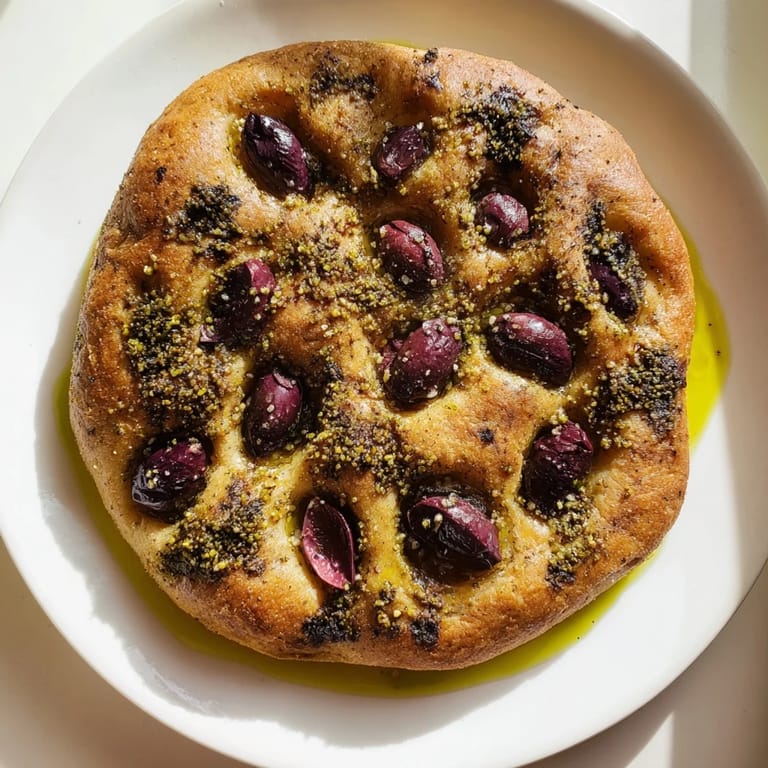
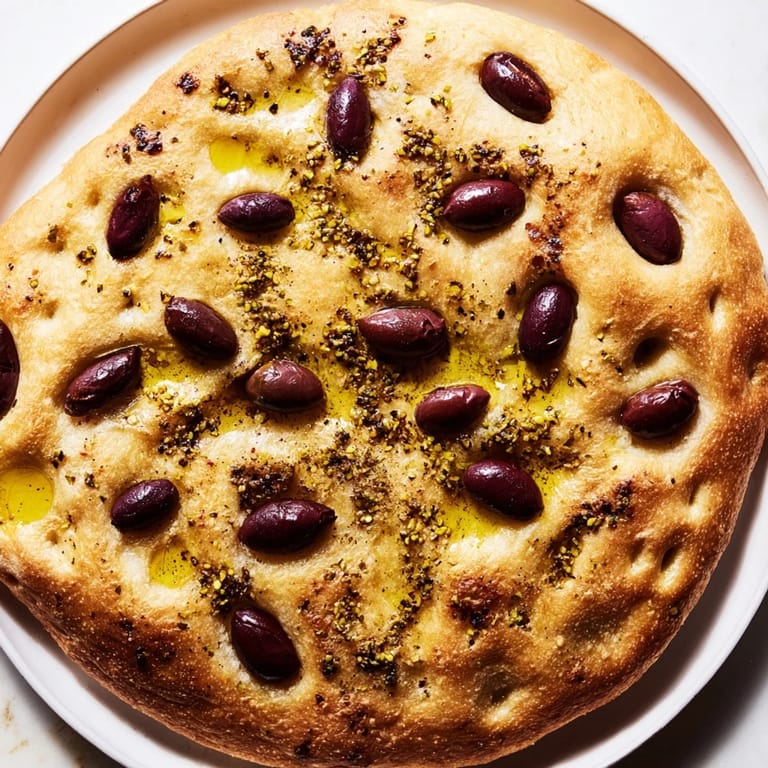
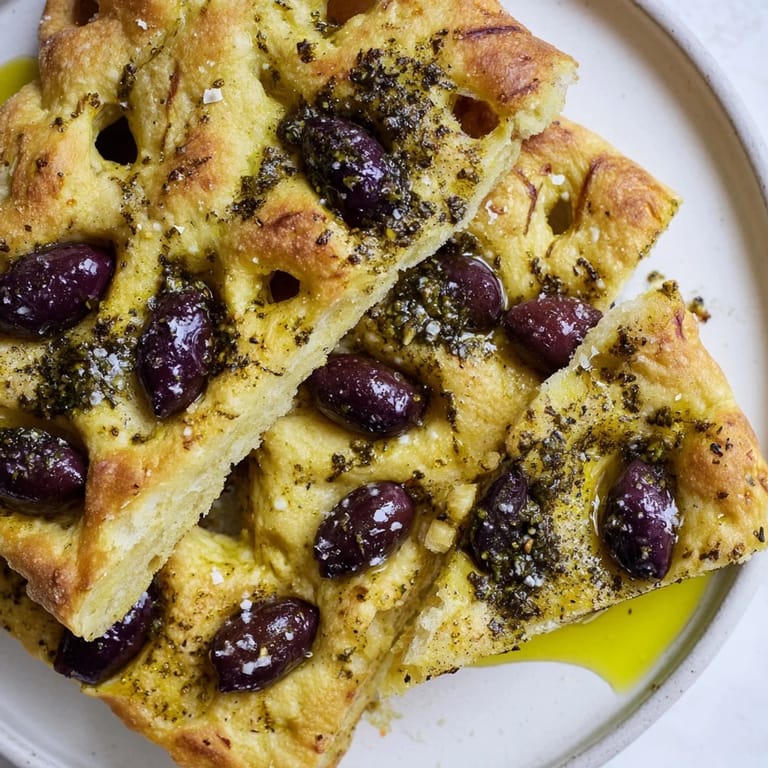
- Preheat your oven to 220°C. Using your fingertips, press deep dimples across the surface—don't be shy. Drizzle with olive oil, scatter zaatar, distribute olives, and finish with flaky salt; each element settles into those dimples during baking.
- Bake until golden:
- Bake for 20–25 minutes until the top is deep golden and the edges are crisp and slightly browned. The focaccia will smell like a Mediterranean afternoon by the time you pull it from the oven.
 Save
Save I've learned that bread baking is as much about rhythm as recipe—there's a quiet confidence that comes from trusting your hands and your senses. When this focaccia came into focus as something I could make repeatedly, something shifted; I stopped seeing recipes as rigid rules and started seeing them as conversations with ingredients that wanted to cooperate.
Variations and Adaptations
This focaccia is a canvas. I've pressed sun-dried tomatoes into the dough before that final rise, and the result was richer and almost meaty. Roasted garlic cloves scattered across the top mellow as they bake and disappear into the bread, giving you little bursts of sweetness. Green olives work too if Kalamatas feel too assertive, and they lean the flavor toward something fresher and more delicate.
Serving and Storage
Serve this warm from the oven if you can, torn into pieces and passed around while it still steams. If you're planning ahead, focaccia holds at room temperature for a day wrapped loosely in cloth—not plastic, which traps steam and softens the crust. A drizzle of labneh or even a simple bowl of excellent olive oil alongside turns it from side dish into the main event.
Why This Bread Works
There's something about the combination of zaatar's herbaceous bite and olives' brine that makes you crave the bread more, not less. The focaccia's open, tender crumb absorbs those flavors without getting soggy, and the crisp exterior provides contrast with every bite. This is one of those rare dishes where every component earns its place.
- Make extra and freeze what you don't eat within a day—it defrosts and crisps beautifully in a 180°C oven.
- If your zaatar has been sitting in a cabinet for months, give it a smell test; once it loses its bright aroma, it's lost its magic.
- Trust the rise time over the clock; your kitchen's warmth varies, so watch for the dough to roughly double before moving to the next step.
 Save
Save This focaccia taught me that sometimes the simplest gestures—warm hands stretching dough, fingers pressing dimples, oil drizzled with intention—create moments worth repeating. It's bread that brings people close.
Recipe FAQs
- → What is the best flour to use for this focaccia?
Bread flour is recommended for its higher gluten content, which helps create a chewy and airy texture.
- → Can I substitute Kalamata olives with other types?
Yes, green olives can be used for a milder flavor, or black olives for a richer taste.
- → How can I ensure a fluffy texture in the bread?
Proper kneading and allowing the dough to rise twice are key to developing structure and fluffiness.
- → What is the purpose of dimpling the dough before baking?
Dimpling helps keep the dough from puffing unevenly and allows olive oil and spices to settle into the surface.
- → Can I add other toppings to enhance flavor?
Yes, sun-dried tomatoes or roasted garlic work well to add extra depth and aroma to the focaccia.