 Save
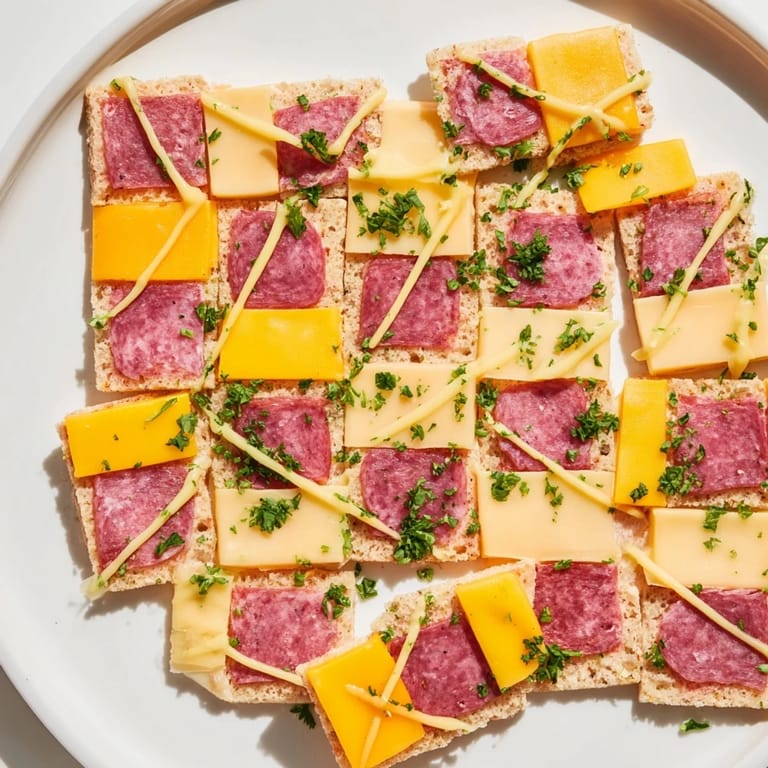
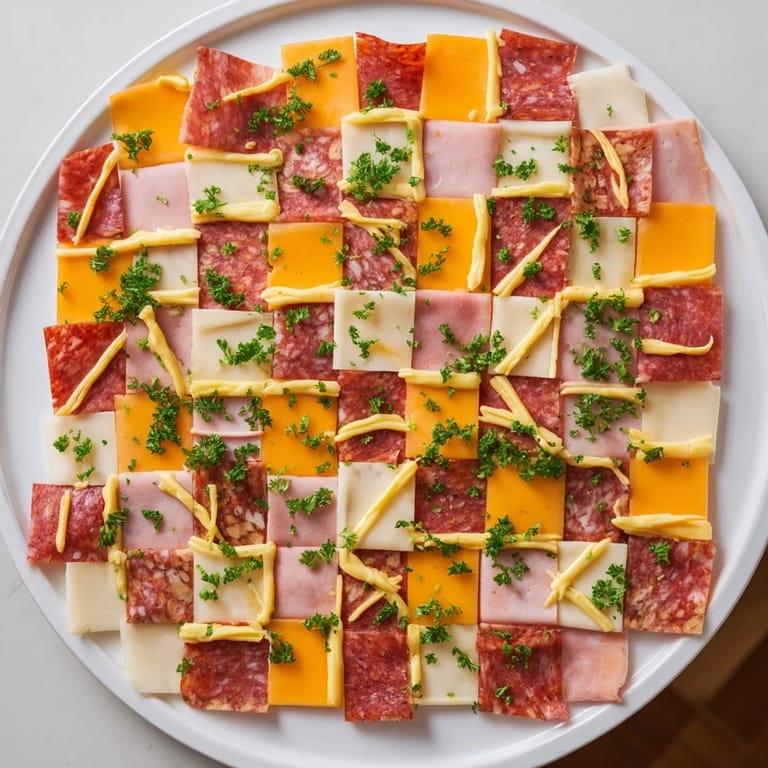
Save My friend Sarah threw a dinner party and asked me to bring something that would make people smile before they even tasted it. I wanted to create something that looked like an edible work of art, and that's when I thought of turning a charcuterie board into something more intentional—a "quilt" made of meats and cheeses, stitched together with mustard. The moment I laid out those colorful squares and piped the mustard lines, I realized I'd stumbled onto something that felt both playful and genuinely delicious.
What I love most about this recipe is that it broke the ice at that party without me saying a word. People gathered around the board before anything else, taking photos and laughing at how the mustard "stitches" made it look like a patchwork quilt someone actually sewed. By the time everyone sat down, half the platter was already gone, and the conversation had already started around the table.
Ingredients
- Smoked turkey breast, 100 g sliced: The mild smokiness keeps things balanced without overpowering the cheeses.
- Salami, 100 g sliced: This is your flavor anchor—choose a quality salami with good spice because it's what people taste first.
- Ham, 100 g sliced: Ham brings sweetness and helps create visual contrast between the pink and darker meats.
- Swiss cheese, 100 g sliced: The holes in Swiss make it instantly recognizable on the board and add that classic deli feel.
- Sharp cheddar, 100 g sliced: Sharp cheddar cuts through the richness of the meats with its bold flavor and bright yellow color.
- Provolone, 100 g sliced: Mild and slightly creamy, provolone is the bridge that lets all the flavors talk to each other.
- Whole grain mustard, 2 tbsp: The texture of the seeds adds visual interest and a gentle tang that ties everything together.
- Dijon mustard, 2 tbsp: Smoother and more refined, Dijon creates a sharper accent line next to the whole grain.
- Fresh parsley or chives, finely chopped: A small garnish lifts the whole thing and adds a hint of freshness that cuts through the richness.
Tired of Takeout? 🥡
Get 10 meals you can make faster than delivery arrives. Seriously.
One email. No spam. Unsubscribe anytime.
Instructions
- Cut everything into uniform squares:
- Use a sharp knife and aim for 2-inch squares so each bite feels intentional and balanced. Consistent sizing is what makes this look like an actual quilt instead of a random arrangement.
- Arrange in a patchwork pattern:
- Start in one corner and alternate meats and cheeses as you move across the board, creating that checkerboard effect. Step back as you go to see if the colors feel balanced and visually pleasing.
- Stitch the mustard lines:
- Fill a squeeze bottle or piping bag with mustard and draw lines between the rows, alternating between whole grain and Dijon as you go. The contrast between the two mustards is what really sells the "thread" illusion.
- Garnish and serve:
- Sprinkle the parsley over the top, set out toothpicks or small forks, and watch people light up when they see it. Serve it right away so the meats stay fresh and the mustard lines stay crisp.
 Save
Save The real magic of this recipe hit me when someone's five-year-old daughter asked if the mustard lines were "real stitches." Her mom smiled and said, "No, but it's beautiful anyway," and that's exactly what this dish is—something that brings people together by making them smile first and eat second.
Building Your Own Color Story
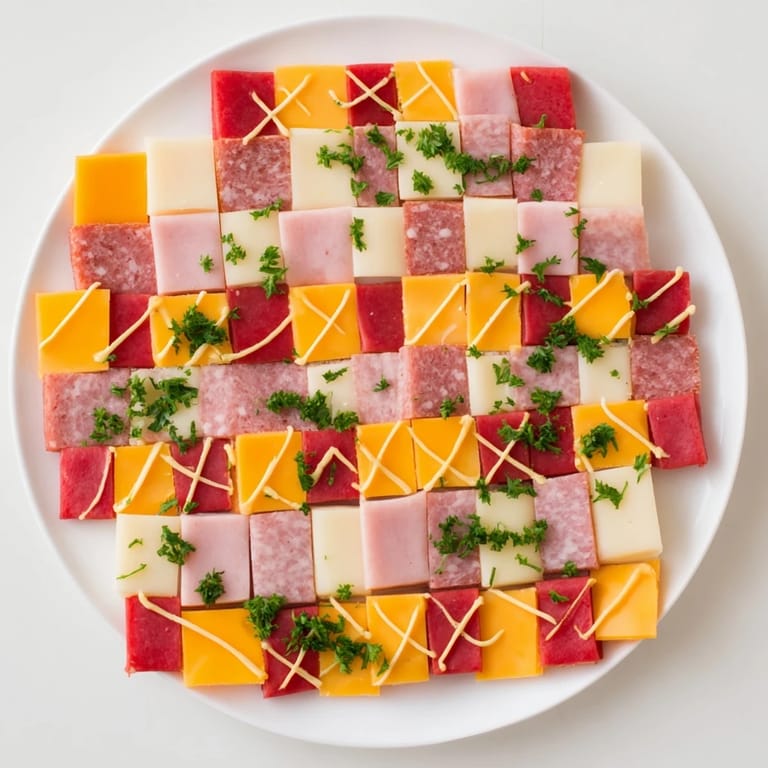
The checkerboard pattern is just a starting point, and I've learned that the real artistry comes from thinking about color. Dark salami next to bright cheddar creates natural contrast, while the pale Swiss cheese gives your eye a place to rest. Don't worry about it being perfect—slight imperfections actually make it feel more handmade and charming.
The Mustard Matters More Than You Think
I used to think any mustard would work for the "stitching," but the difference between whole grain and Dijon really does change how the board feels. The whole grain sits slightly raised on the surface and catches the light, while Dijon spreads smoother and creates finer lines. Alternating between them not only looks intentional but also keeps things interesting as people taste their way through the board.
Making It Your Own
This is where the recipe stops being about following instructions and becomes about what you actually love. I've made versions with roasted red peppers tucked between squares, and I've seen people add thin slices of apple or pear for sweetness. The mustard stitching stays the same, but everything else is negotiable.
- Try roasted red peppers, olives, or pickled vegetables between the squares for extra color and flavor.
- Swap in different cheeses based on what looks beautiful at your market—gouda, gruyère, or even a good mozzarella work wonderfully.
- If you want to serve it with something, water crackers or thinly sliced baguette on the side are perfect, and it pairs beautifully with a crisp white wine or light beer.
 Save
Save This recipe reminds me that the best entertaining isn't about perfection—it's about creating moments where people feel cared for the moment they see the plate. Serve this with confidence and watch what happens.
Recipe FAQs
- → How should the meats and cheeses be cut?
Cut all meats and cheeses into uniform 2-inch squares to create a neat patchwork design.
- → What mustards are recommended for this dish?
Use whole grain and Dijon mustards to pipe lines between squares, adding tang and visual interest.
- → Can this dish be served with garnishes?
Yes, sprinkle with finely chopped parsley or chives to add freshness and color.
- → What tools are best for creating the mustard lines?
A squeeze bottle or piping bag works best for neatly drawing mustard lines resembling stitching.
- → Is this arrangement suitable for low-carb diets?
Yes, the assortment of meats and cheeses is low in carbohydrates, making it appropriate for low-carb eating.
- → Can vegetables be added?
Adding roasted vegetable squares can enhance color and flavor variety within the pattern.