 Save
Save I still remember the first time I created a board that made someone stop mid-conversation just to stare at it. It was at a dinner party where I wanted to do something different, something that felt less like "here's food" and more like "here's an edible work of art." That's when the Zig-Zag Lightning Strike was born—a recipe that transforms ordinary ingredients into something that looks like it was designed by an architect, not a cook. The bold diagonal arrangement caught the evening light in the most unexpected way, and I realized then that sometimes the simplest ingredients, when arranged with intention, become unforgettable.
I made this for a small art show opening I was catering, and it ended up being the only thing people actually stopped to photograph. Someone even asked if they could use a picture of it for their social media. It was humbling, really—a simple vegetable board becoming the unexpected star of the evening, all because we played with geometry and contrast instead of falling back on the same old circular platter everyone's seen a thousand times.
Ingredients
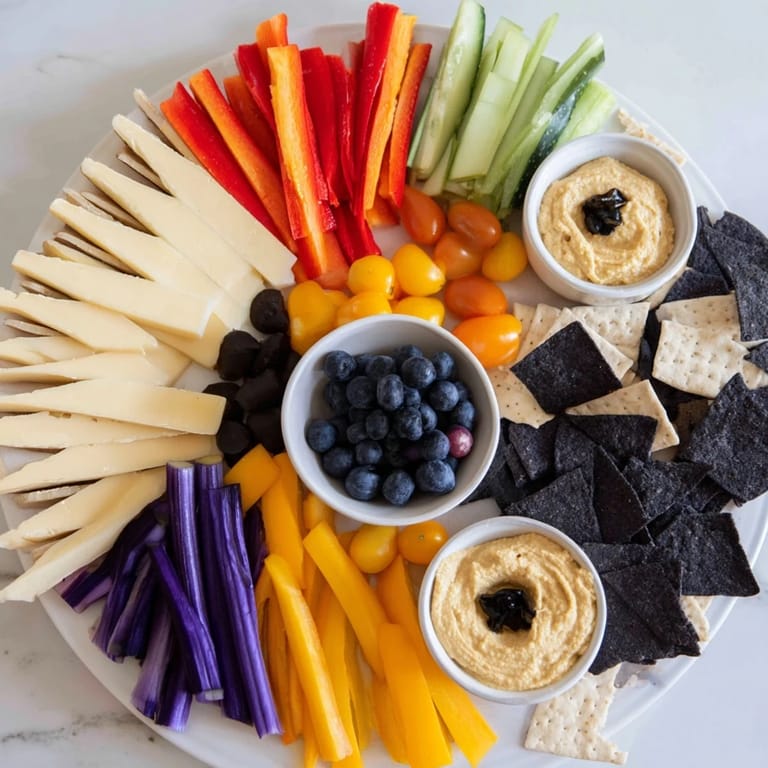
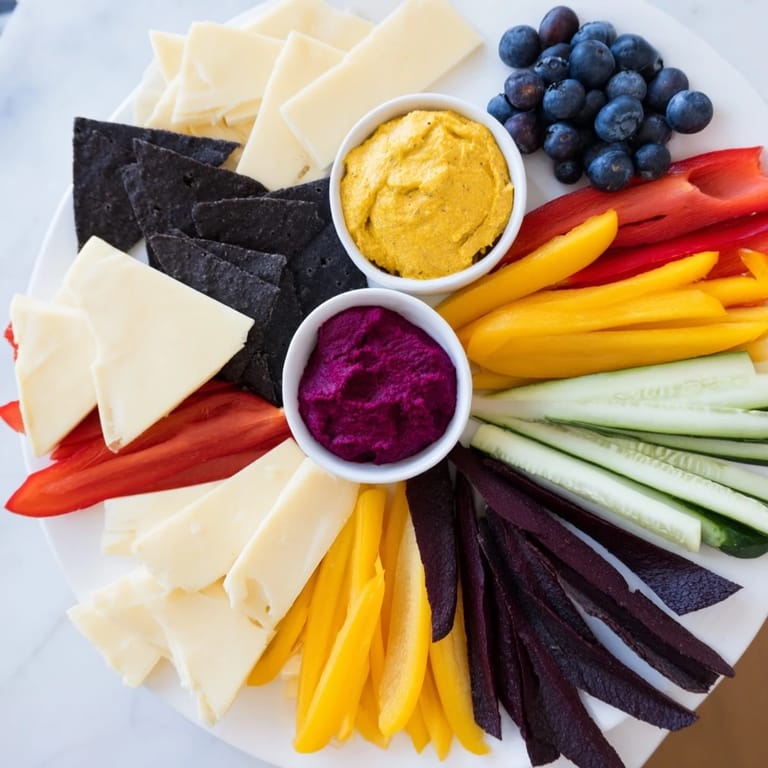
- Red bell pepper strips: These provide the warmest color in your zig-zag, and the sweet flavor grounds all the other elements. Cut them thick enough to stay crisp, thin enough to look elegant.
- Yellow bell pepper strips: The brightness here is non-negotiable—they're your light source on the board, making everything around them feel more vibrant.
- Cucumber sticks: Pale and cool, they act as visual palate cleansers between the more dramatic colors and add a refreshing crunch that keeps people coming back.
- Purple carrots: These are your secret weapon for depth. Regular orange carrots work, but purple ones feel intentional, like you planned the color story all along.
- Sharp white cheddar: Sliced thin and angular, this cheese catches light and creates sharp visual contrast. The sharpness in flavor also holds its own against the vegetables.
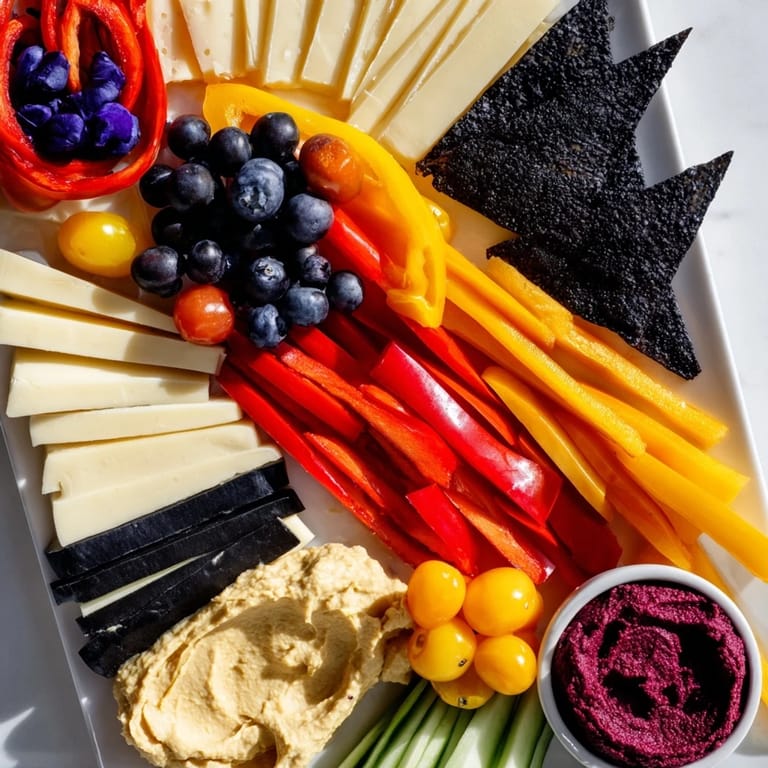
- Black wax gouda: The dark exterior is what you're after here—it creates the boldest color contrast and its buttery flavor is a gentle surprise.
- Blueberries: These aren't just decoration. They're tiny jewels that punctuate your design and offer that sweet-tart moment that makes people realize this board is actually delicious.
- Golden cherry tomatoes: Halved, they show their sunny interior and add a pop of acidity that balances the richness of the cheeses.
- Beet hummus: Deep, earthy, and naturally bold in color, this dip is both functional and visual. It's become my secret because people taste something unexpected and interesting.
- Classic hummus: The counterpoint to the drama of the beet version, it adds creaminess and familiarity for anyone hesitant about the more adventurous flavors.
- Blue corn tortilla chips: The deep blue color reinforces your angular design and adds a grounded, substantial element that balances all the delicate vegetables.
- Black sesame rice crackers: These are your bold punctuation marks. They're crispy, they're dark, they're literally architectural in how they define the edges of your zig-zag.
Tired of Takeout? 🥡
Get 10 meals you can make faster than delivery arrives. Seriously.
One email. No spam. Unsubscribe anytime.
Instructions
- Wash and prepare all your ingredients:
- Run everything under cool water, pat it dry—this is crucial because wet vegetables won't catch light the same way and the board will look rushed. Cut your vegetables into long, deliberate lines. Think about the geometry. Your knife work here is part of the design.
- Imagine your diagonal line:
- Before you place anything, visualize a bold line running from one corner of your board to the opposite corner. This is your zig-zag spine. Everything else will reference this central tension.
- Begin with your base color:
- Start placing ingredients along that diagonal, beginning with your deepest, darkest elements—the black gouda, the blue chips. This gives you anchors to build around.
- Create your contrast rhythm:
- Now alternate your bright, warm colors with your cool, pale ones. Red pepper against white cheddar. Bright yellow against the deep cucumber. You're not randomly arranging—you're orchestrating a color conversation along that line.
- Position your dips strategically:
- Find the points where your zig-zag naturally bends, where one angle meets another. Place your small bowls there. They're not afterthoughts—they're part of the geometry.
- Frame the edges:
- Run your crackers and chips along both sides of that central lightning bolt line, emphasizing the sharp angles and the forward movement of the design.
- Scatter your jewels:
- Now come the blueberries and tomato halves. These go along your zig-zag path like lights along a runway, creating rhythm and drawing the eye deeper into the arrangement.
- Step back and squint:
- Seriously. Squint at your board. Your eyes should follow that diagonal path without hesitation. If they don't, adjust. Move things. Trust your instinct about what feels balanced.
- Serve with intention:
- Bring it to the table and let people look before they reach. The first moment matters.
 Save
Save The moment I'll never forget is when a friend brought her five-year-old to a dinner where I served this, and the little girl immediately said, "It looks like lightning made of rainbows." That's when I knew it was more than just a nice-looking platter—it was actually doing something, sparking joy and curiosity. That's the real recipe right there.
When I first started arranging boards, I thought it was about filling space. What I learned, slowly and through trial and error, is that it's actually about creating movement. The zig-zag deliberately moves the viewer's eye from one corner to another, and every color choice either accelerates that movement or pauses it. Warm colors feel closer and faster; cool colors feel receding and calm. By alternating between them, you're creating a visual rhythm that makes the board feel energetic, alive. It's the same principle that makes a great painting great—it's not what you put on the canvas, it's how you orchestrate it.
The beauty of this recipe is that it's a framework, not a rigid rule. Once you understand the zig-zag principle and the color contrast idea, you can swap ingredients based on what you have and what season it is. Spring version? Use asparagus spears and fresh peas. Winter? Add roasted beets and pomegranate seeds. The architecture stays the same, but the personality shifts. I've made versions with only white and black ingredients for a wedding, and versions with every color of the rainbow for a pride celebration. The template is infinitely adaptable.
I learned the hard way that this board pairs beautifully with beverages that cut through the richness of the cheese. A crisp Sauvignon Blanc is my first choice because the acidity mirrors the tartness of the tomatoes and hummus. But sparkling water with fresh lemon is equally satisfying if you're keeping it alcohol-free—the fizz keeps your palate clean between bites, and the lemon echoes the brightness you've already built visually. Serve it at room temperature, or if it's hot outside, keep it on ice underneath, but don't let it sit there too long or your vegetables will sweat and lose their crispness. I also learned to have small plates and napkins available—this is a board people want to graze from, not plate from, and it gets messy in the best way possible.
- Always double-check your sesame and hummus for allergens before serving, especially if you're hosting people with dietary restrictions
- If you're making this gluten-free, verify every single cracker and chip label—cross-contamination can happen in processing
- Prep everything in advance and arrange it just before serving to keep everything crisp and the colors as vivid as possible
 Save
Save Every time I make this, I'm reminded that the most memorable meals aren't about complexity—they're about care and creativity applied to simple things. This board is my proof that anyone can make something beautiful in their kitchen.
Recipe FAQs
- → What vegetables are used for the angular cuts?
Red and yellow bell peppers, cucumber sticks, and purple carrots are cut into long, angular shapes to emphasize bold lines.
- → Which cheeses complement this platter best?
Sharp white cheddar and black wax gouda, sliced thinly and angularly, add rich flavor and contrast.
- → How are the dips incorporated in the arrangement?
Beet hummus and classic hummus are placed in small bowls strategically along the zig-zag for visual and flavor impact.
- → Can this platter accommodate dietary restrictions?
Yes, gluten-free crackers are an option, and plant-based cheeses can substitute the dairy for vegan preferences.
- → What is the purpose of the zig-zag layout?
The zig-zag creates a dynamic, angular presentation that enhances the high-contrast colors and shapes of the ingredients.
- → How does this platter suit modern entertaining?
Its artistic, bold arrangement and combination of fresh, vibrant ingredients make it ideal for contemporary appetizer or grazing boards.